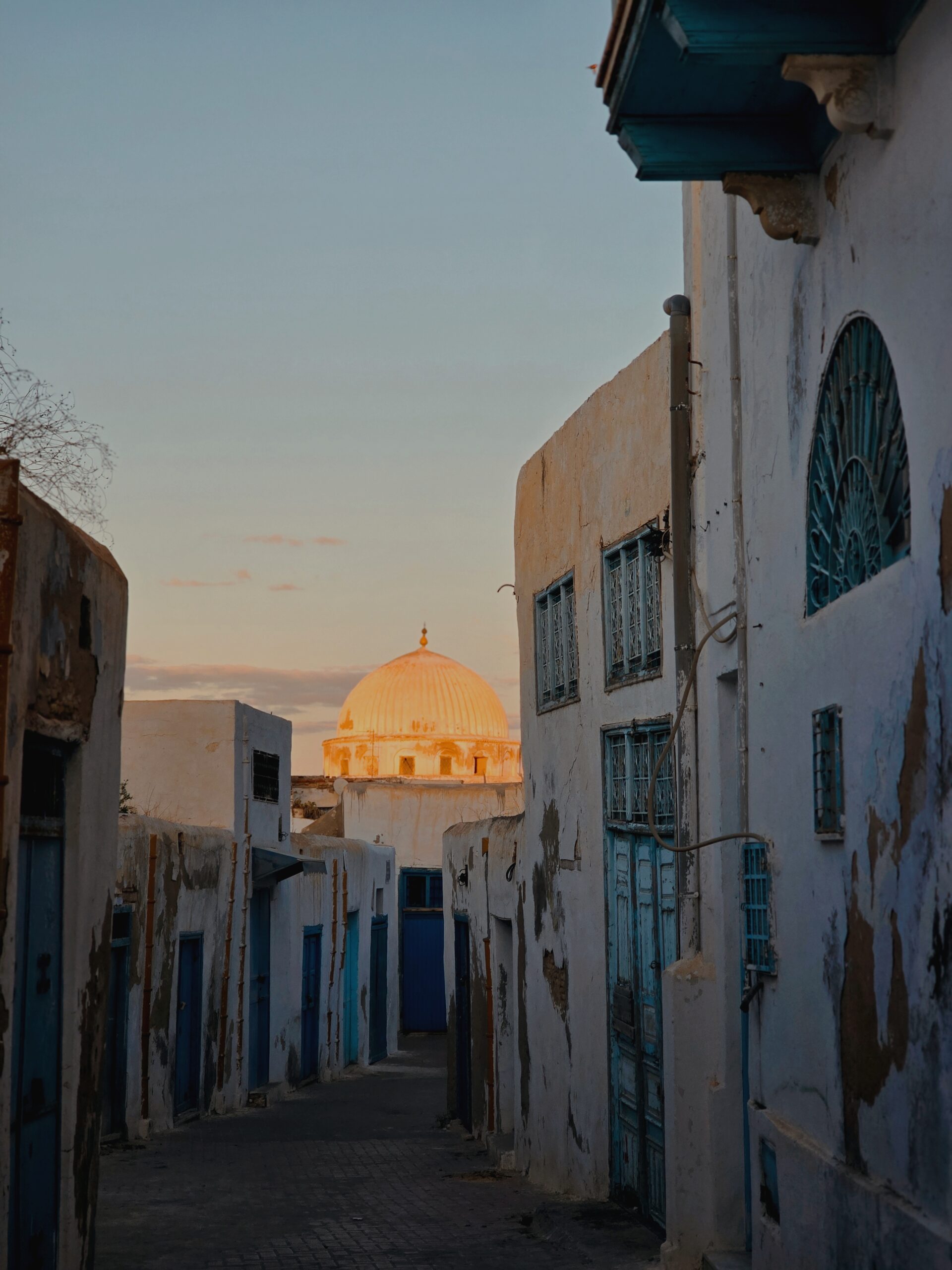
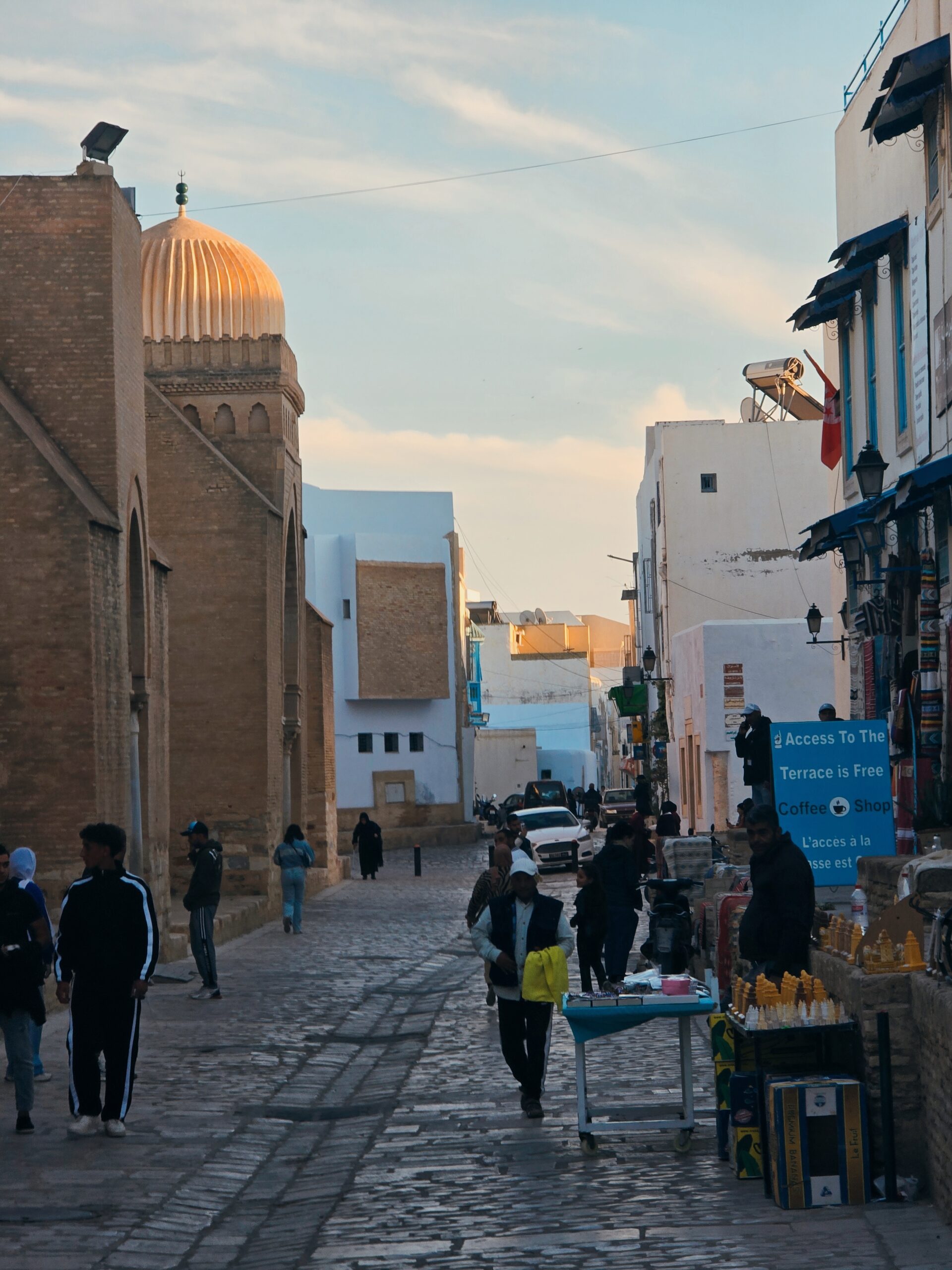
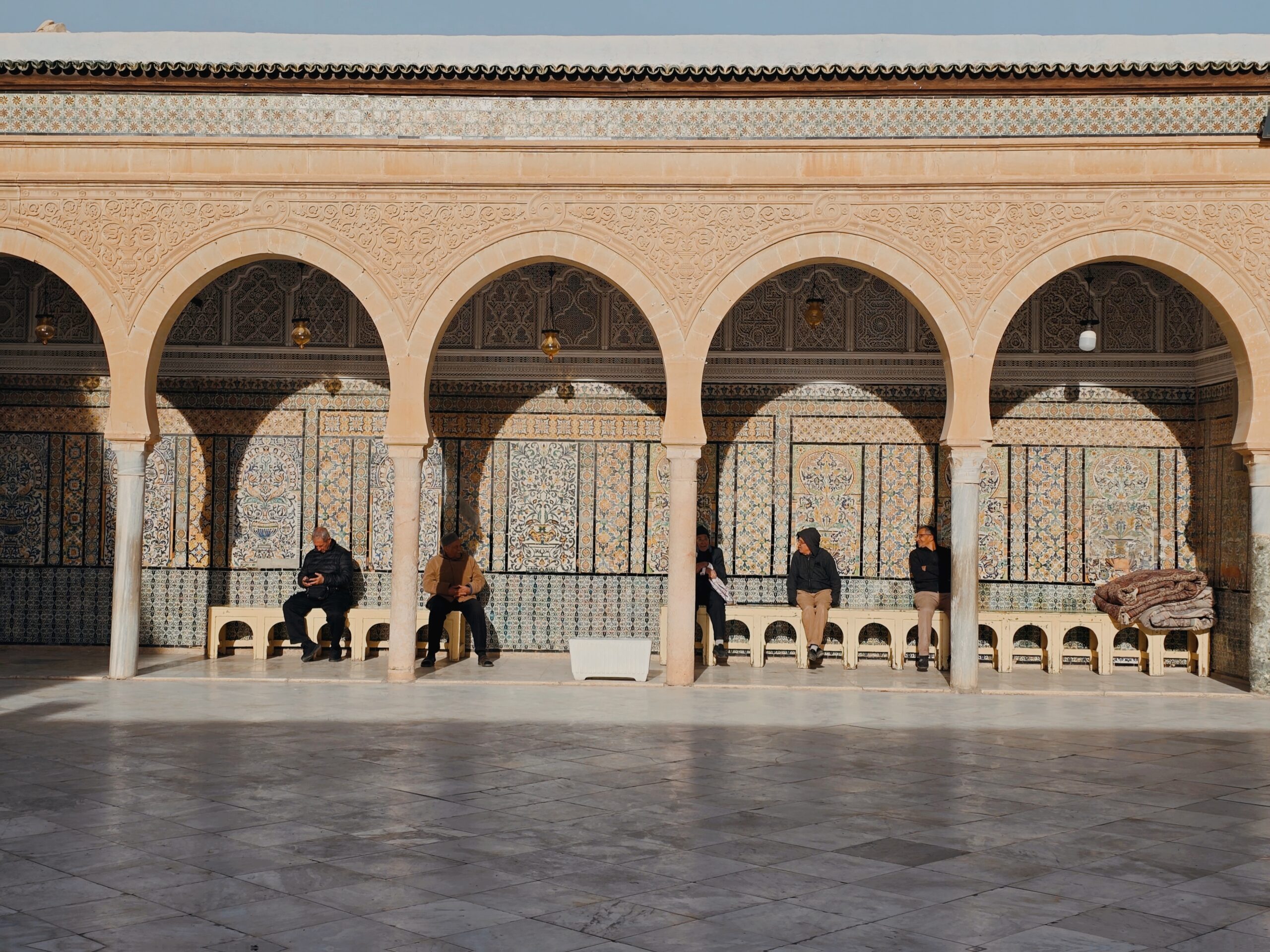
tepping into Kairouan feels like slipping through a doorway into another century. With its maze-like white and blue medina, echoing call to prayer and the golden glow of the Great Mosque, this holy city has a calm, soulful energy unlike anywhere else in the country.
Visiting Kairouan feels like stepping into a living museum.
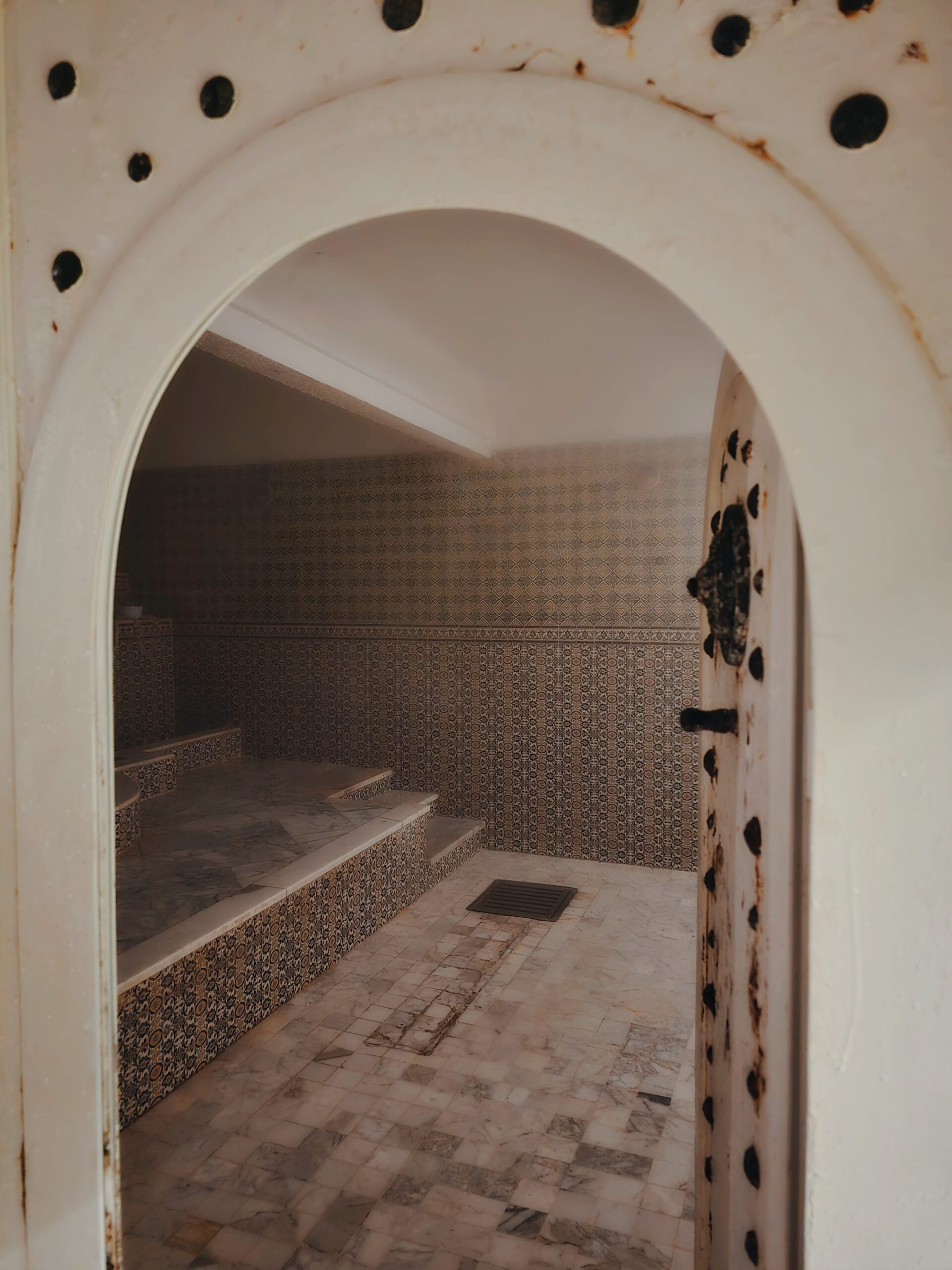
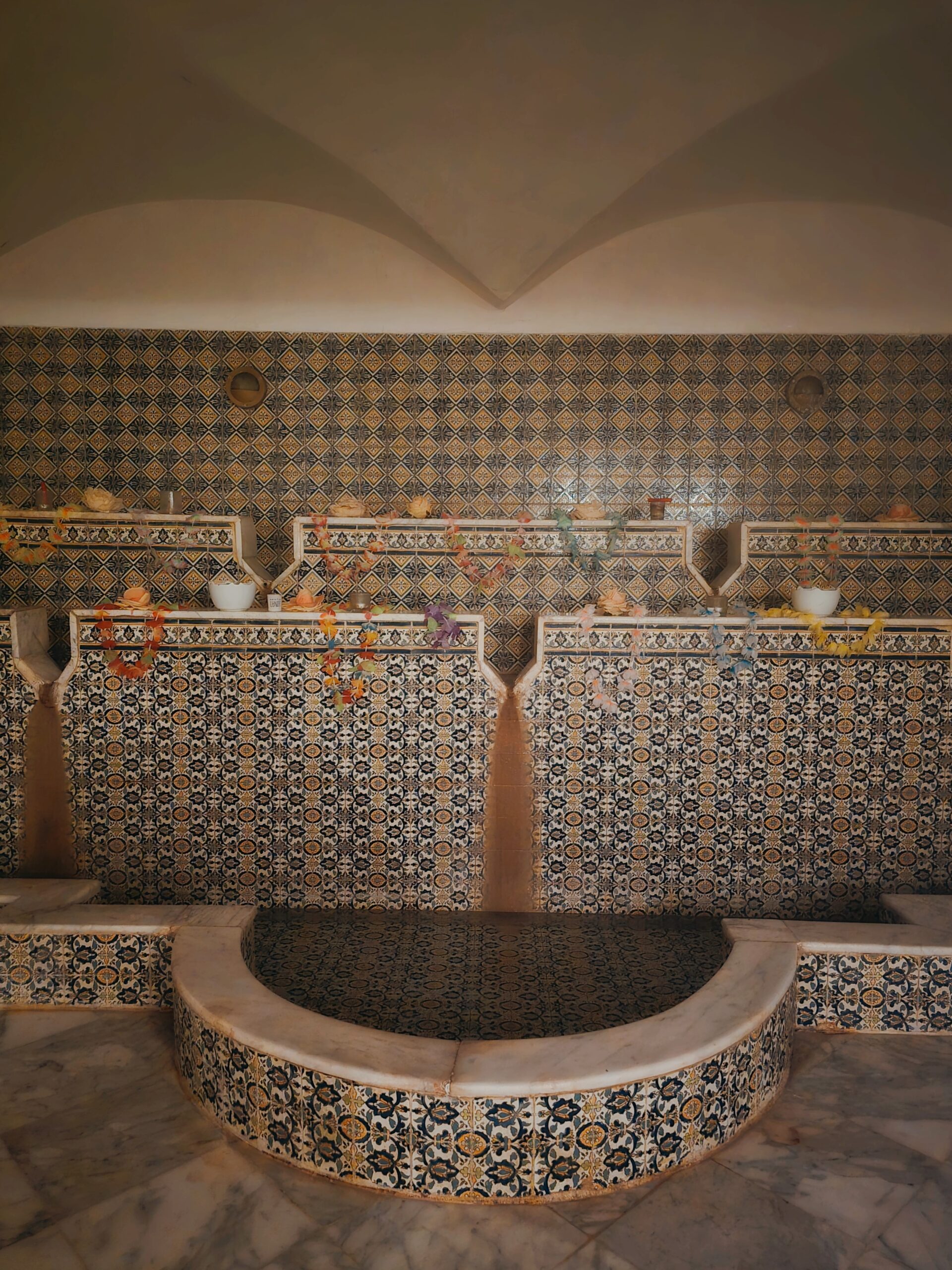
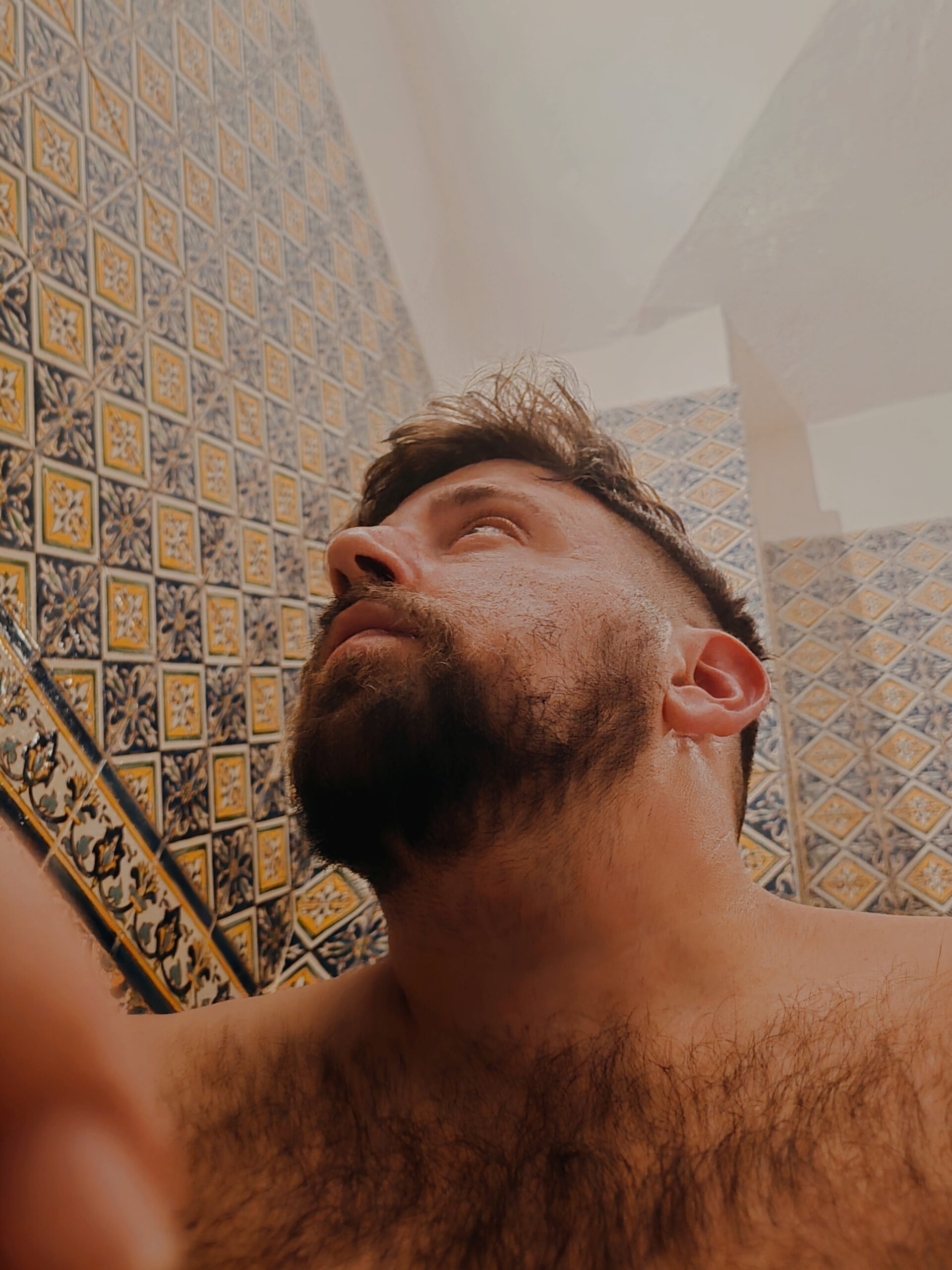
I spent just one night here, staying in La Kasbah which wonderfully blends traditional architecture and design with modern amenities. The hotel was great, it also had a nice spa where I could try the hammam,
That time was enough to fall in love with Kairouan’s timeless streets, its craftsmanship and the quiet beauty. Tucked into the heart of Tunisia, Kairouan is a city where time seems to pause. Revered as the country’s spiritual capital and considered the fourth holiest city in Islam, it offers travelers a blend of sacred history, North African culture, and a calm, timeless atmosphere.
Fun Fact: Parts of Indiana Jones and the Raiders of the Lost Ark were filmed in Kairouan; its medina doubled as scenes set in Cairo.
Around the Medina
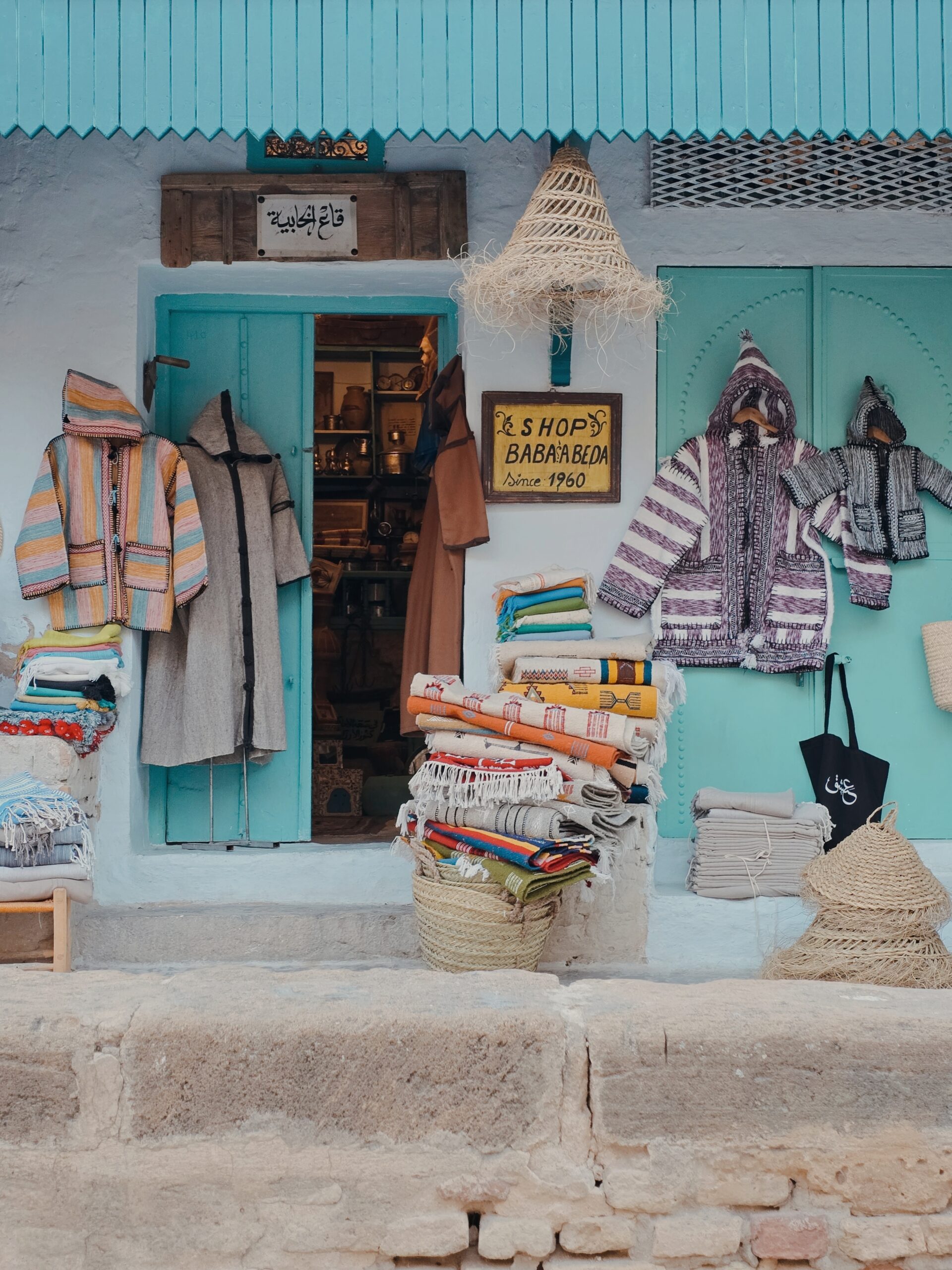
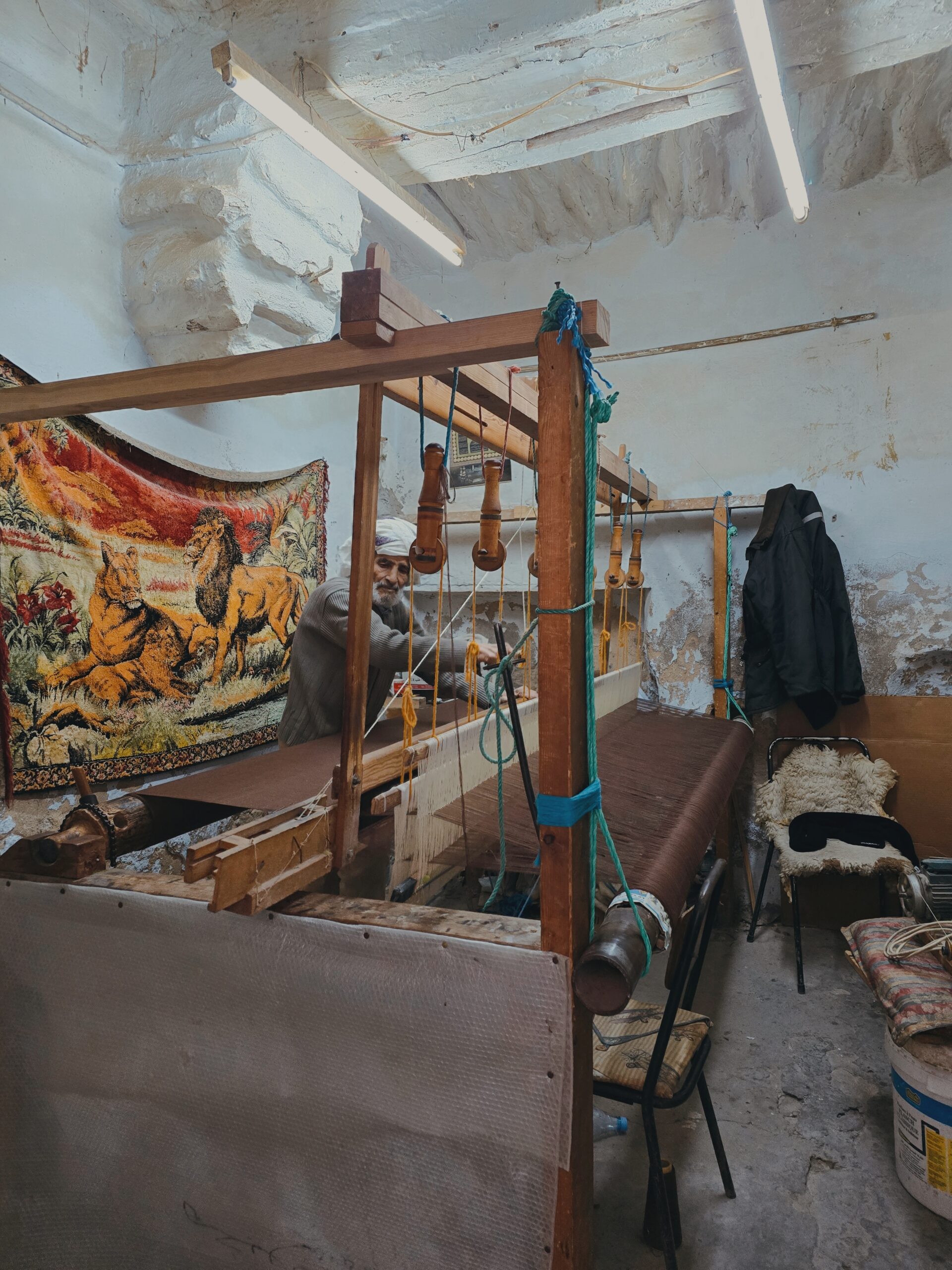
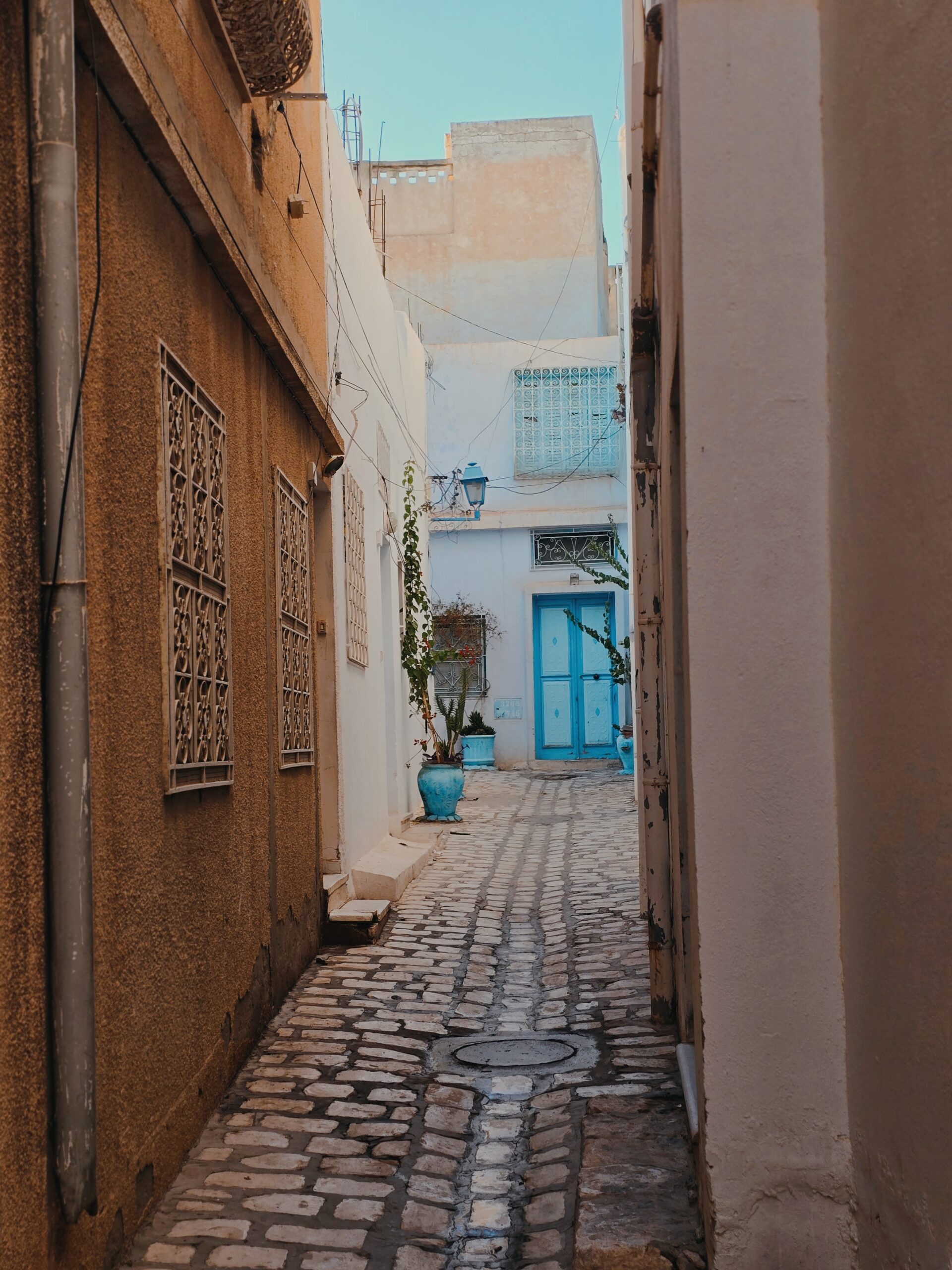
Step into the medina and you’ll find a maze of narrow lanes filled with artisans weaving textiles, crafting metalwork, and selling traditional sweets. The city is particularly famous for its handmade carpets, some of the most prized in Tunisia. Keep an eye out for the beautifully carved and painted blue doors that decorate many homes—they’re a signature of Kairouan’s traditional architecture.
Once again you will realize quickly that the paths in the medina look like a Greek island. The white-and-blue aesthetic became widespread under the influence of Andalusian refugees who brought southern Spanish architectural styles to Tunisia.
A City Built on Faith
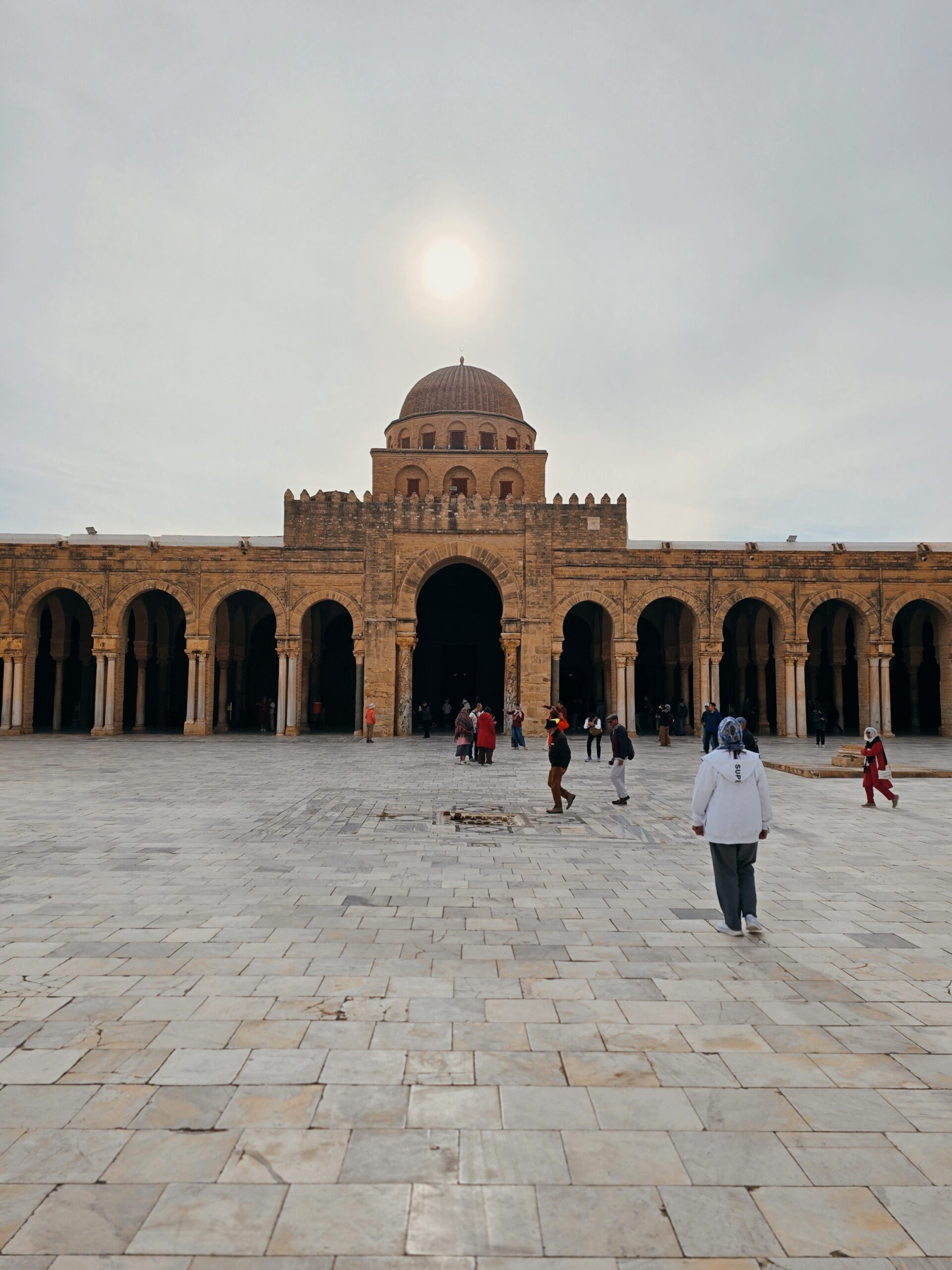
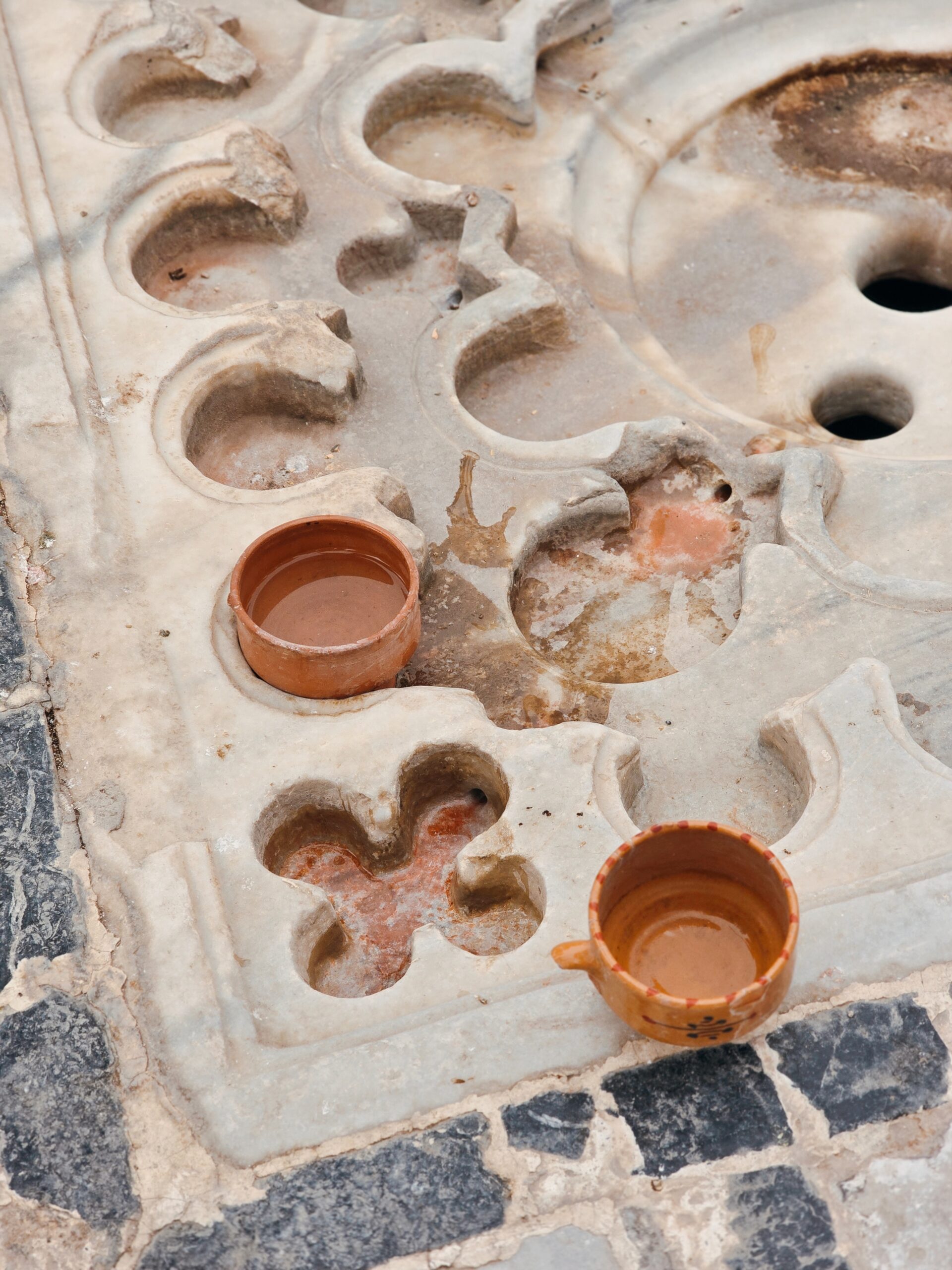
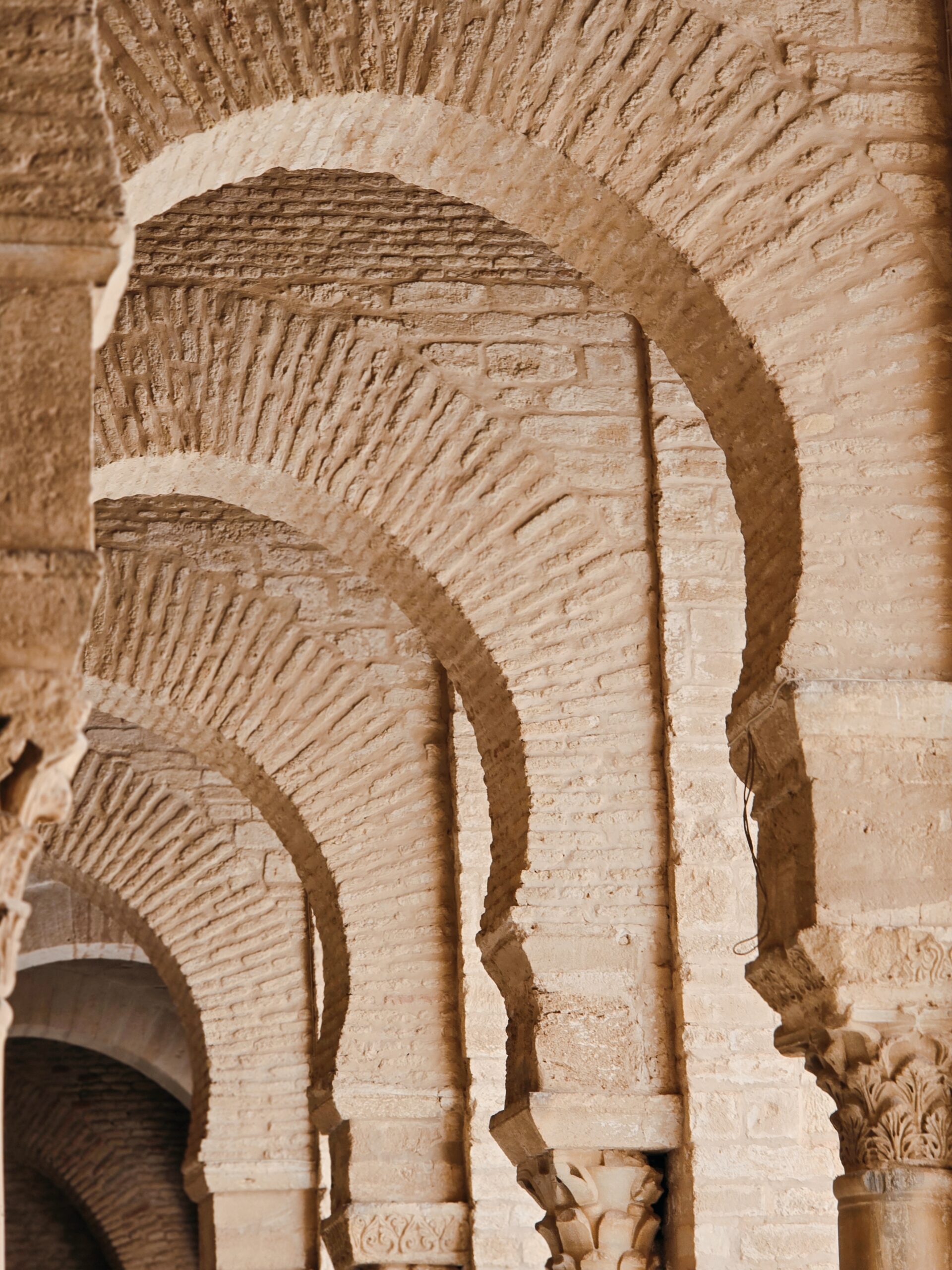
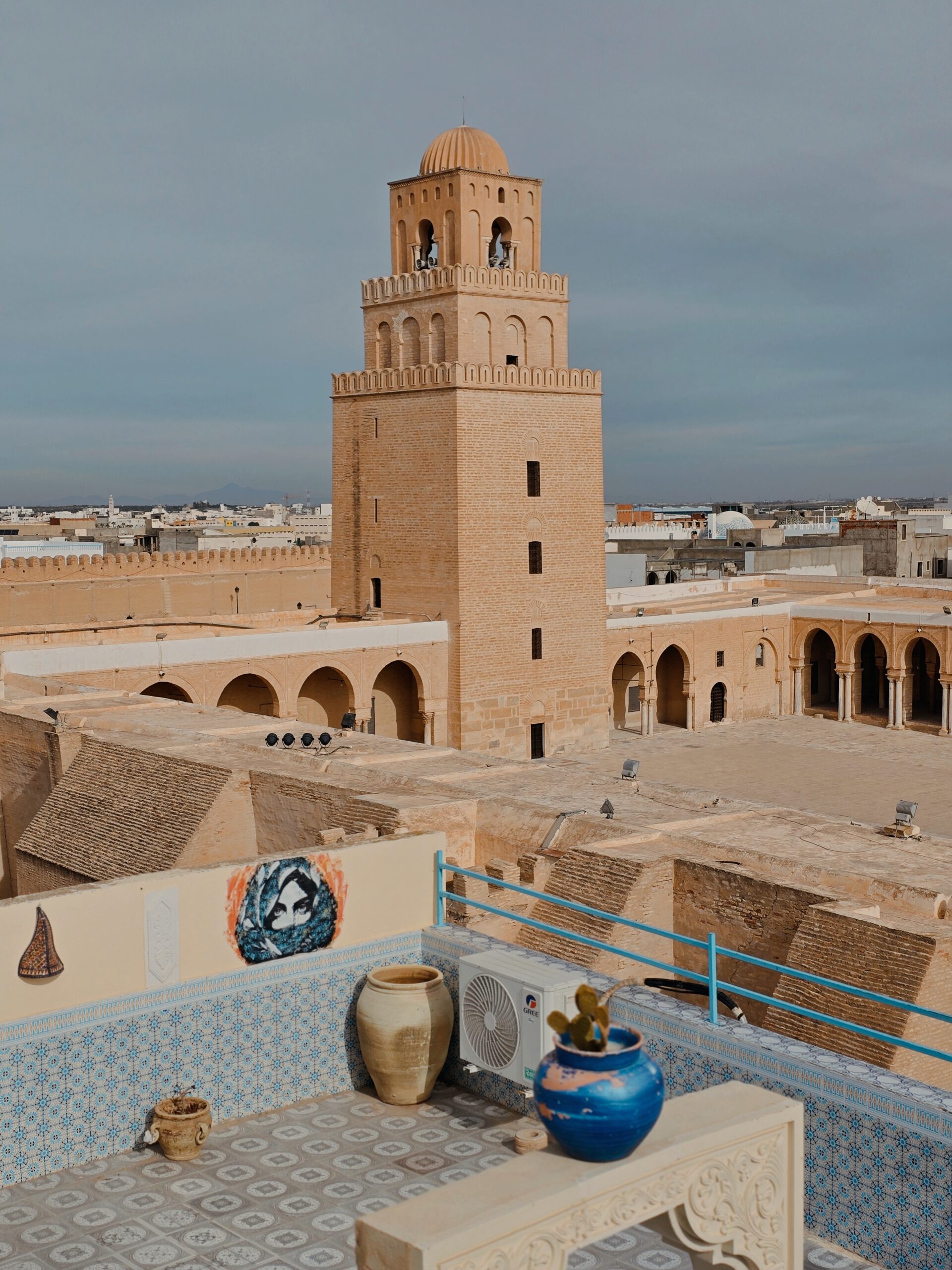
Its iconic Great Mosque of Kairouan—one of the oldest places of worship in the Muslim world—remains a masterpiece of early Islamic architecture. The courtyard is not only a majestic architectural space but also a remarkably practical one. Its designers engineered a subtle slope across the entire courtyard so that rainwater naturally flows toward a central collection point. This point is a sunken basin, often described as an impluvium, where the water gathers before entering an underground storage system.
The carved marble edges and controlled flow slow the water just enough to allow sediment to drop out, making the collected water cleaner by the time it reaches the cisterns. These large underground reservoirs, supported by sturdy columns, were essential for ensuring a reliable water supply in Kairouan’s dry climate.
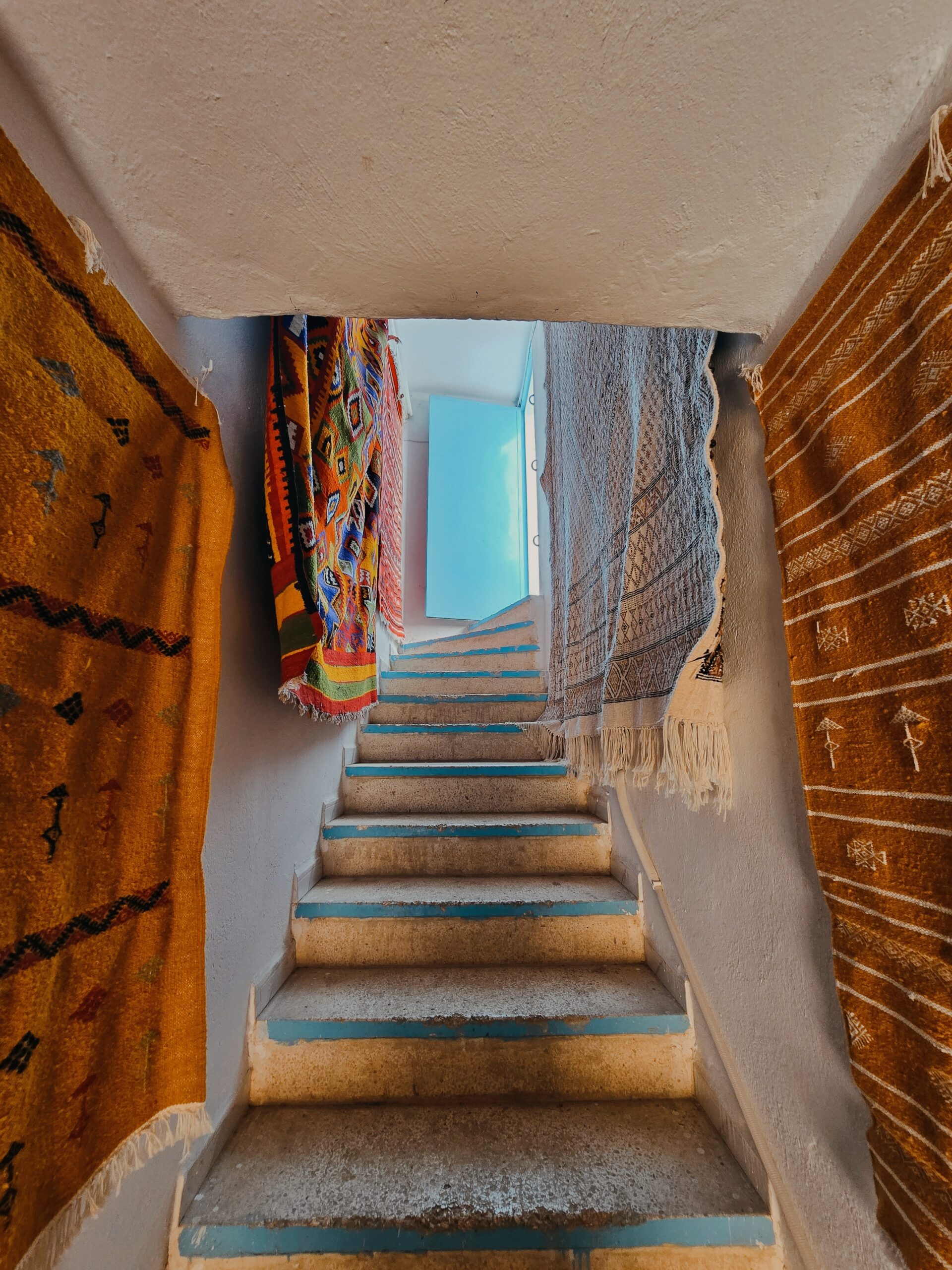
If you want to catch a quick coffee, go in Dar Mima Chez Mamie, which starts as a souvenir shop – then as you go up the stairs it transforms into a carpet store and, finally, a terrace with a panoramic view of the Mosque.
The Zaouia of Sidi Sahabi
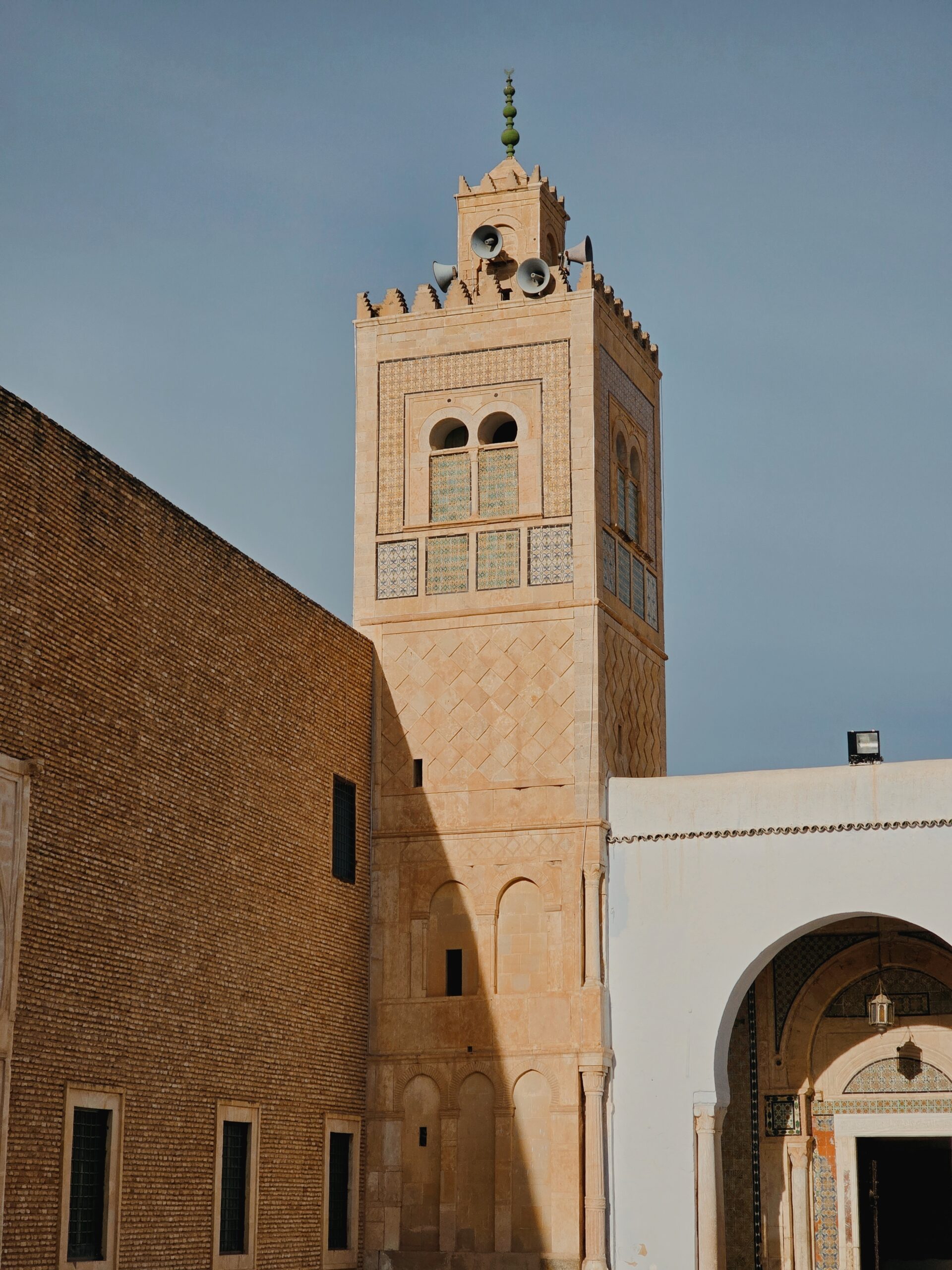
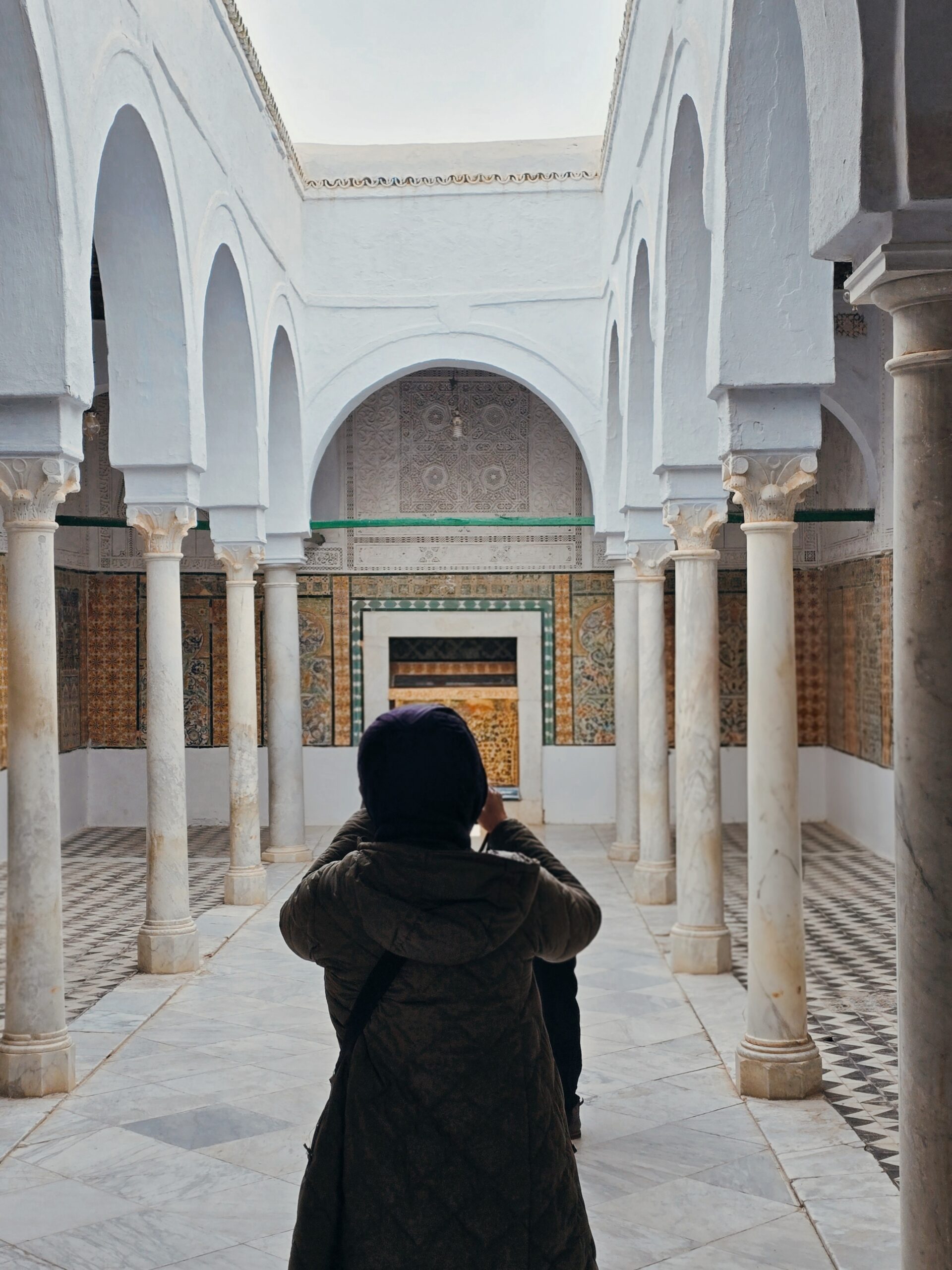
In Tunisia, a zaouia typically refers to a small religious complex that includes a shrine or tomb, and this one, is one of Kairouan’s quieter but deeply meaningful religious sites. It is dedicated to Sidi Sahabi, a revered companion of Uqba ibn Nafi, the general who led the early Islamic expansion into North Africa.
The site is also known as the Barber’s Mosque because he was the barber of the Islamic prophet Muhammad, and tradition also holds that he was buried with three hairs from Muhammad’s beard.
Although not as prominent as Kairouan’s major landmarks, the zaouia is worth a stop for travelers seeking authenticity and calm. It’s a respectful and serene space where history, faith, and local heritage come together in a subtle but memorable way.
Kairouan isn’t a bustling coastal resort or a glittering metropolis. Instead, it offers something rarer: quiet authenticity. Visiting feels like stepping into a living museum – one where daily life still follows rhythms that have existed for centuries.