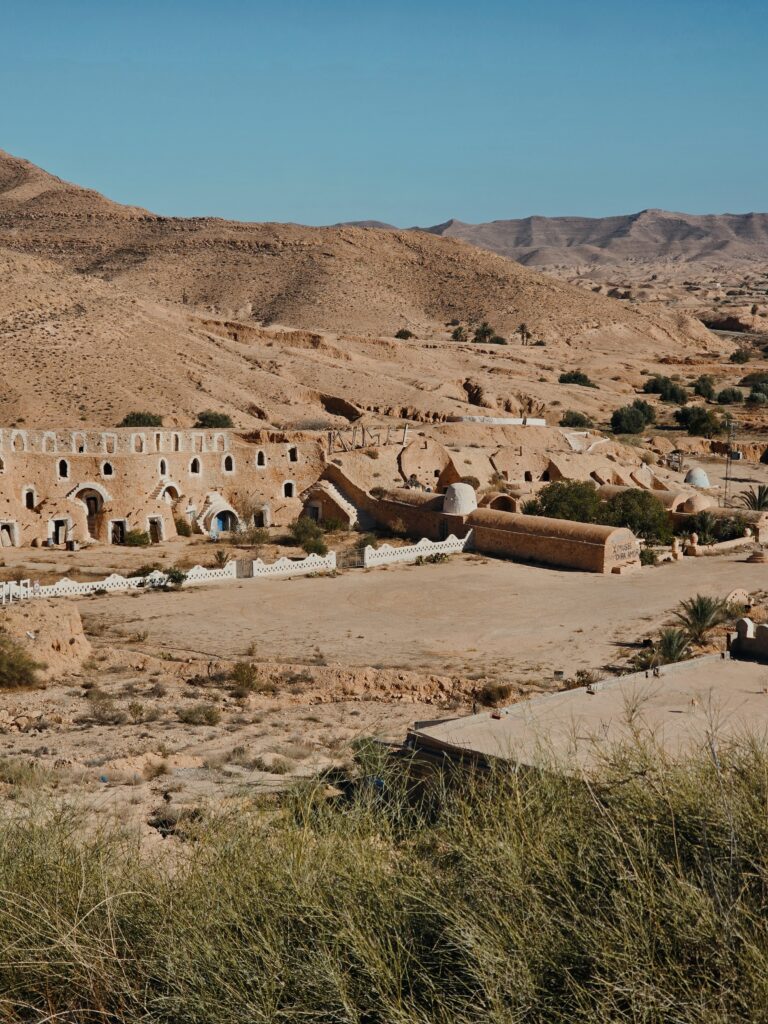
atmata, a village that feels like it belongs to another world. Famous for its troglodyte homes — the ancient underground dwellings carved directly into the earth — Matmata offers travelers a glimpse into a lifestyle shaped by centuries of desert life.
This was not just another stop, its a place that really puts things into perspective.
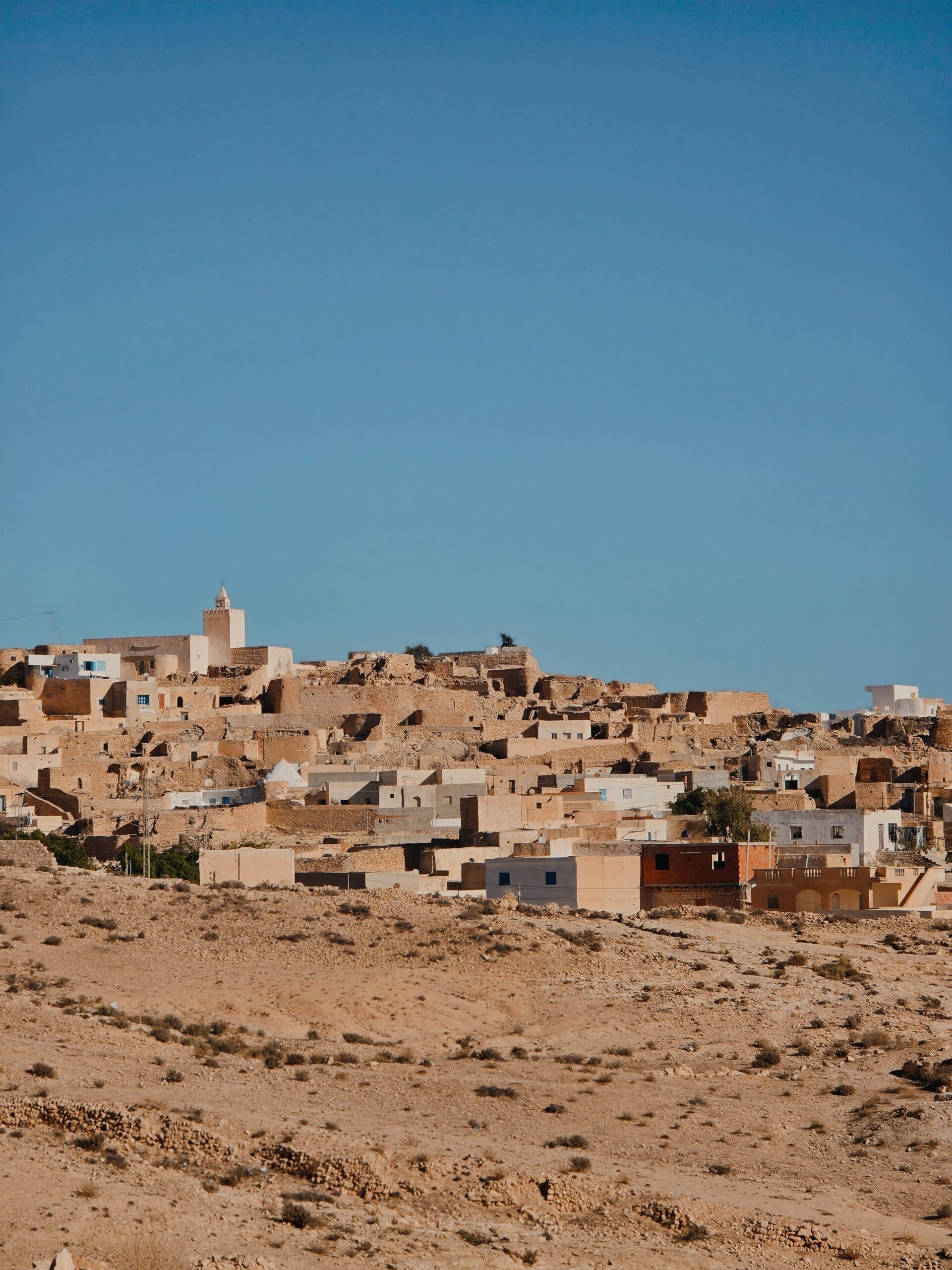
Before going to the troglodytes’ homes, we were going for a quick stop at Dar Ayed, a charming rural guesthouse and cultural stop in the Berber village of Tamezret, about 10 km from our destination. On our way there we even saw a ksar, and maybe the only con of this day is that we didn’t make a stop there.
The ksars of North Africa are some of the most fascinating remnants of Berber (Amazigh) culture, especially in southern Tunisia. They are essentially a fortified village or granary, designed to protect both people and their precious resources.
Originally, these structures served as safe storage for grain, olive oil, and other essentials, safeguarding them from raids, harsh desert weather, and wildlife. Over time, some ksars evolved into fully functioning villages where families not only stored goods but also lived, creating a unique blend of practicality and community.
They are typically stacked vertically, forming honeycomb-like structures, with each family having its own space.
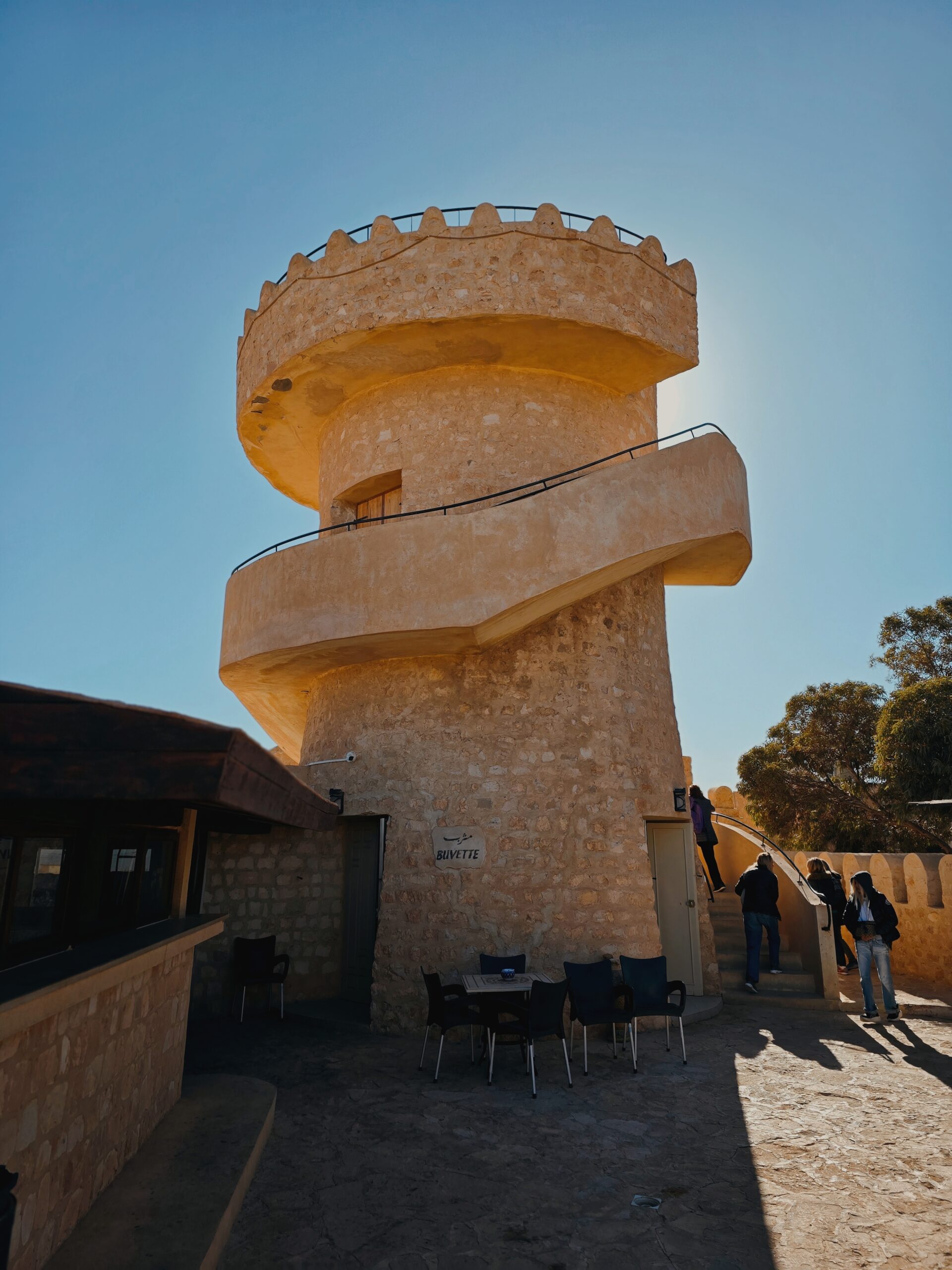
Then we arrived at Dar Ayed. It’s a traditional accommodation and cultural hub designed to immerse visitors in Amazigh (Berber) heritage and hospitality. One feature that stands out at Dar Ayed is its observation tower. Though not an ancient ruin, this tower was built as a lookout point as part of the guesthouse complex. It’s a great spot for photos at sunrise or sunset and gives a sense of the scale of the region’s landscapes. There’s also a small cafe, two stores and a tiny museum, so its a true pit stop.
The view from the tower
At last, we finally arrived at the troglodytes’ home.
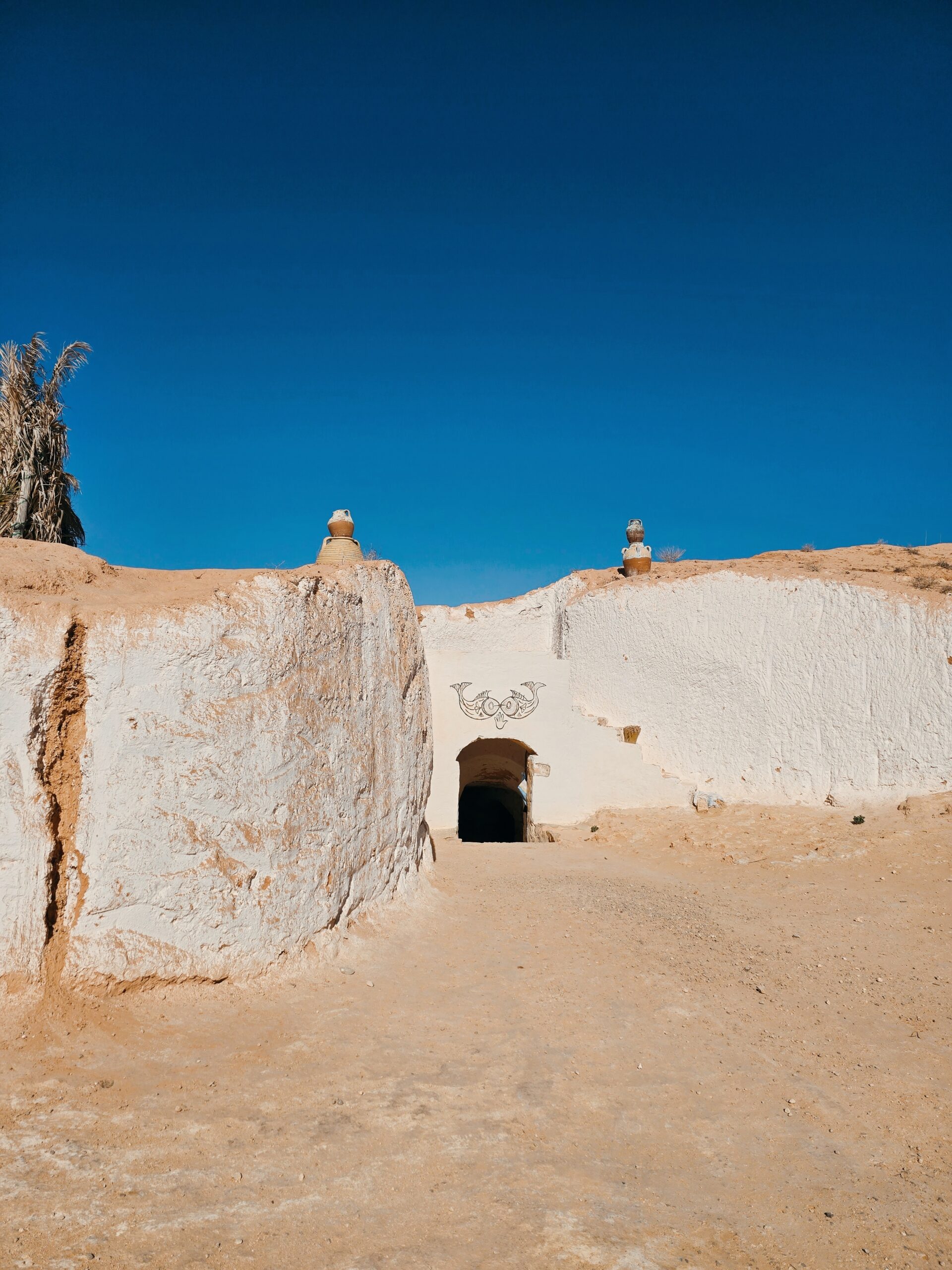
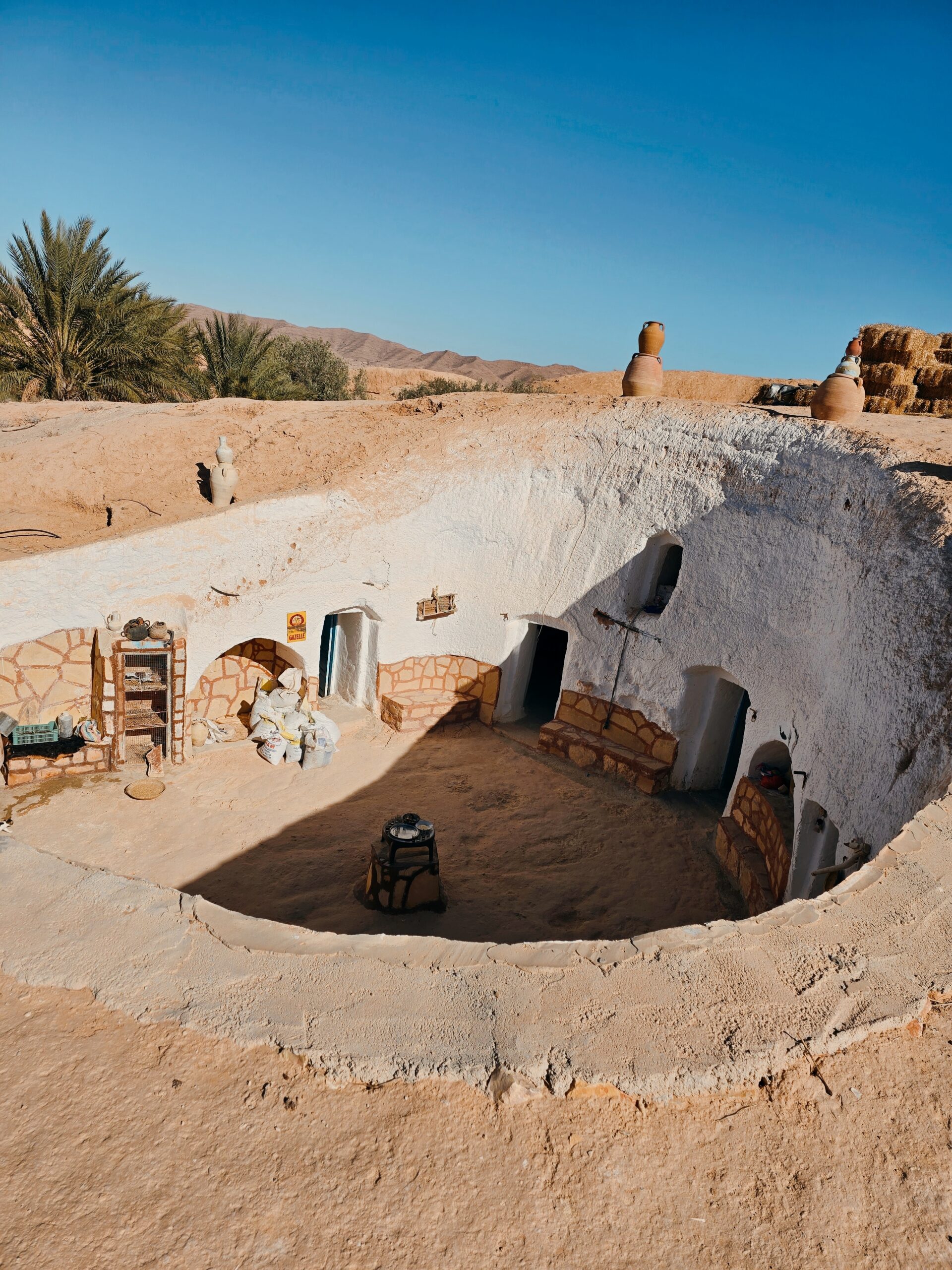
The troglodyte homes of Matmata are one of the most striking and unusual sights in southern Tunisia. Unlike conventional houses, these dwellings are carved directly into the earth, creating subterranean homes that descend into the desert soil.
This architectural style was developed by the Berber communities centuries ago as a practical response to the harsh climate of the Sahara. By digging downward instead of building upward, families could escape the intense heat of summer and the chilly desert nights, creating naturally insulated living spaces that are both functional and enduring.
The house from outside
The houses, photographed from their roof
A typical troglodyte home is centered around a circular courtyard, open to the sky, with rooms hollowed out along the walls. These rooms serve as living spaces, kitchens, storage areas, and bedrooms. The layout is remarkably efficient: the central pit allows for natural light and ventilation, while the surrounding rooms provide privacy and shelter. Every wall and chamber is hand-carved, with attention to structural stability and comfort.
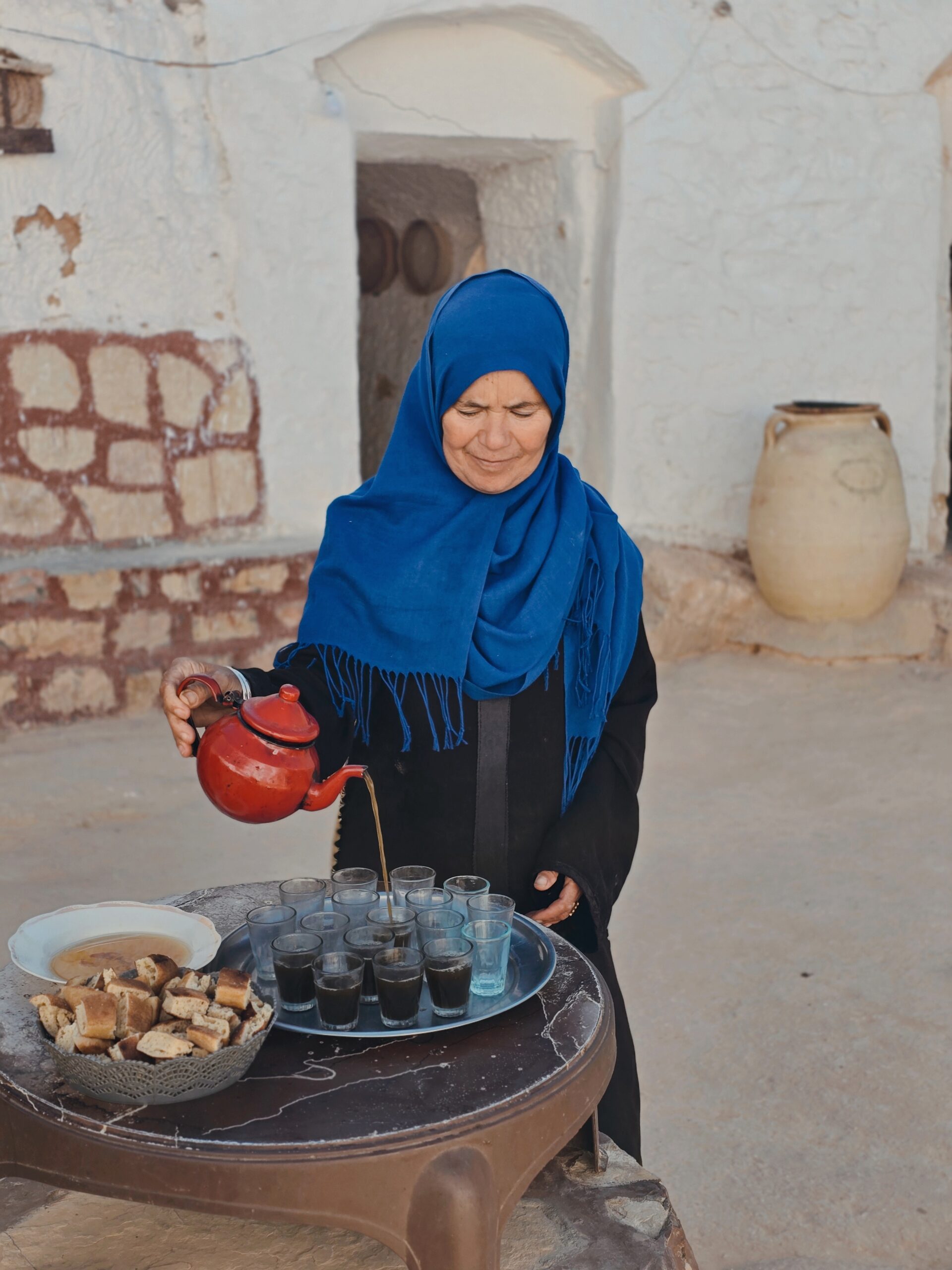
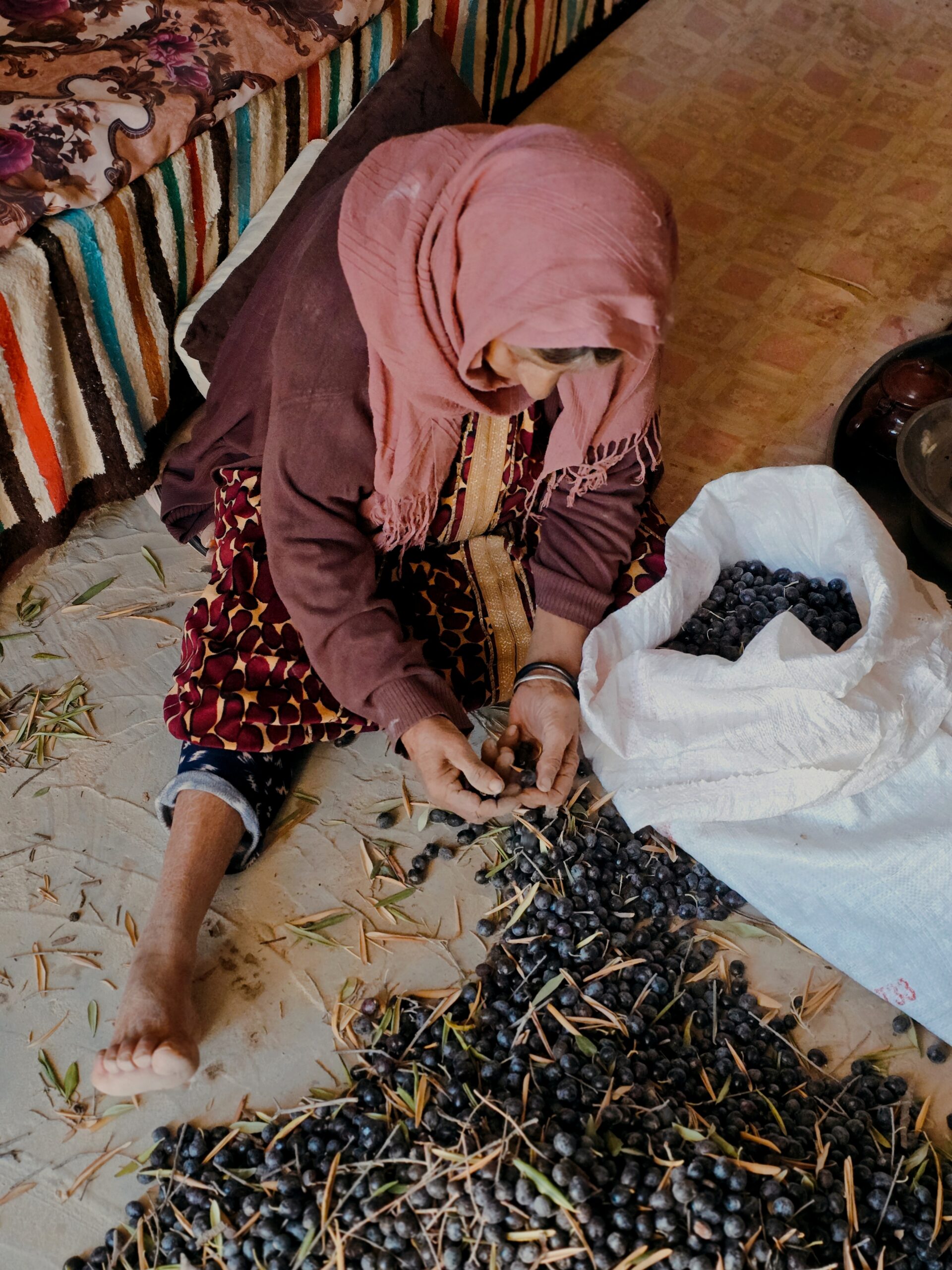
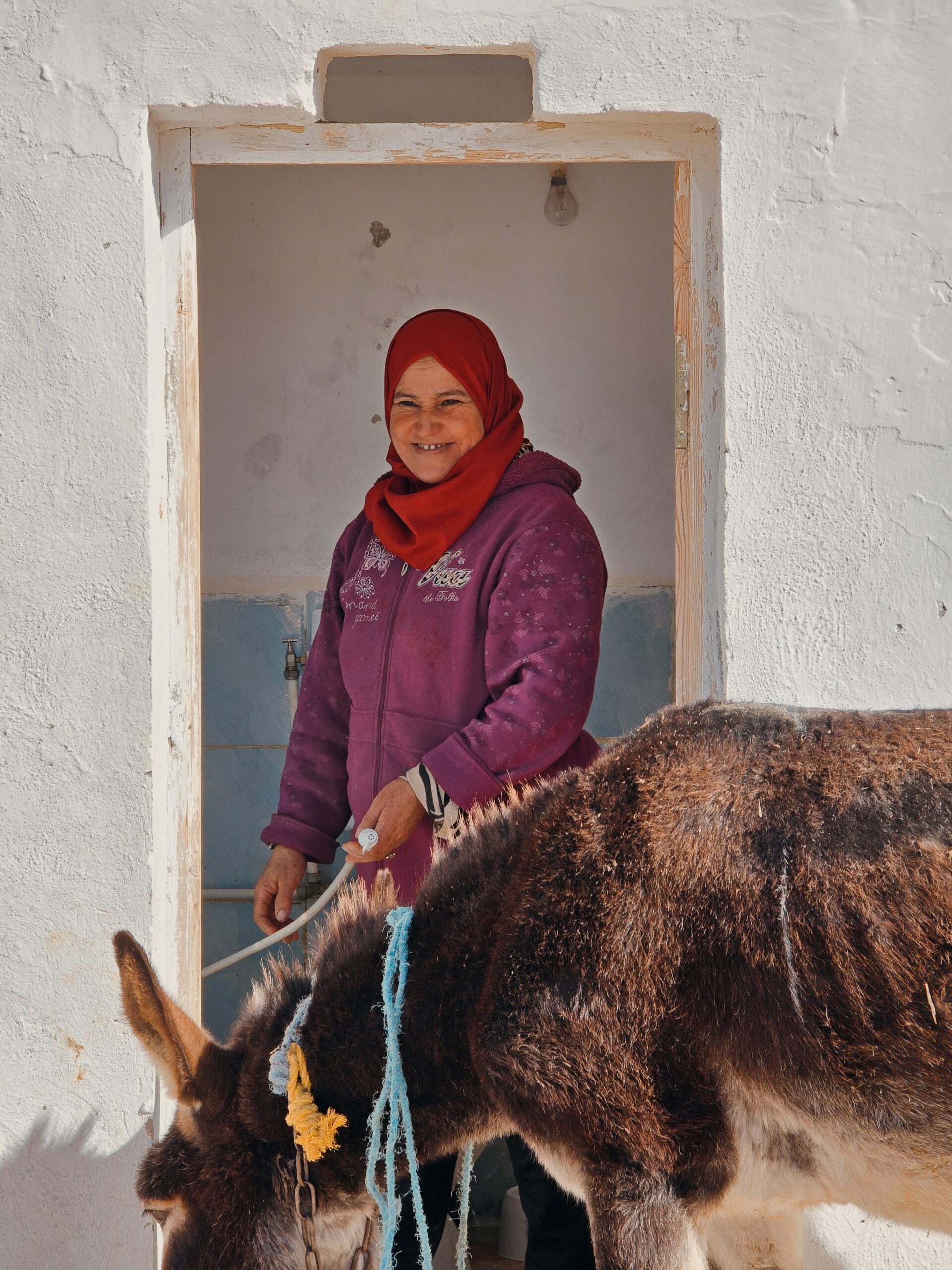
We encountered people doing their best to communicate with smiles and gestures, friendly and welcoming, posing for pictures while doing their daily chores. They even offered us tea and fresh bread with a dip made of oil and honey.
Walking through its circular courtyards and subterranean rooms, you’ll discover a place where tradition meets ingenuity, where the harsh Sahara climate is met with clever architecture.
This was not just another stop, its a place that really puts things into perspective. How people live a simpler life underground, kids enjoying each other’s company, women taking care of the house and the animals while the men are out to work. A fascinating stop in a world so different than ours, and still so captivating.