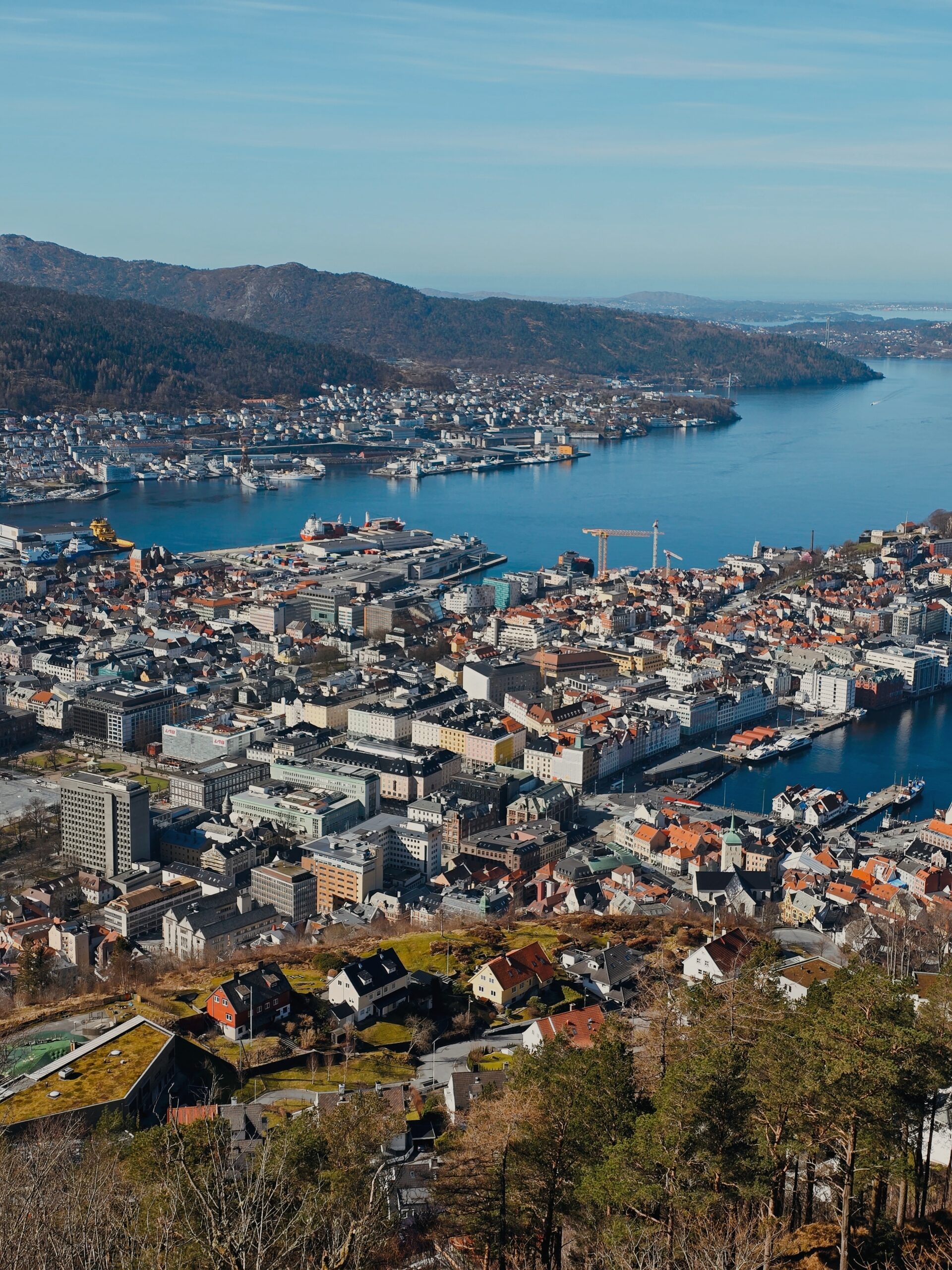
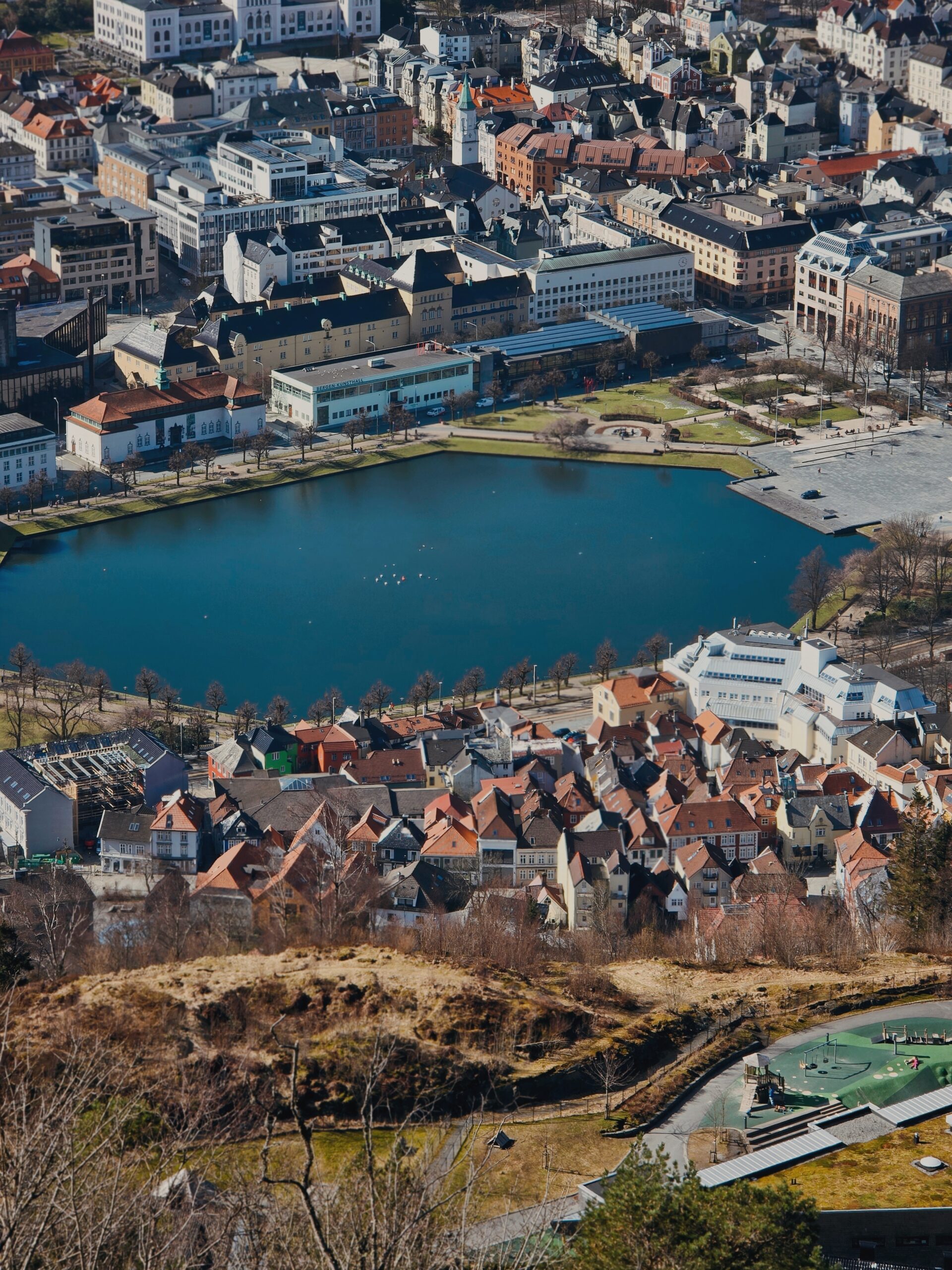
he «rain capital of Europe» surprised us in all the best ways. Nestled between the dramatic peaks of the «Seven Mountains» and the North Sea, Norway's second-largest city feels more like a quiet coastal city.
I went in with zero expectations, only targeting the fjords, but came home head over heels with Bergen.
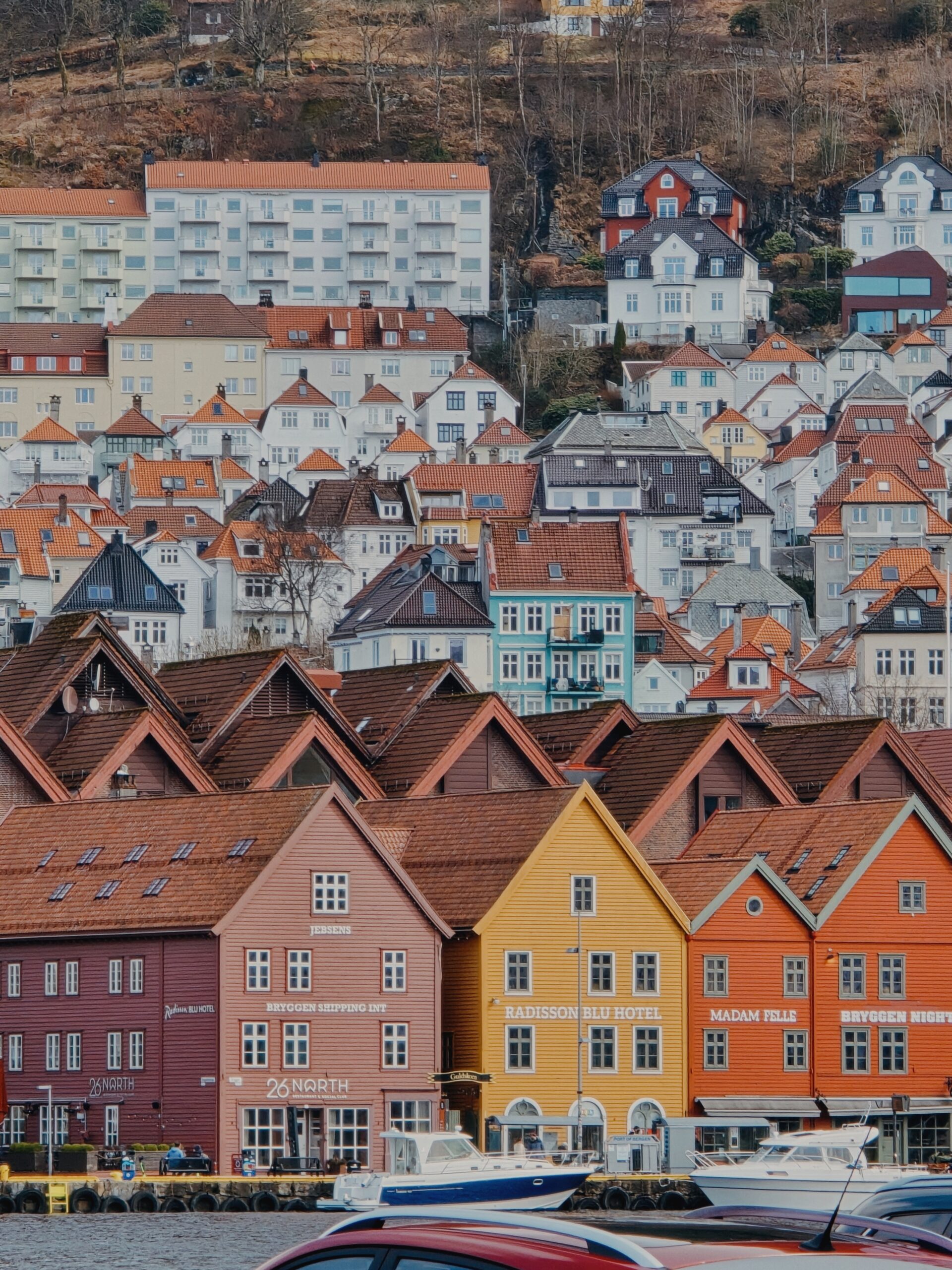
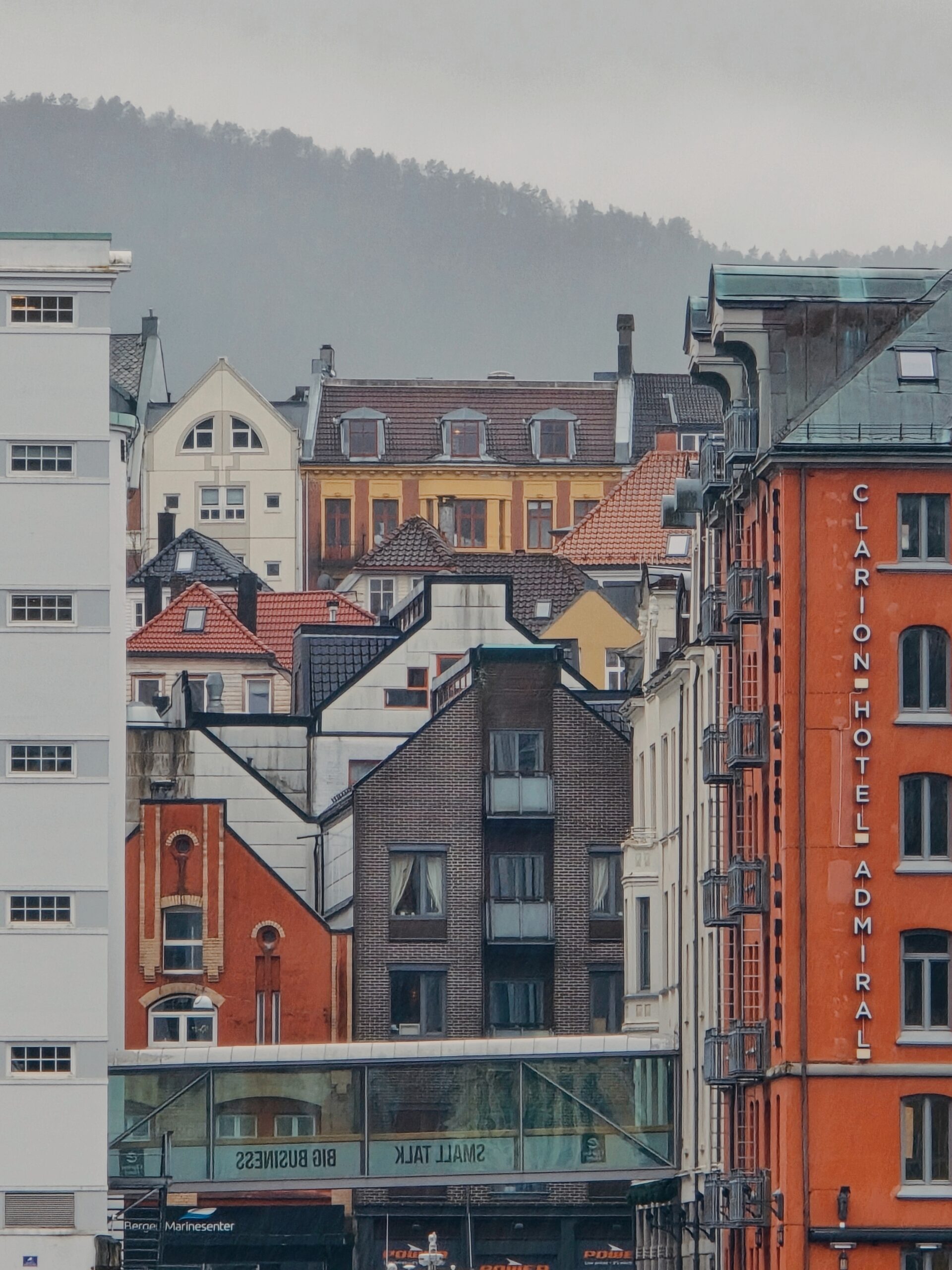
We arrived in Bergen in the early morning, just before people were starting to wake up for their Saturday. Even though we expected heavy rain, we only had some drizzles with a very short snowfall later in the day. Walking from the train station towards Bryggen, you walk around more modern buildings before the sight of the colorful wharf strikes you.
For starters, Bergen is the gateway to the fjords. This is how I ended up here and where you should go if you want to experience the cruise through the fjords like I did (see it here).
But, it’s a beautiful city on its own so you’d want to explore a bit.
Bryggen
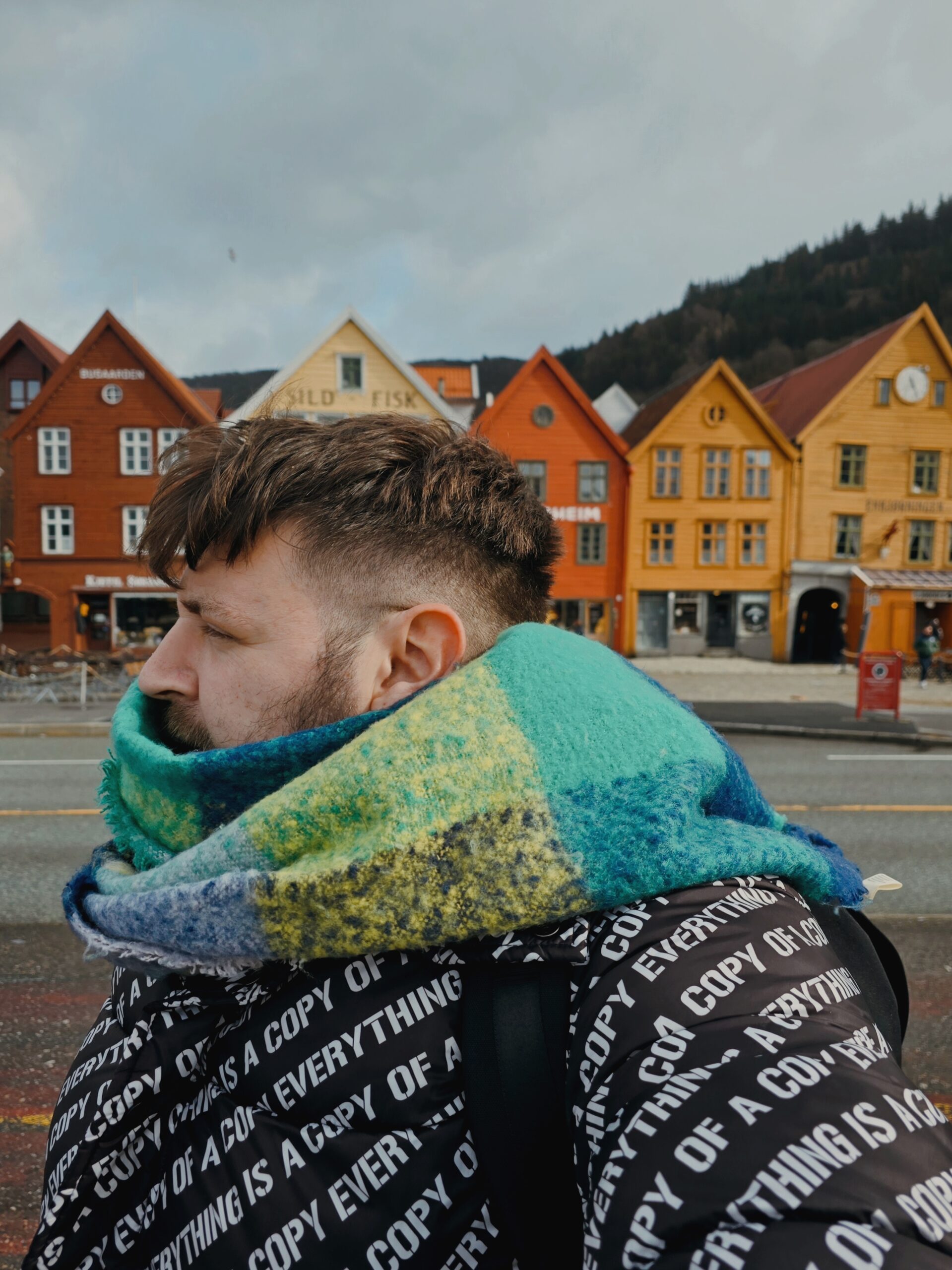
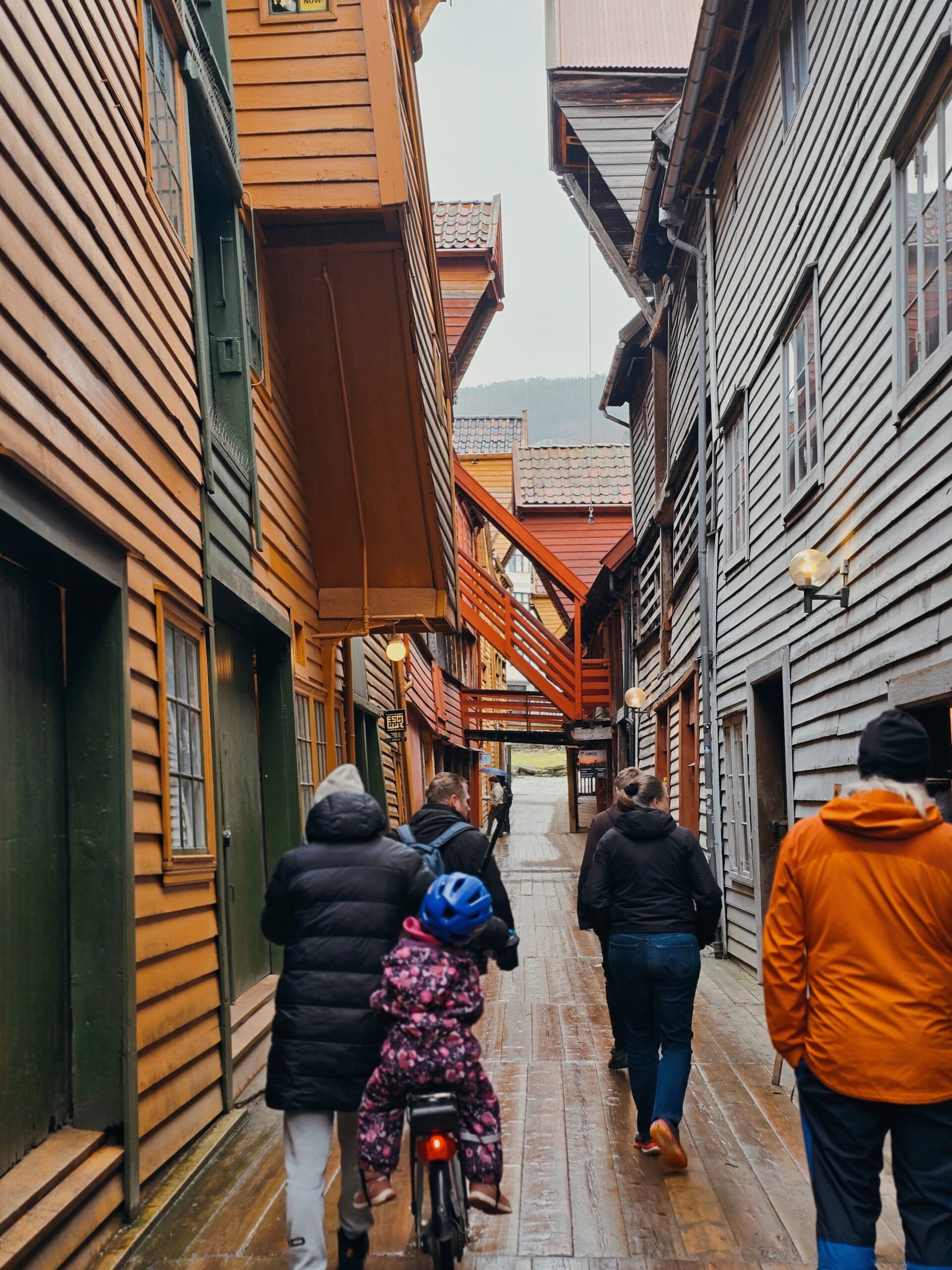
Bryggen, the historic harbor district of Bergen, feels like stepping into a living postcard with its rows of preserved wooden buildings dating back to the Hanseatic trading era. Today, many of the buildings have been restored and are used as shops, galleries and small restaurants. Bryggen is listed as a UNESCO World Heritage Site and is a central stop for visitors interested in Bergen’s history and architecture.
Fun fact: These wooden buildings look centuries old, but many of them have actually been rebuilt multiple times due to fires – the most recent major reconstruction followed a fire in 1955.
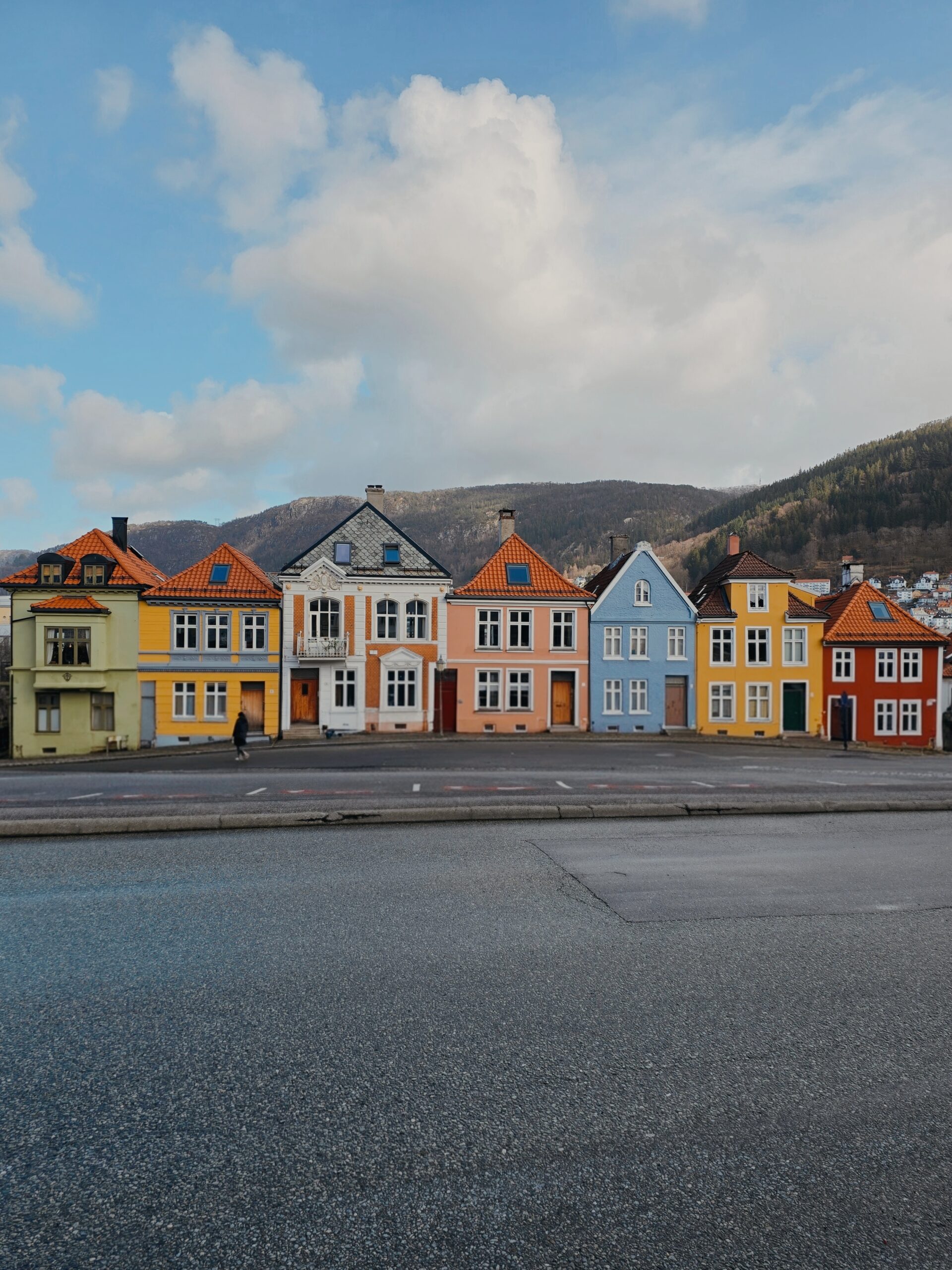
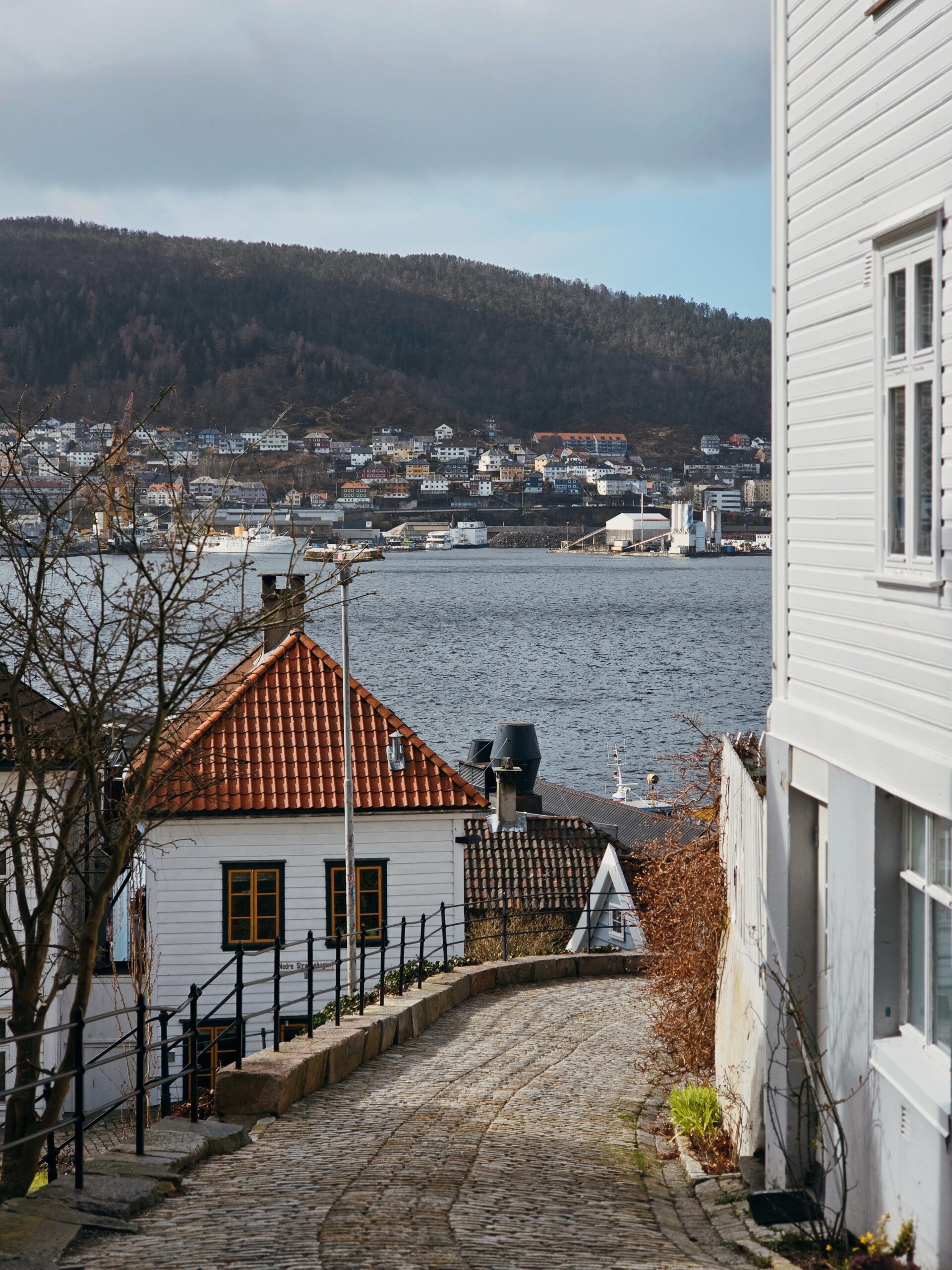
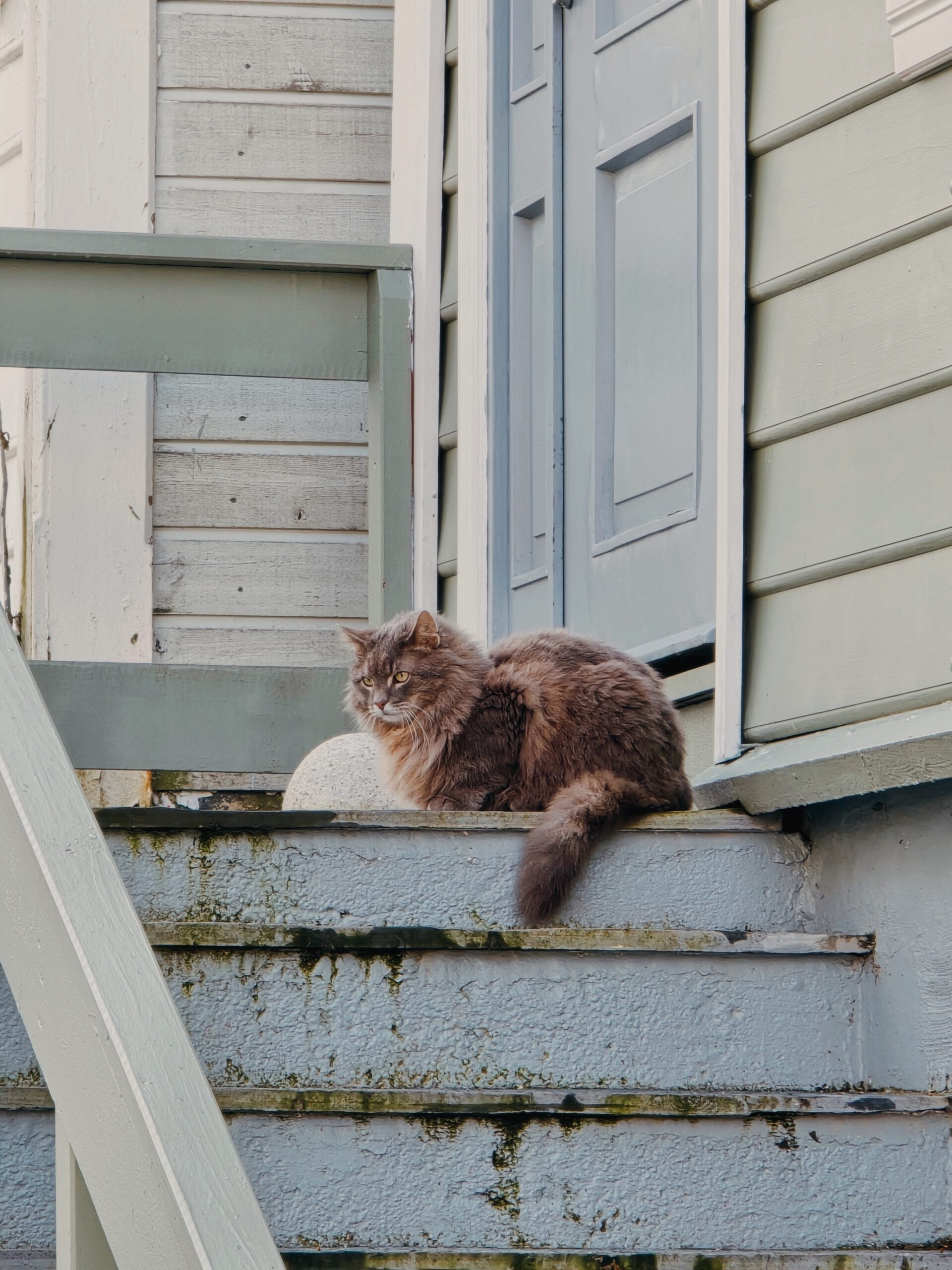
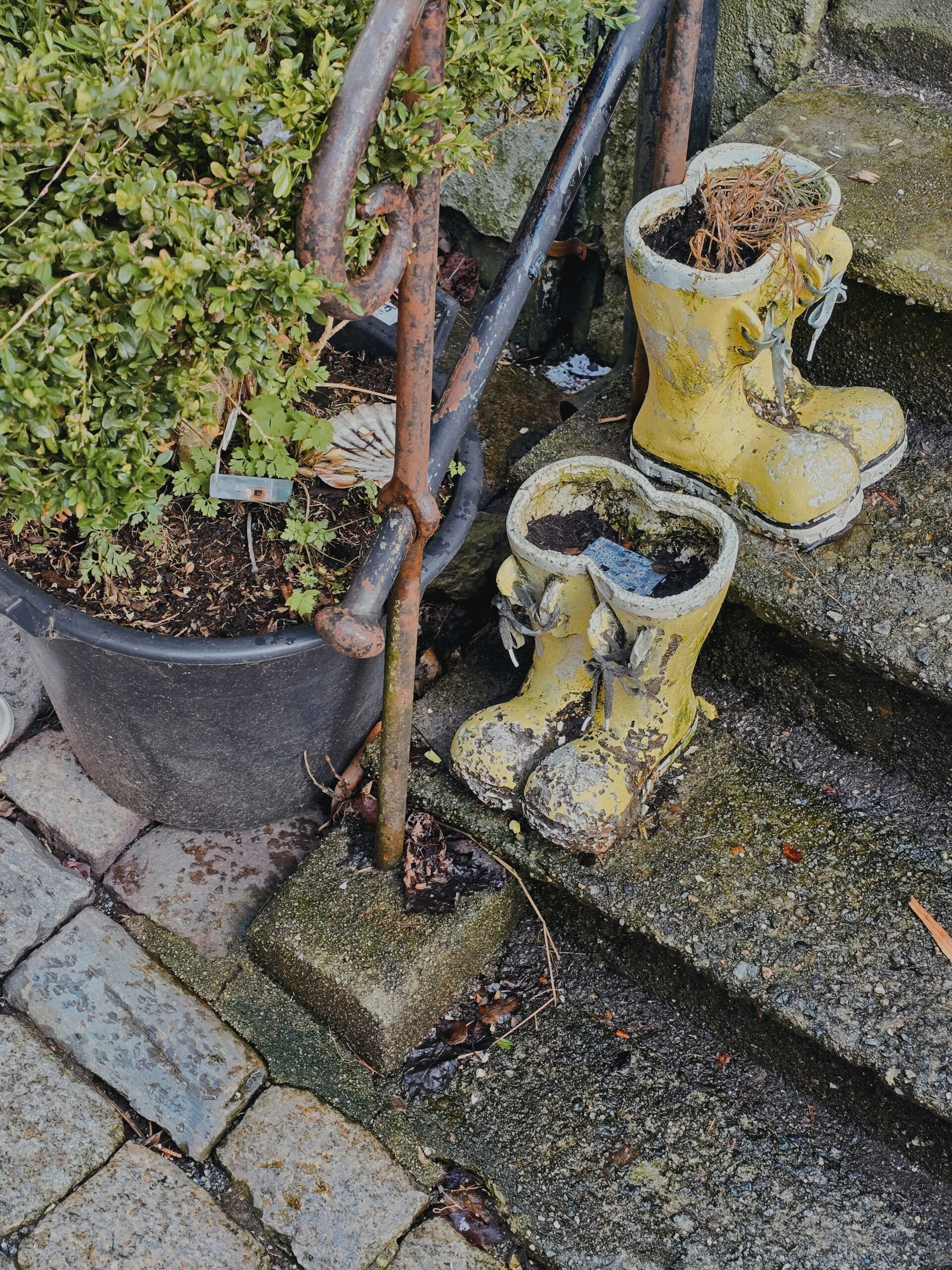
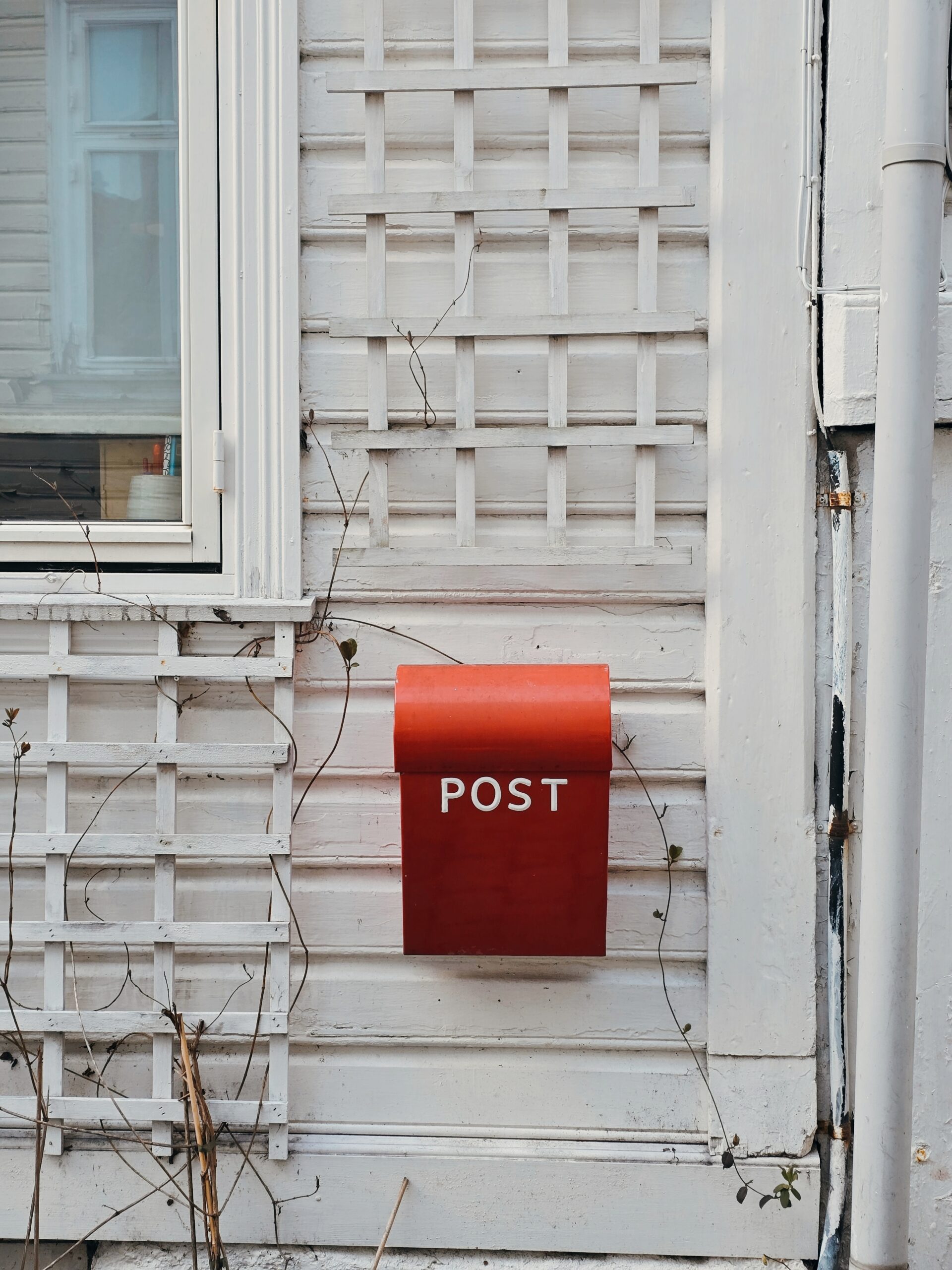
Strangehagen
Corps de Garde
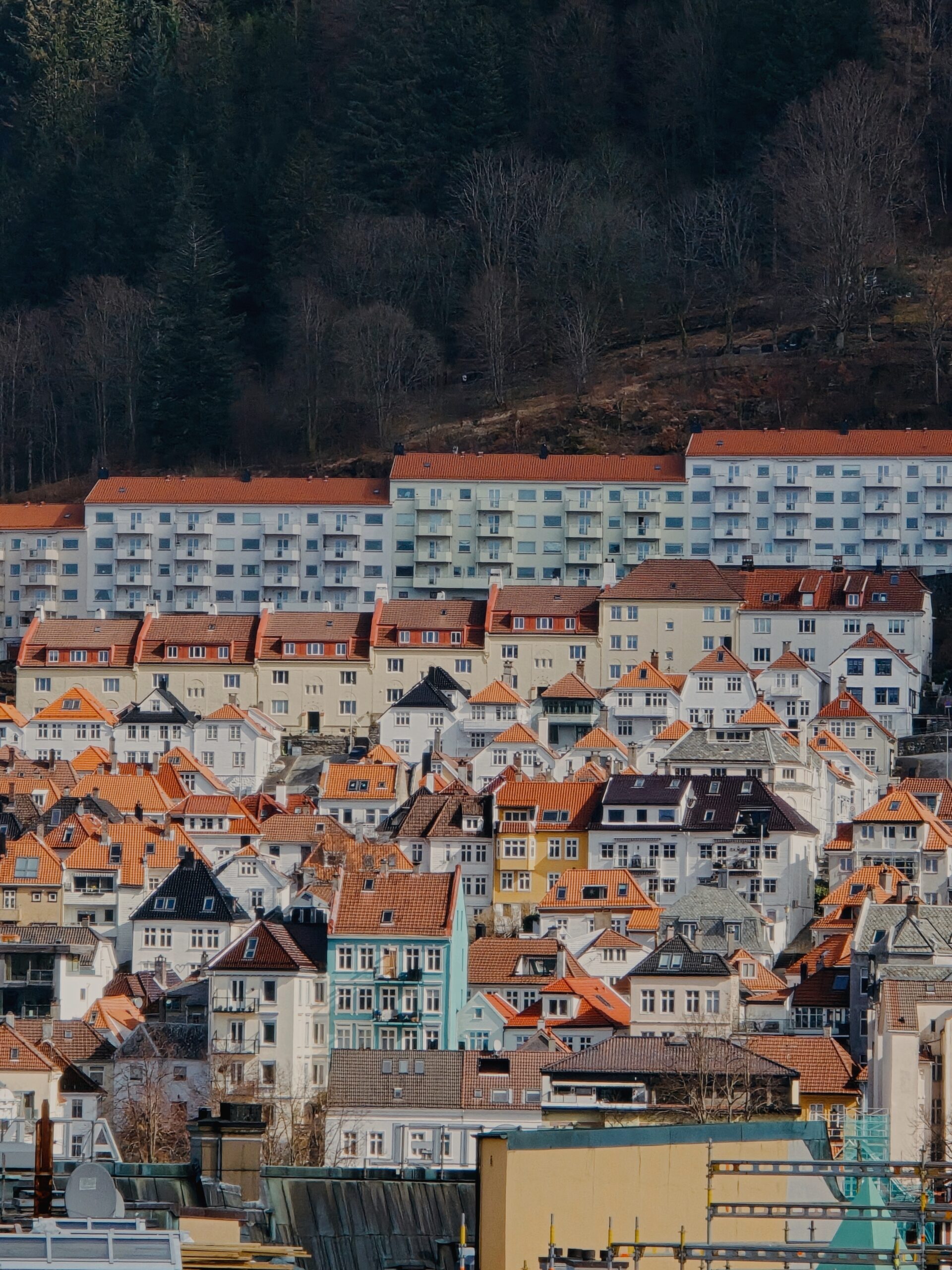
Find the hidden view point for this view
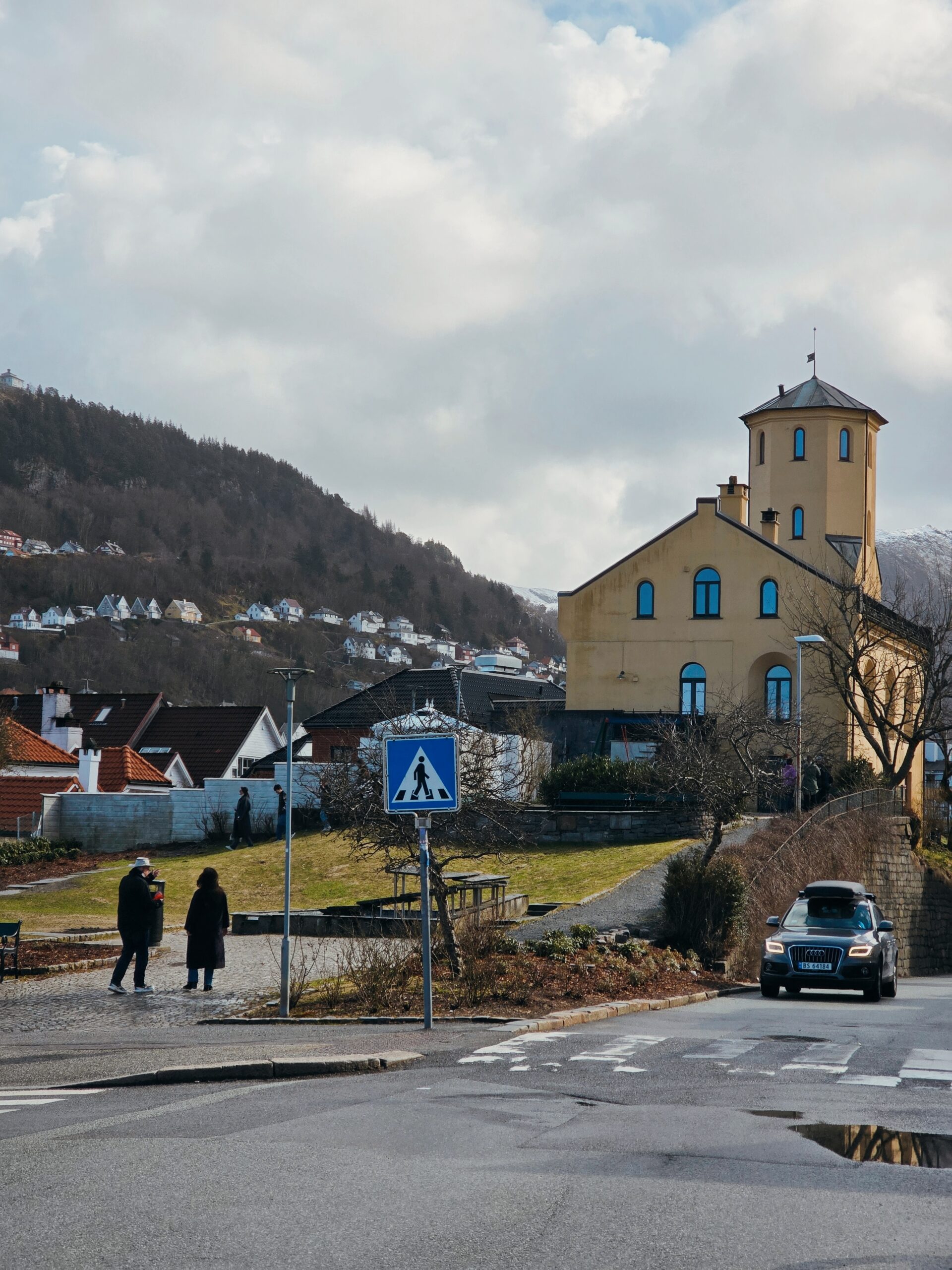
As soon as you finish the uphill from the center, you will a row of colorful houses and a yellow church-like building. That is Corps de Garde. The building was originally built as a guardhouse for the Citizens’ Armed Forces in 1794.
In 1868, the building became the base for Bergen’s first professional fire brigade. The building was rebuilt and the fire watch tower was erected in 1886-87. Over time, the tower was considered unsuitable and in 1904 it served as a watchtower for the last time.
If you follow the path to the side of Corps de Garde, you will find a ”hidden” opening between the roofs and the buildings, offering a stunning view of Bergen.
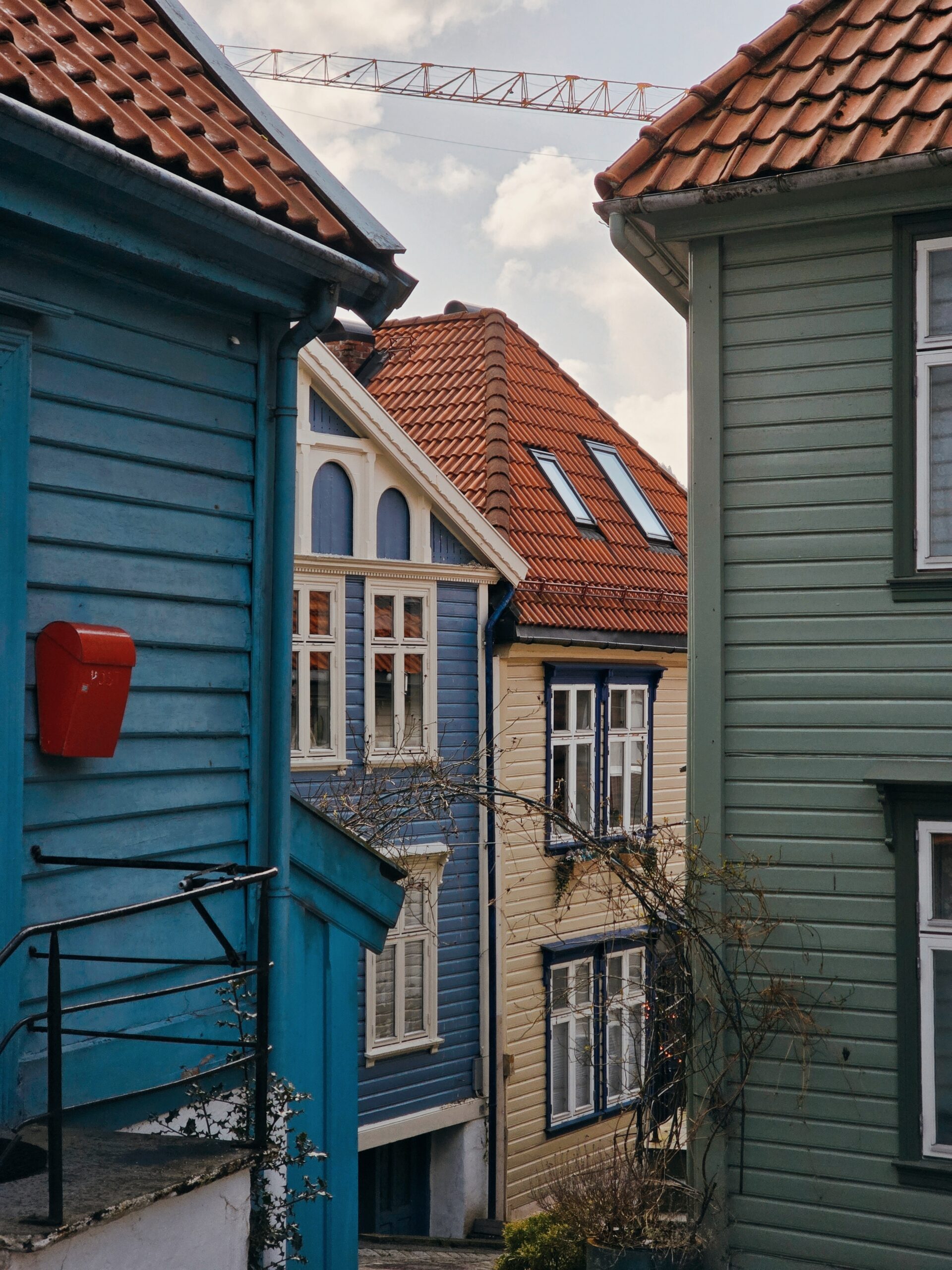
If you walk away from Corps de Garde, you will find the scenic neighborhood.
It’s known for its tightly packed wooden houses, narrow lanes, and slightly elevated position, which gives it a more secluded feel despite being close to central areas like Bryggen. The neighborhood developed in the 18th and 19th centuries and was traditionally home to working-class residents. It’s a 10 minute walk from the center, and its worth a visit if you have time to spare.
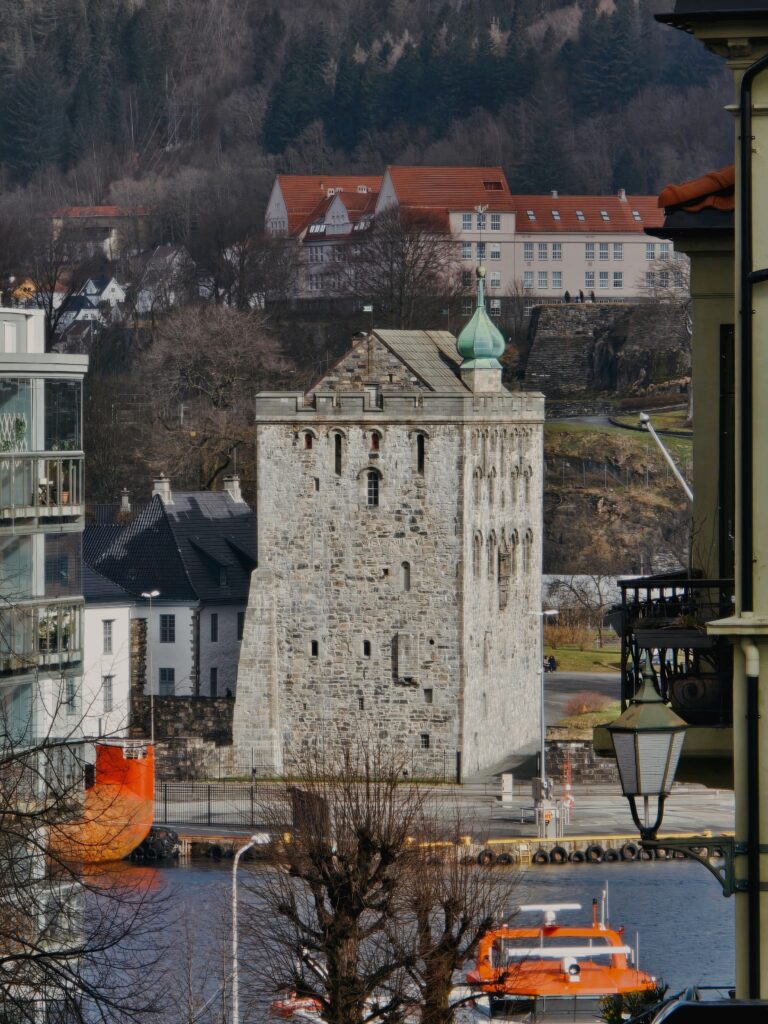
The Rosenkrantz Tower
Regarded as the most important Renaissance monument in Norway, the Rosenkrantz Tower was the residence of one of Norway’s most significant kings, Magnus the Lawmender, in the 13th century. Some sections of the tower date back to the 1270s and were constructed under Magnus the Lawmender Håkonsson. Over time, it was expanded multiple times, both for defensive purposes and to serve as administrative offices for Bergen’s governors.
Fløyen
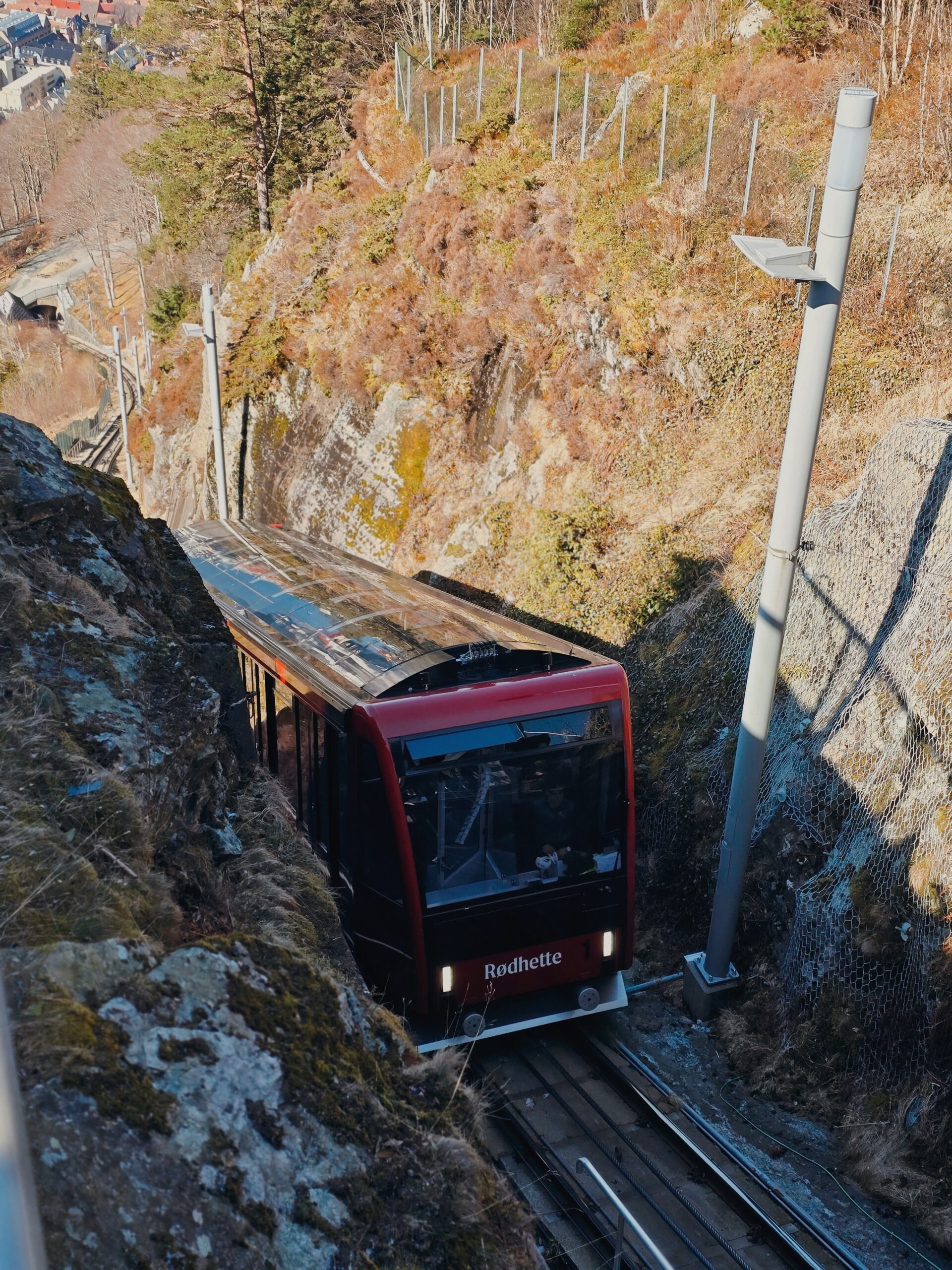
This is one of the most popular viewpoints in Bergen, located about 320 meters above sea level. It can be reached either by hiking up from the city center or by taking the Fløibanen funicular (145 NOK / €13 for a return ticket on low tourist season and 200–220 NOK / €19 on peak seasons), which runs regularly throughout the day.
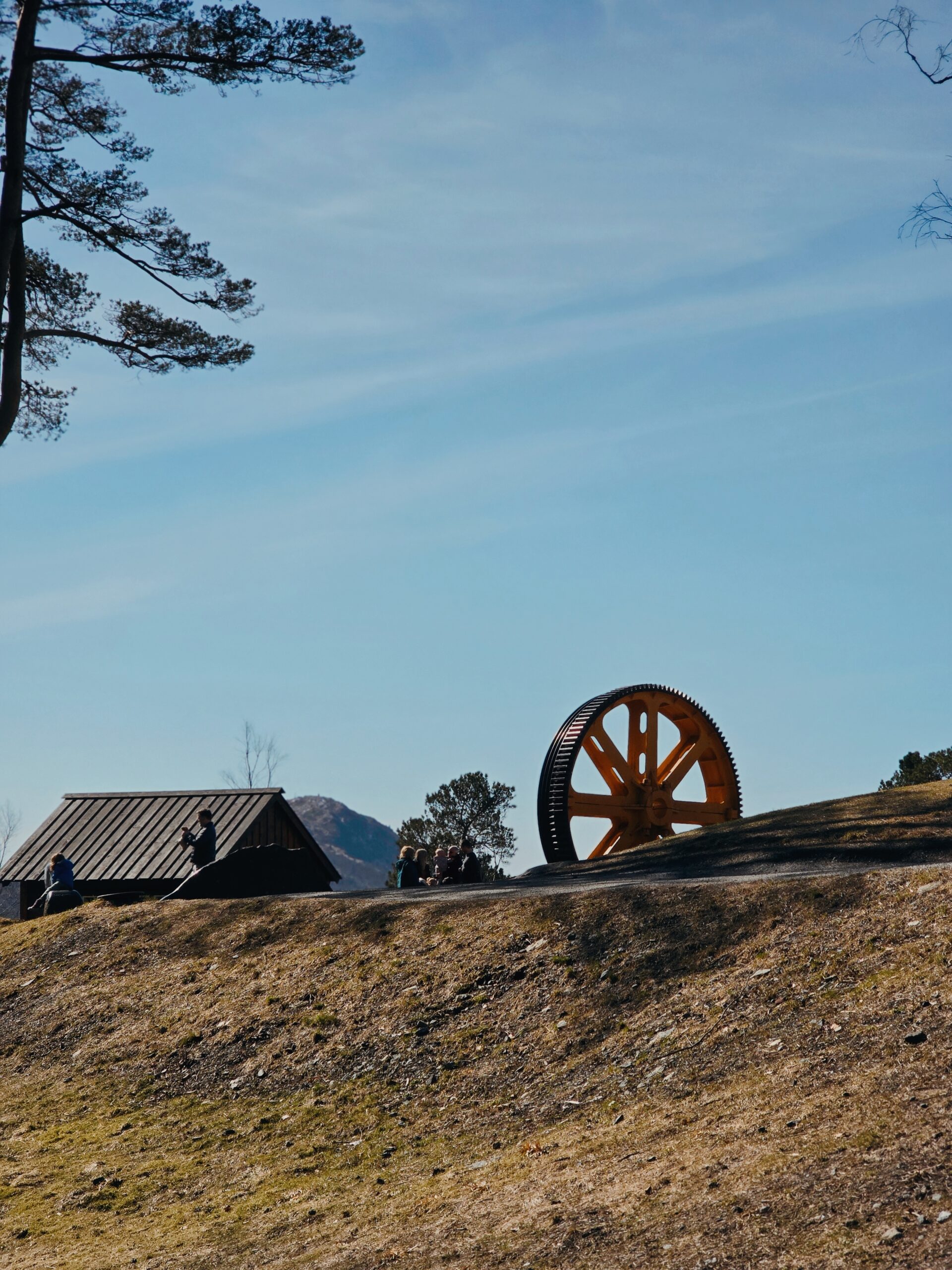
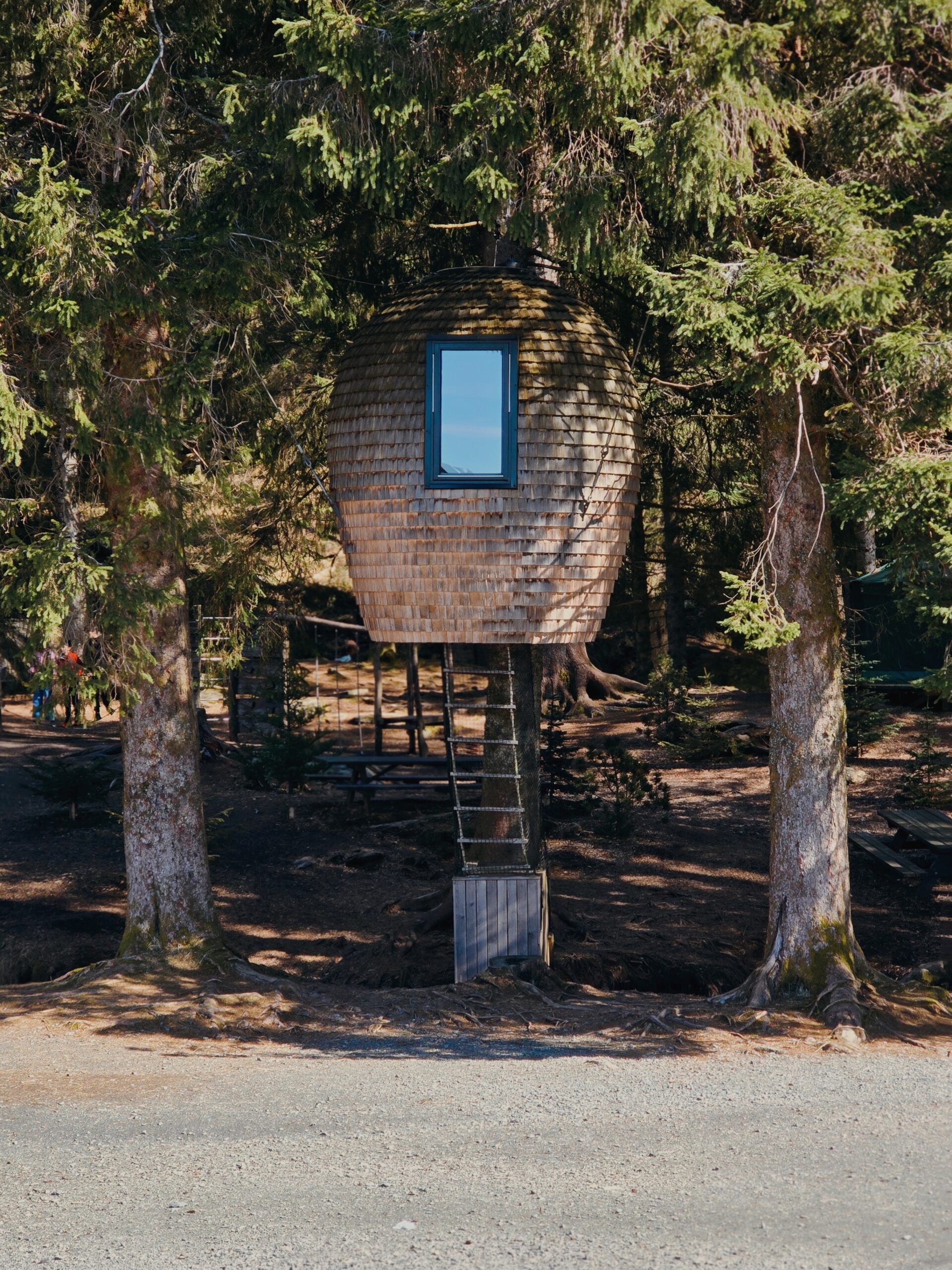
At the top, there is a viewing platform that offers wide views over Bergen’s harbor, surrounding mountains, and fjords. You can find a café, a restaurant, playgrounds and a shop.
Brown Cheese Waffle
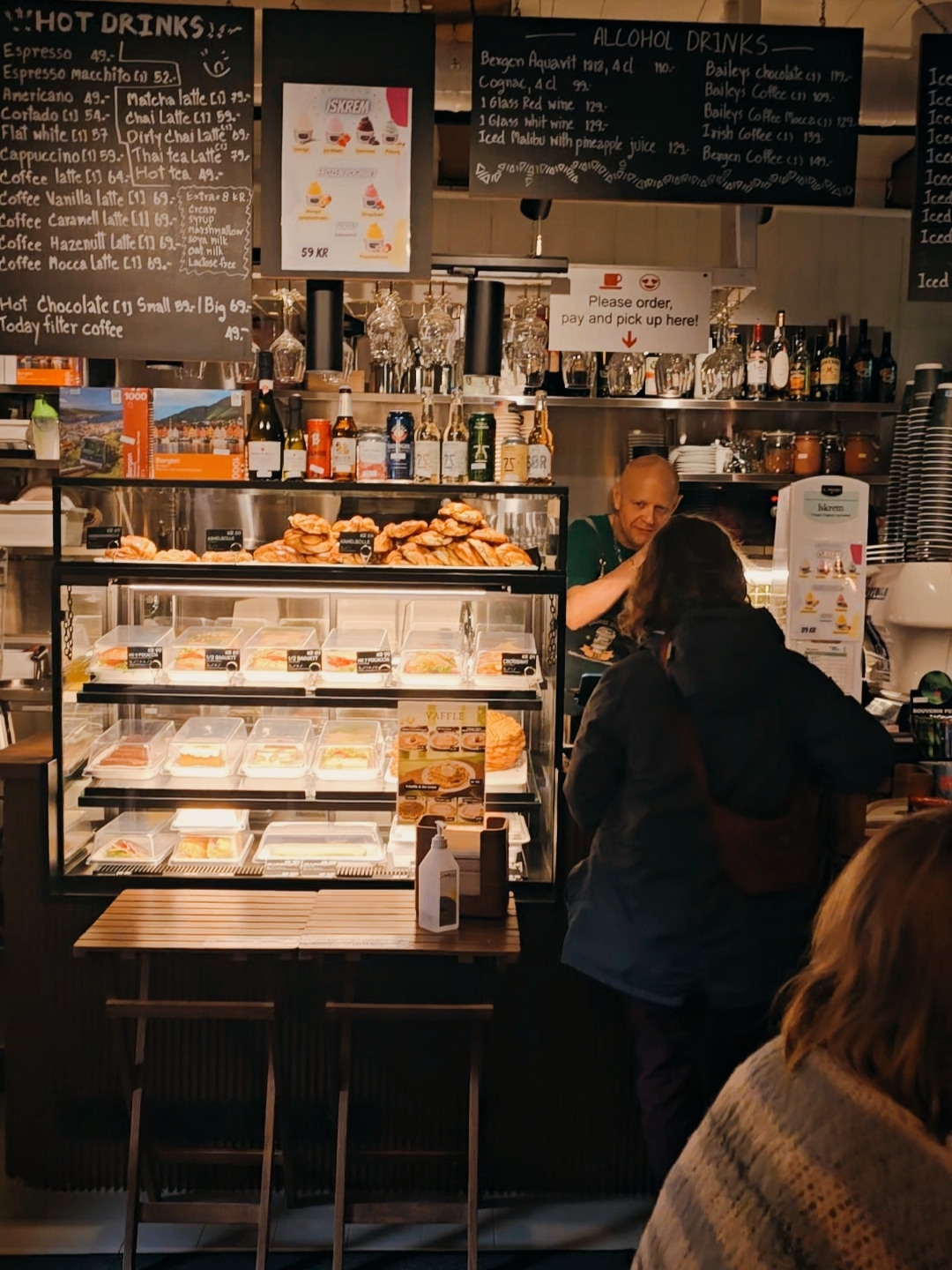
The cute Kaf Kafe
A must-try in Bergen!
A must-try! Brown cheese, or brunost, is a traditional Norwegian cheese made by slowly heating whey until the natural sugars caramelize, giving it a distinctive brown color and a sweet, slightly fudge-like taste. It is commonly eaten in thin slices, often placed on bread or crispbread, and is especially popular for breakfast or snacks.
We tried it on a waffle, in Kaf Kafe, with strawberry jam and it was truly, unexpectedly delicious.
Skillingsboller
A traditional sweet pastry from Bergen, similar to cinnamon buns but typically simpler in form and preparation. They are made from a soft yeast dough rolled with butter, sugar, and cinnamon, then baked until golden and often finished with a light glaze or a sprinkle of sugar. The name comes from the old word “skilling,” a small coin, because the pastry was once an inexpensive everyday treat.
Try it with a soft serve, it’s not as sweet as you may think, but it truly is addictive.
Also...
Bergen may not be full of activities but it really is the town that makes you want to walk around and explore. The feeling it evokes is beautiful and relaxed. On the warmer months, there’s an Open Air Museum recreating life and habits of older years which would have been high on my itinerary if it was open when I visited.
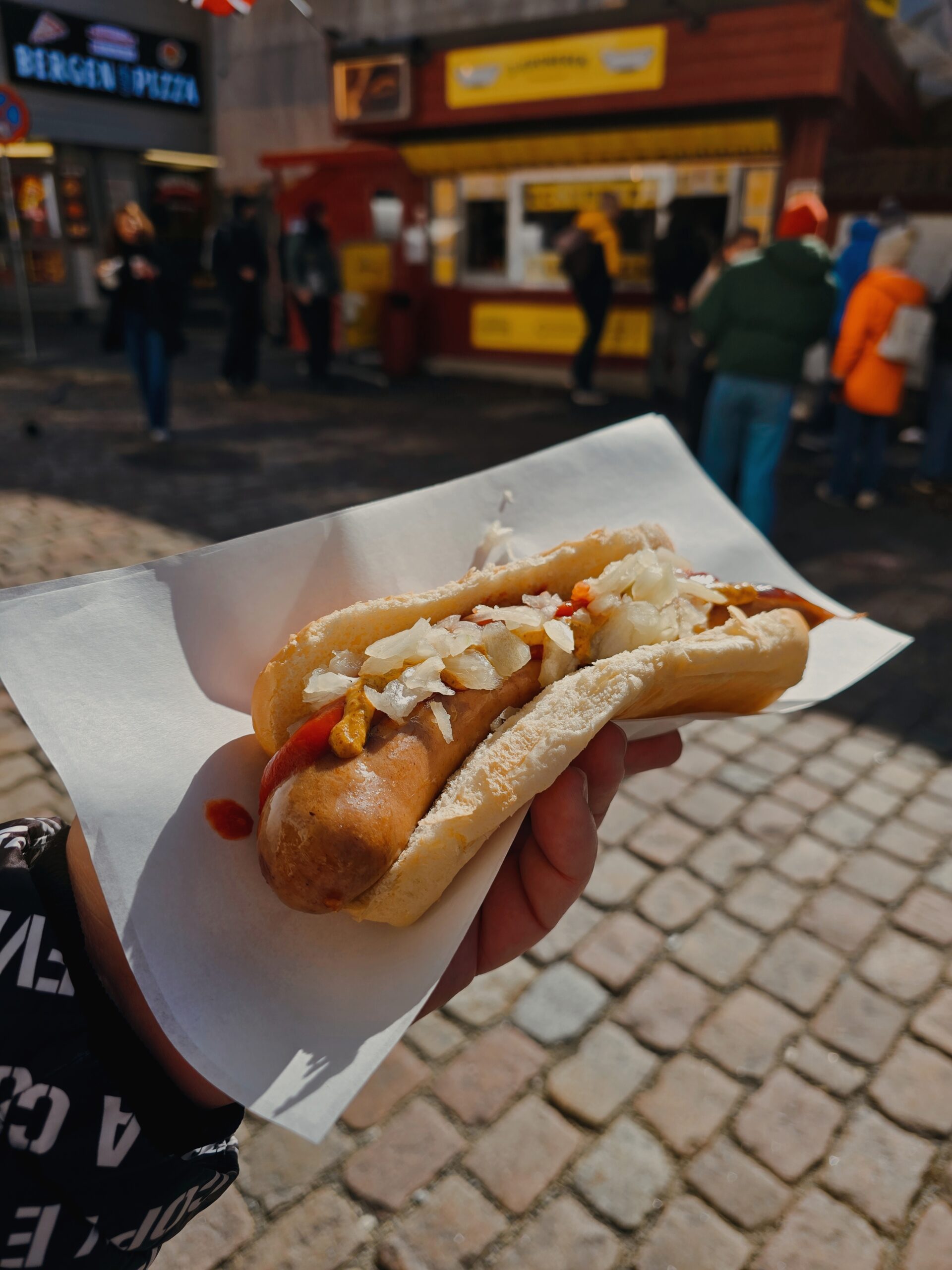
There’s also the famous hot dog stand, Trekroneren, with «the best hot dog in the world». Honestly, a delicious hot dog but maybe not the best in the world. It’s definitely worth a try.
If you walk around Bryggen you will discover cute little shops hidden in alleys, with more crafts and arts by locals instead of the tourist stuff you will find on the wharf. You will also see a plethora of trolls in shops. This is anything but random.
In Norwegian folklore, trolls are mythical creatures that are deeply tied to the landscape and traditional storytelling. In areas around Bergen and the wider fjord region, trolls are a common part of cultural identity and tourism, appearing in souvenirs, sculptures, and guided stories that connect them to dramatic natural features like cliffs and valleys. While they are not part of modern belief, trolls remain an important symbol in Norwegian folklore, representing the mystery and power of nature.
Last, but certainly not least, you’ll want to try some local snacks and that means giving Smash a try. I’m letting you know that you can also find these on the airport and you can, in fact, travel with six packs in your big jacket’s pockets.
Bergen leaves an impression of a city shaped by both its geography and its history. Surrounded by mountains and fjords, it feels slightly enclosed yet open to the sea, with neighborhoods like Bryggen and Strangehagen reflecting its wooden architectural heritage and trading past.
As a travel destination, it balances history, local character, and easy access to nature in a way that feels cohesive rather than fragmented, making it a place that is easy to explore but hard to fully leave behind. I went in with zero expectations, only targeting the fjords, but came home head over heels with Bergen.