Everything you need to know before riding the Flåm Railway
T
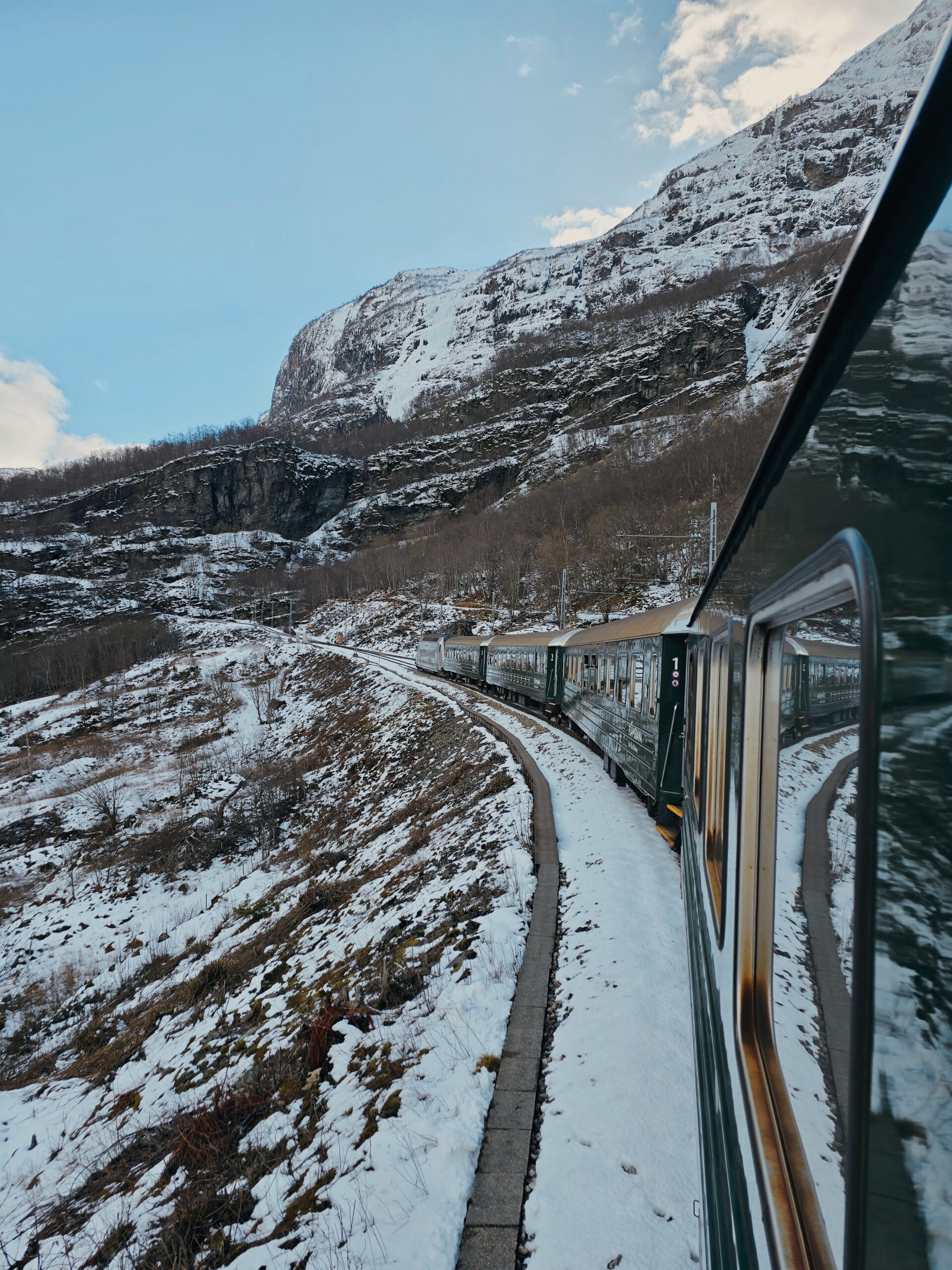
he Flåm Railway (Flåmsbana) is the heavy hitter of Norwegian tourism for a reason. It’s consistently ranked as one of the most beautiful train journeys in the world, and after spending an hour pressed against the window, I can tell you the hype is real.
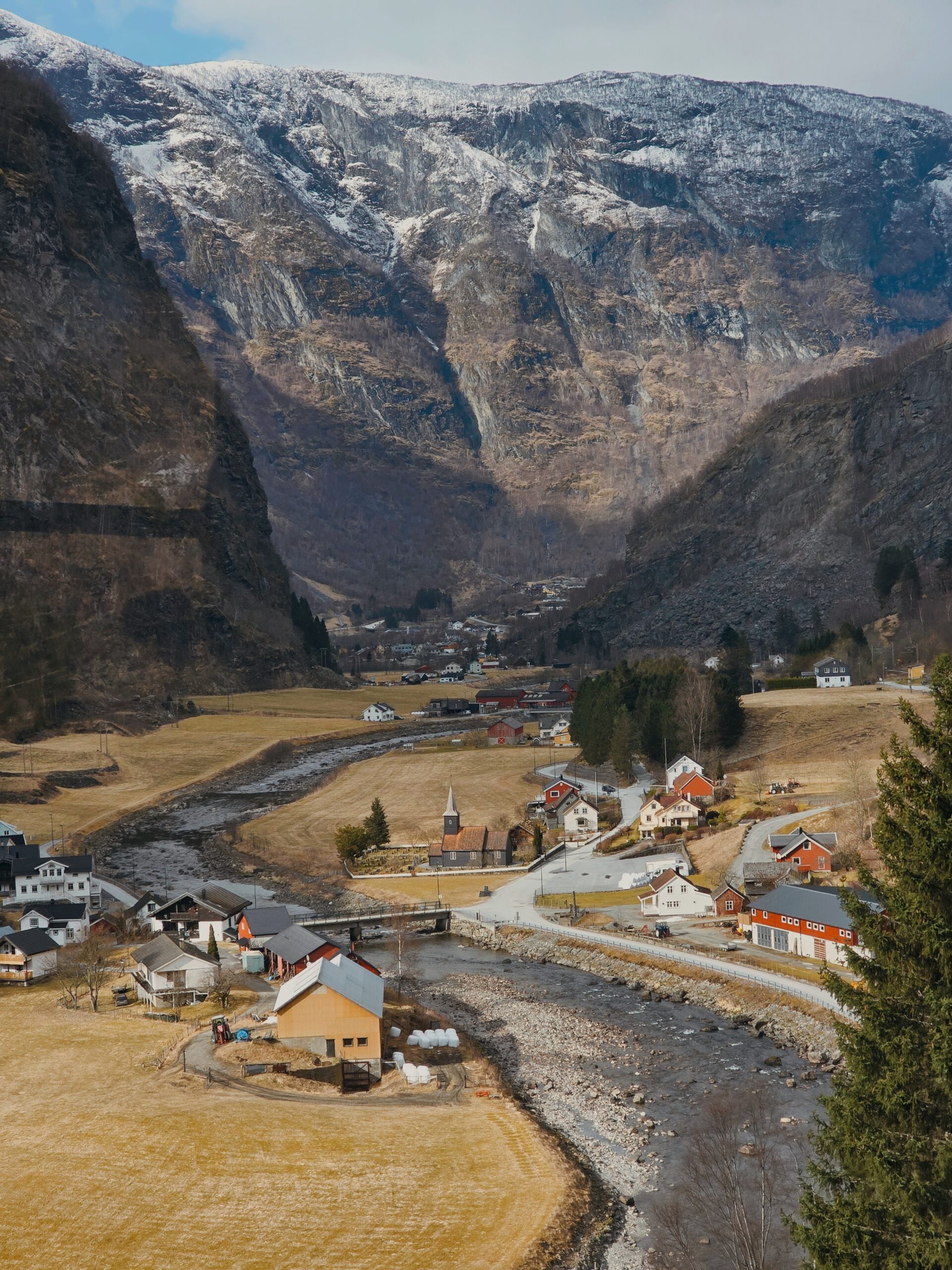
When you think of Norway, this is the scenery that comes to mind, and it doesn't disappoint.
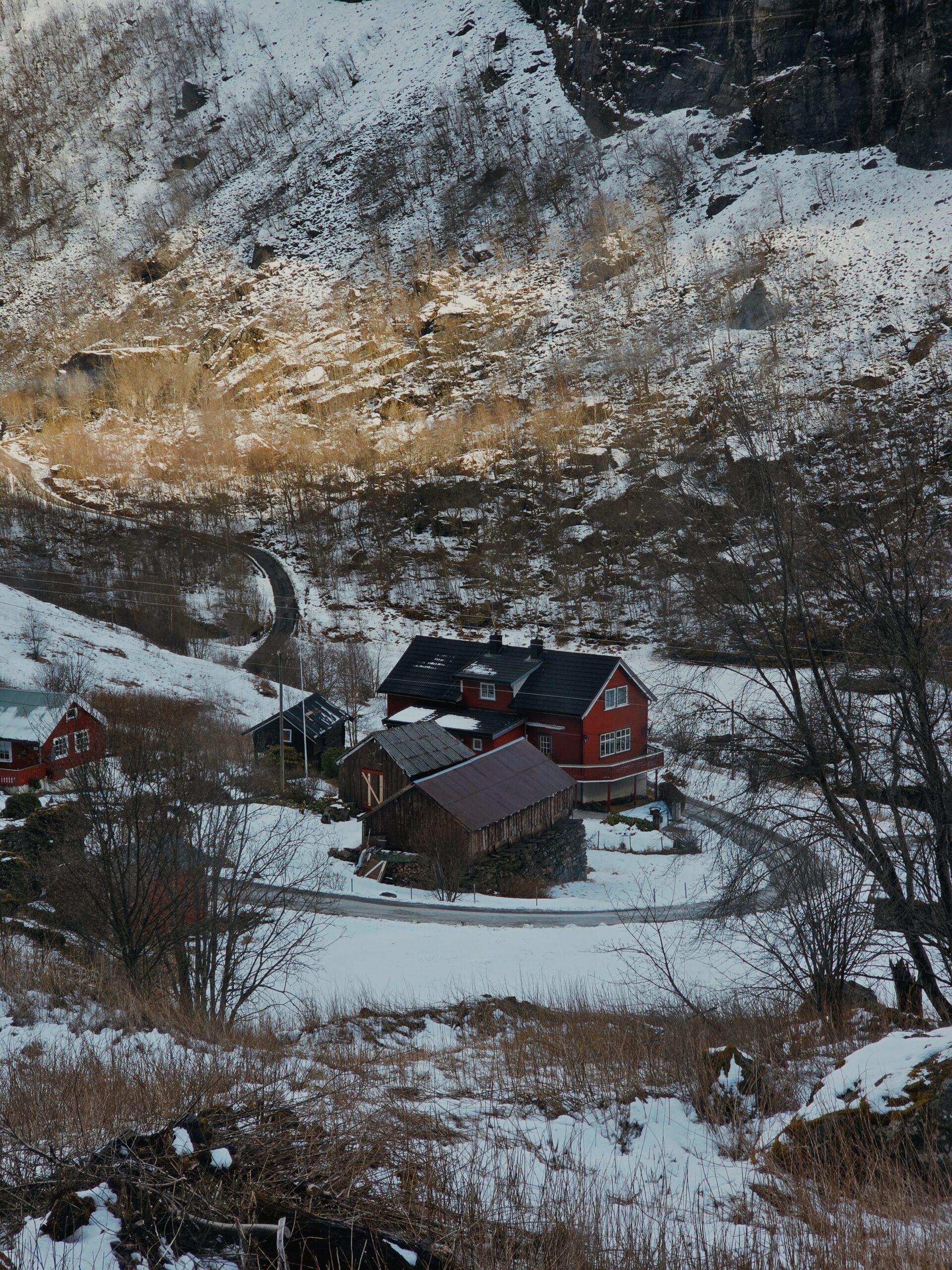
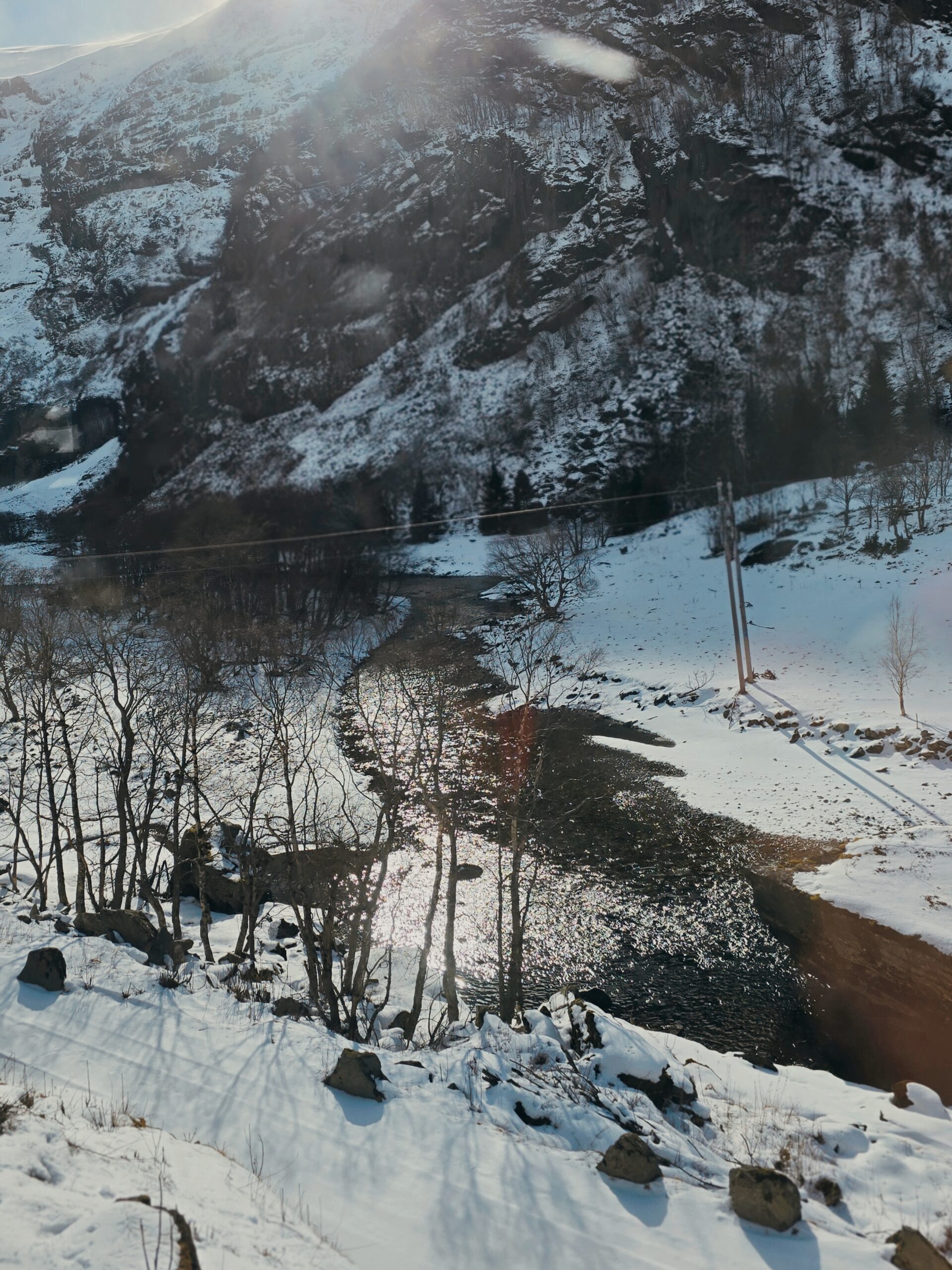
However, I can also tell you choose to visit during late-Spring or summer. Almost everything was covered in snow and while the scenery truly is beautiful, I can only imagine how it looks when the snow melts.
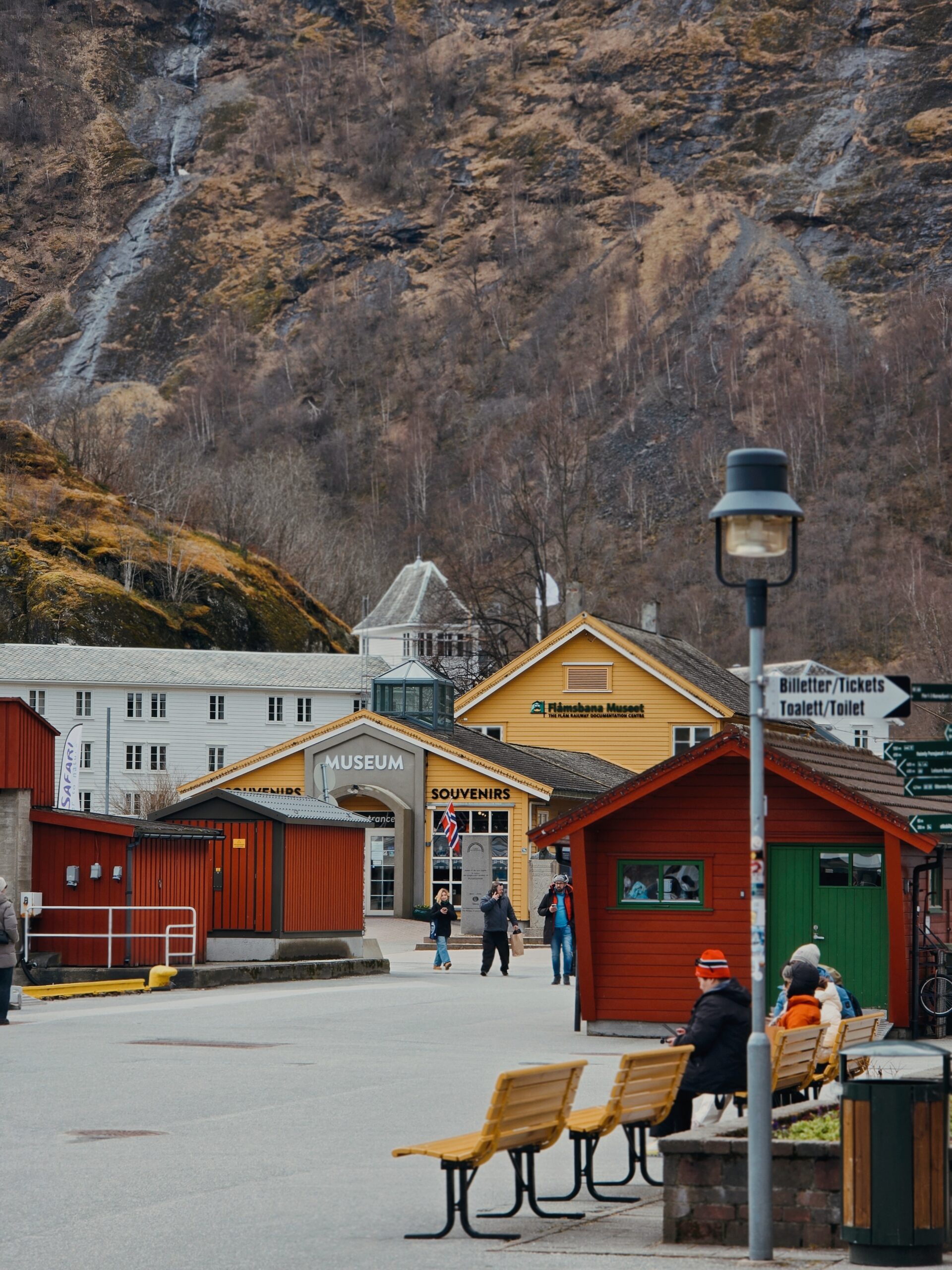
Let’s start from Flåm though! Its name literally translates to “plain” or “flat land” in Old Norse and its nestled at the innermost point of the Aurlandsfjord. It’s a tiny village that makes a big impression.
Historically, Flåm was a quiet farming community, but everything changed in the early 20th century with the arrival of cruise ships and the monumental engineering feat of the Flåm Railway, which took 20 years to build.
While Flåm only has about 400 permanent residents, it hosts nearly half a million visitors every year!
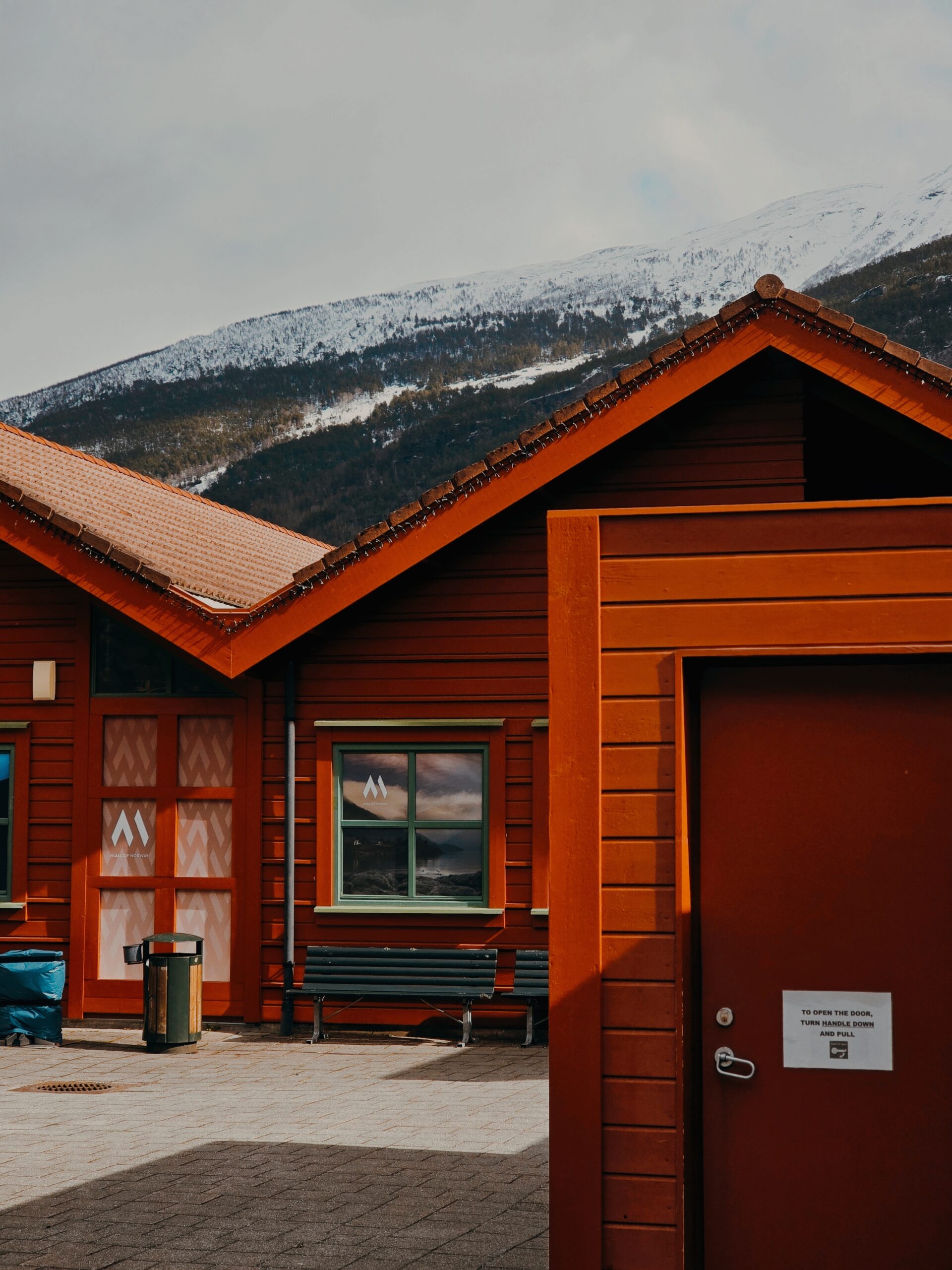
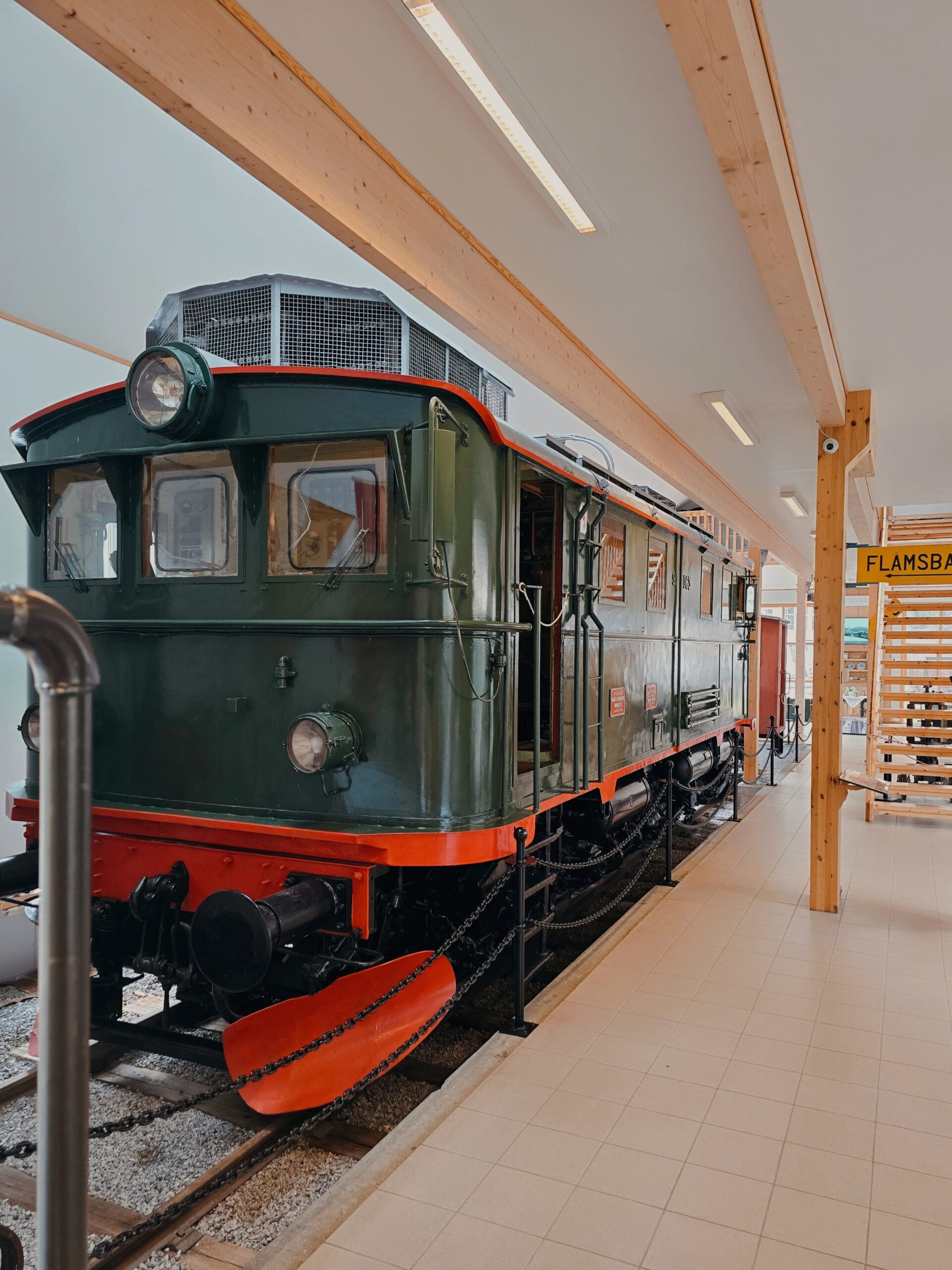
If you have some time to spare between the ferry and the train, walk around. It has shops, cafes, a bakery and a free museum that takes you back to the train’s history (including the old train, standing outside)!
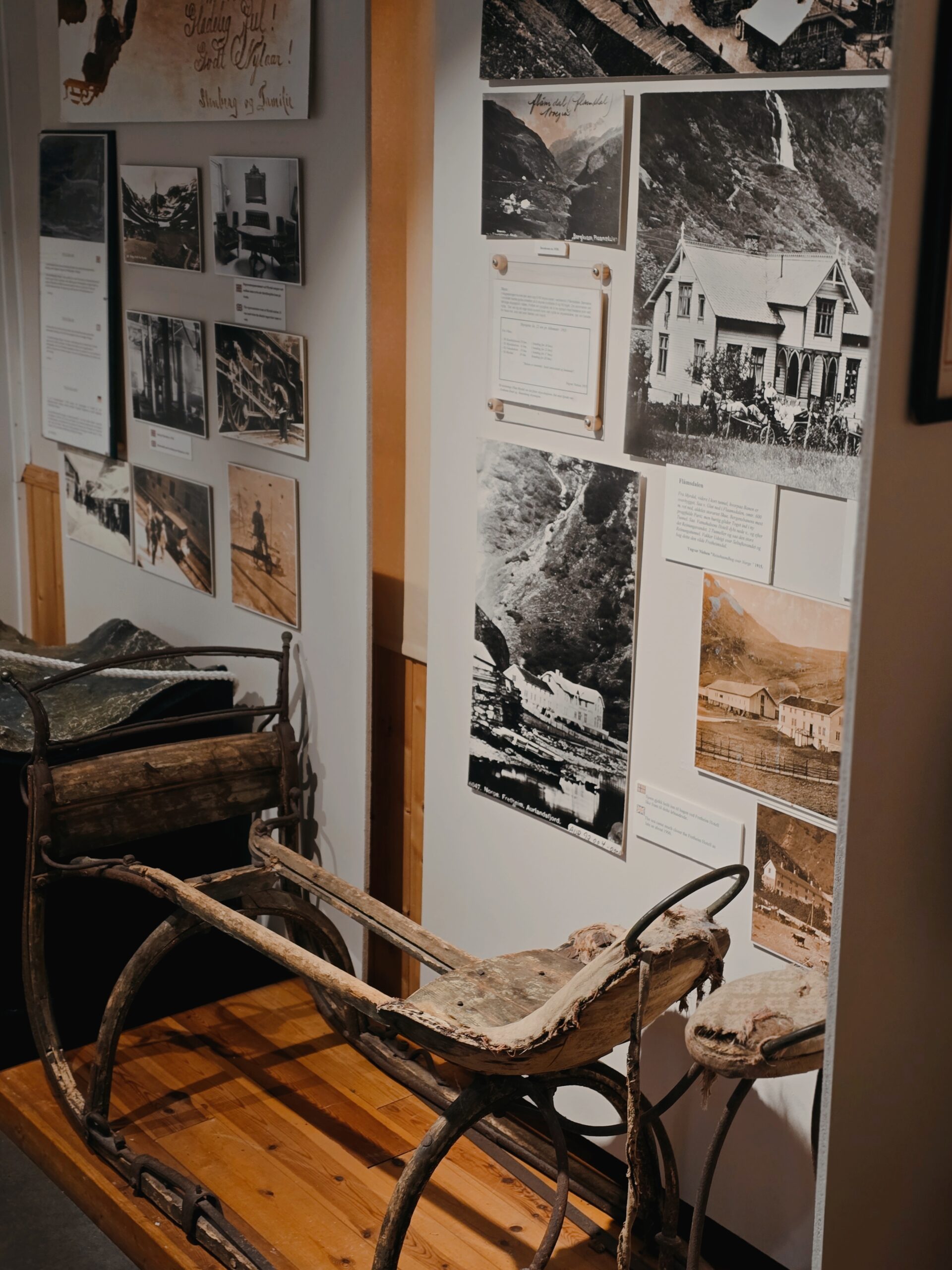
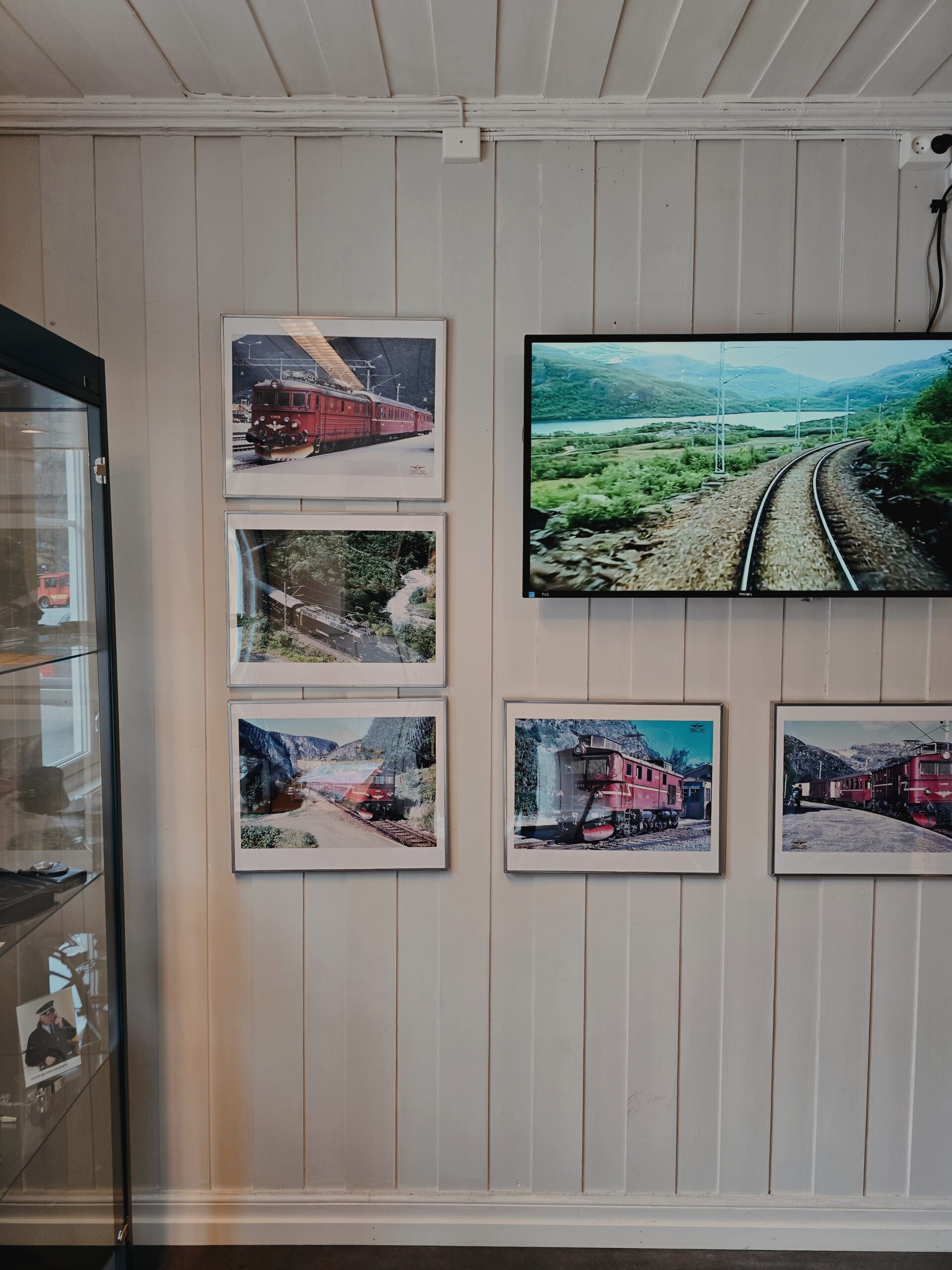
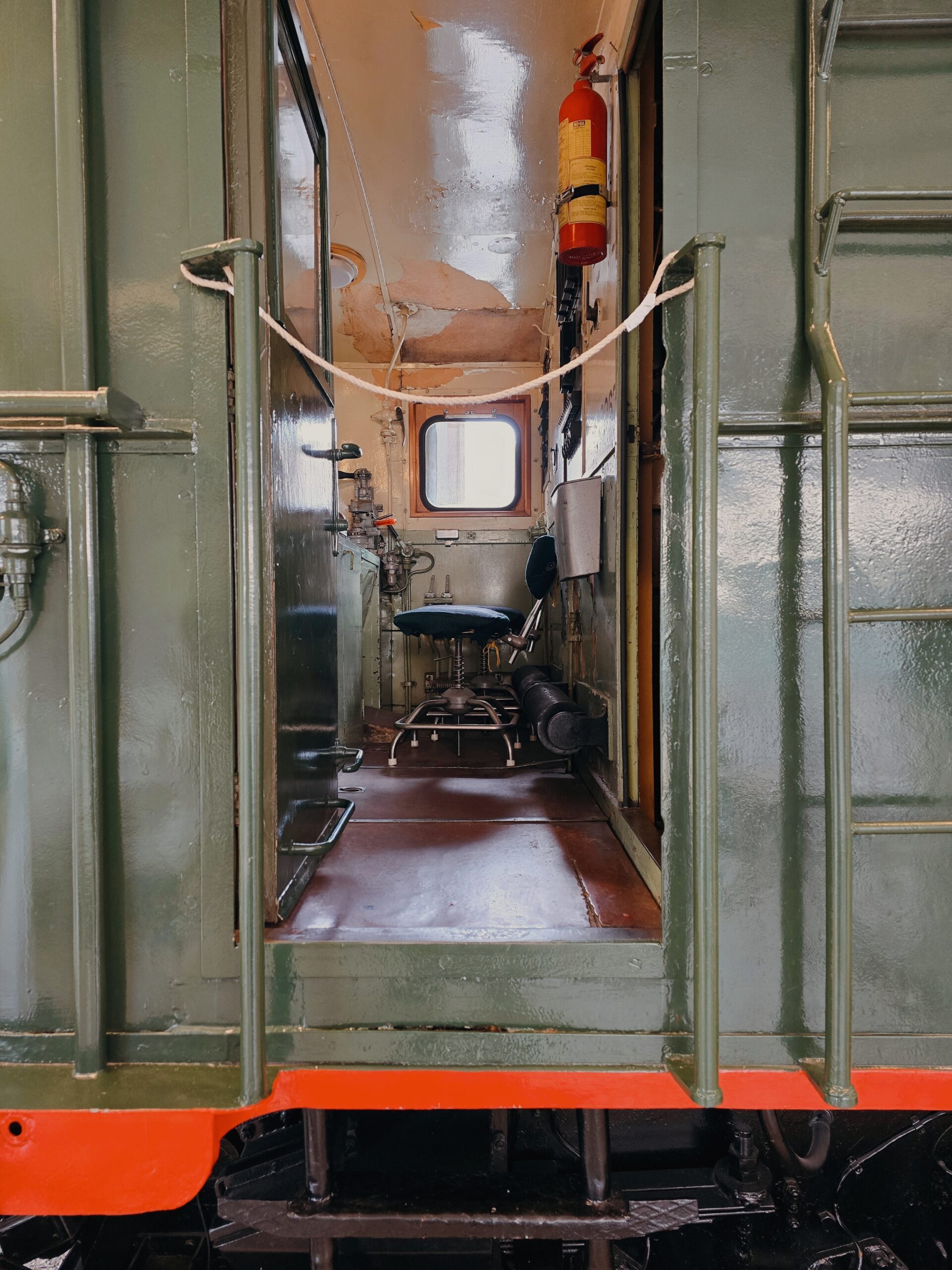
The museum showcases an impressive collection of artifacts, including one of the original electric locomotives (El 9), old railcars, and the specialized tools used by the “navvies” who hand-dug many of the tunnels. Detailed displays and photographs document the 20-year construction process, highlighting the technical challenges of navigating the steep Flåm Valley.
Its shop is also unique. Since the ticket we booked was digital, the shop has some printed, old-style tickets if you want to buy for a very (very) low price as a nice souvenir.
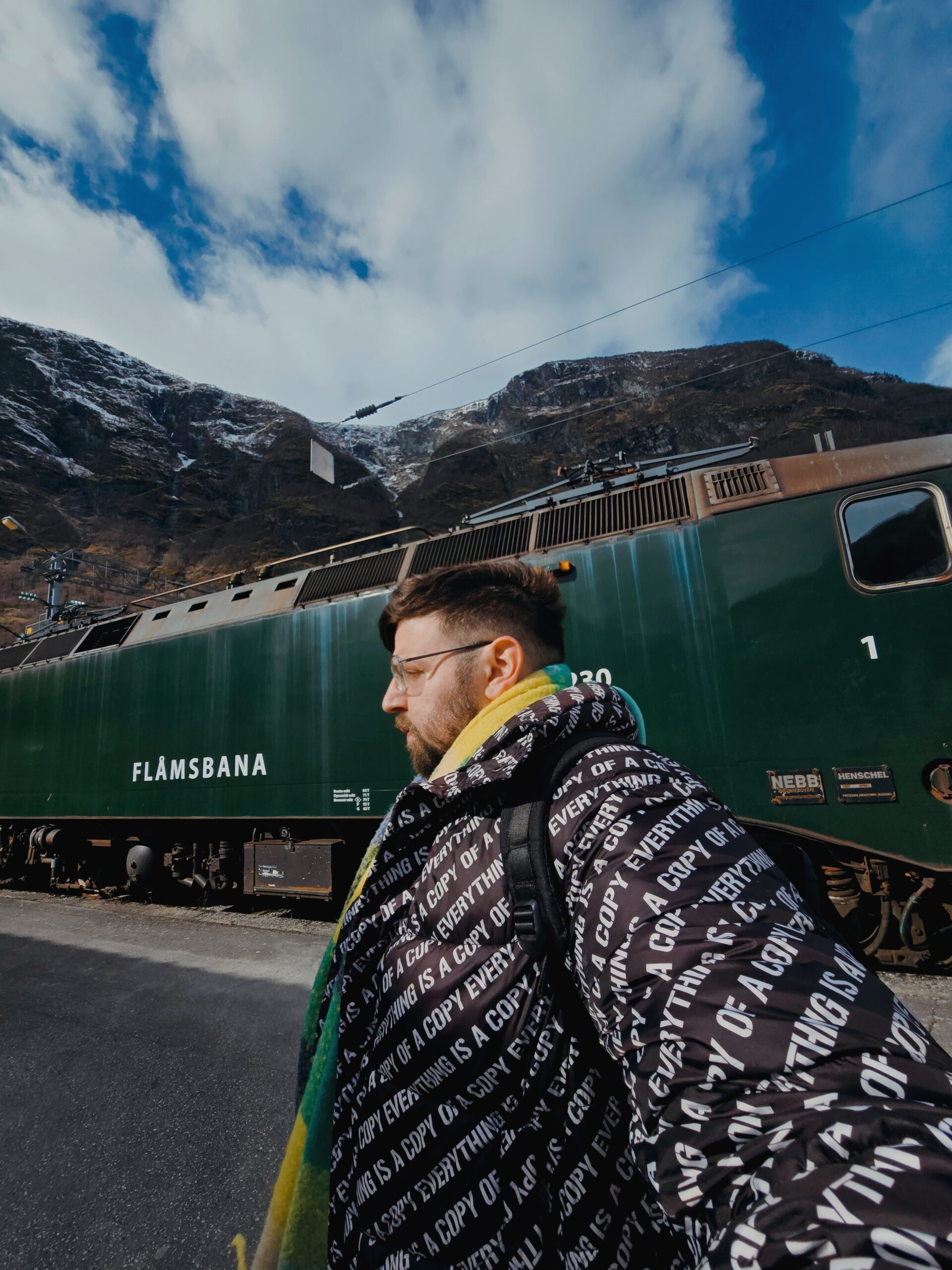
Standing by the old train
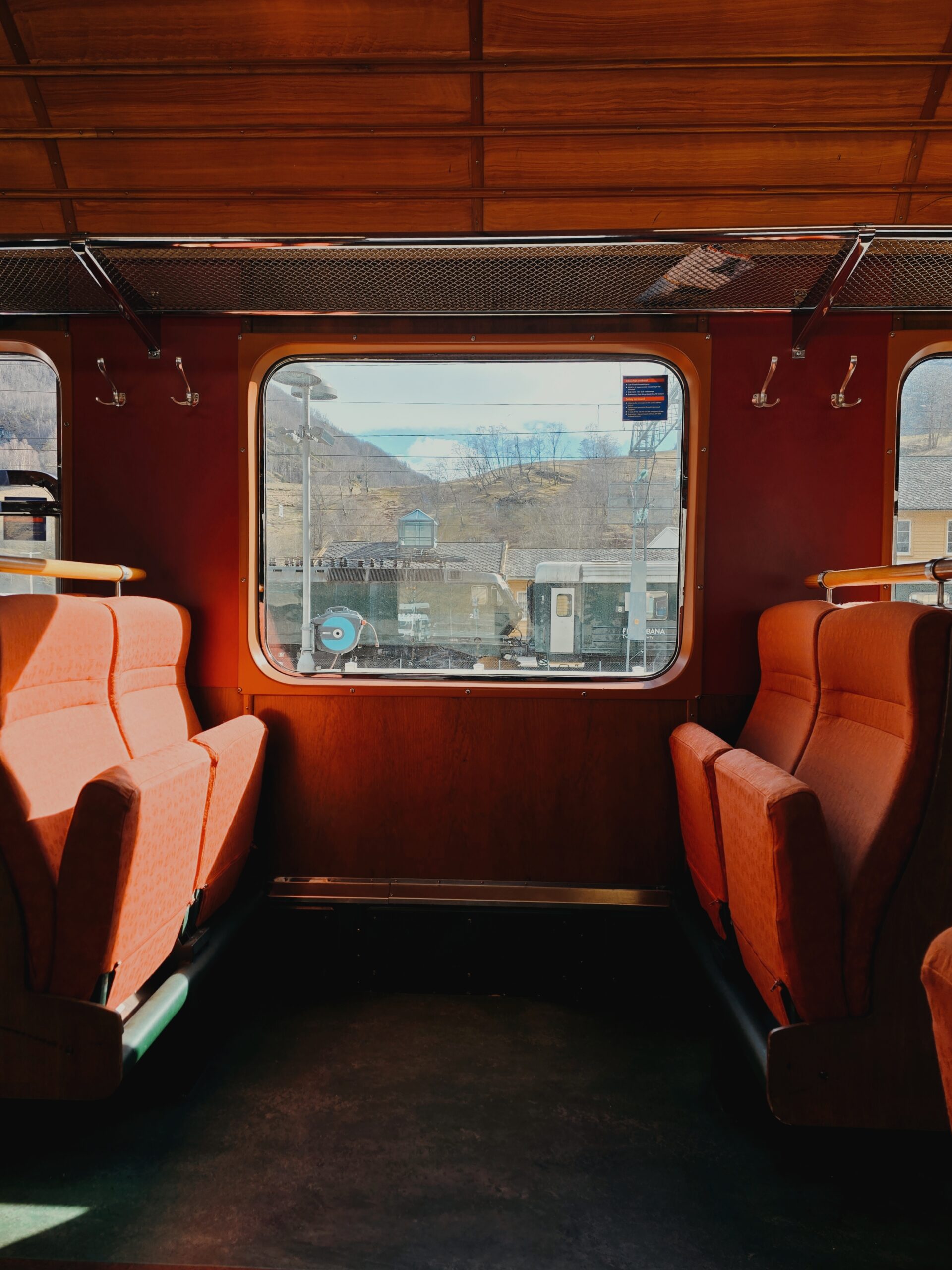
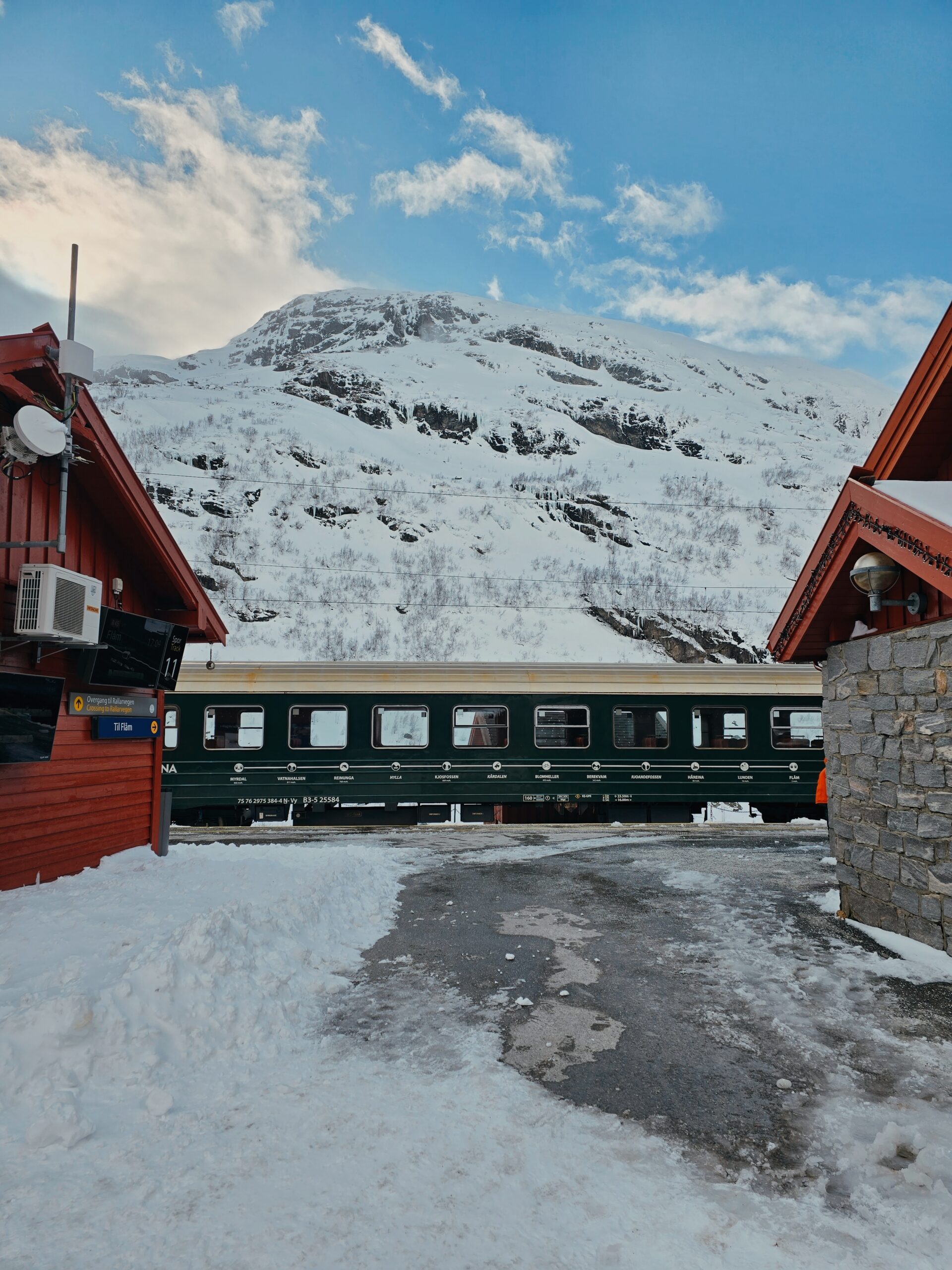
Inside the newer, working train
The way to Myrdal
The ride from Flåm to Myrdal is essentially a 20-kilometer vertical climb that feels more like a slow-motion roller coaster than a standard train commute. It’s one of the steepest standard-gauge railway lines in the world, with a gradient of 5.5% for nearly 80% of the journey.
As the train pulls away from the fjord, you quickly leave the “flat” land behind and start spiraling upward through the lush Flåm Valley.
To gain elevation without the tracks being too steep for the wheels to grip, the railway twists through 20 tunnels, with 18 of those tunnels having been dug entirely by hand. If you look closely at the tunnel walls, you can still see the marks left by the workers (the “navvies”) who spent 20 years finishing this project.
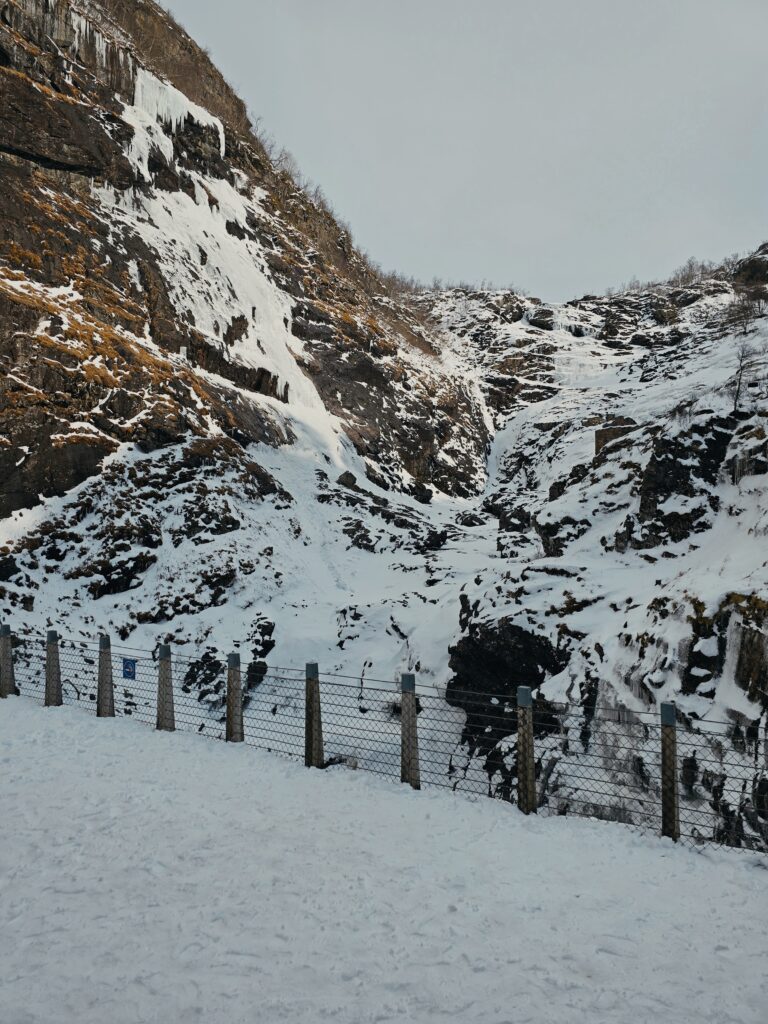
Kjosfossen is one of the highlights of the ride. The train doesn’t just pass by it – it makes a dedicated five-minute photo stop specifically so everyone can jump off and enjoy it.
It was frozen when we were there but it’s a massive, thundering waterfall with a total drop of about 225 meters. When the train stops, move fast! Everyone tries to stop at the same spot on the platform.
If you head to the far end (away from the train cars), you can usually get a shot of the falls without twenty other tourists’ heads in the frame. However, I managed to take the shot below because I was standing by the window when we stopped.
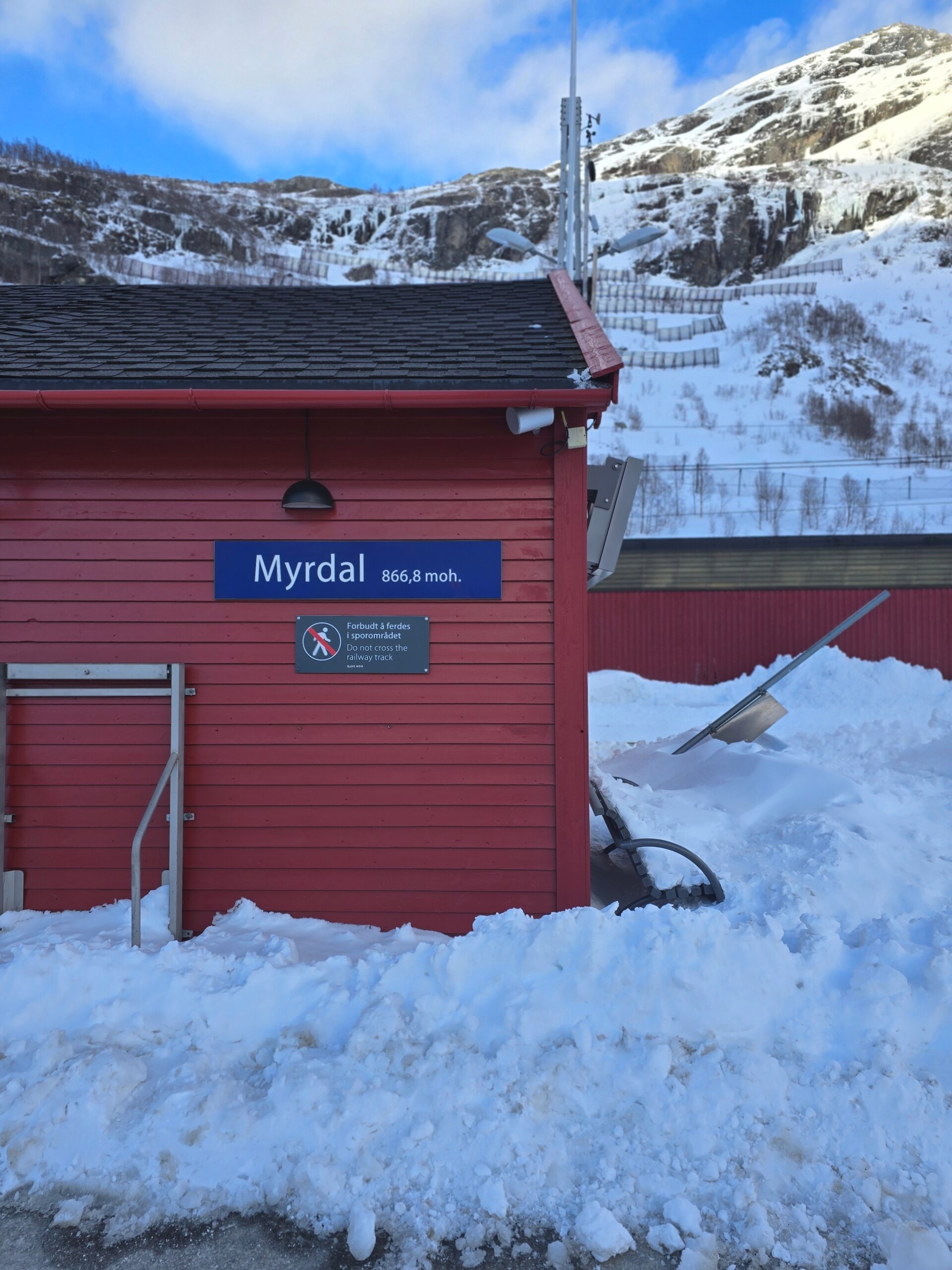
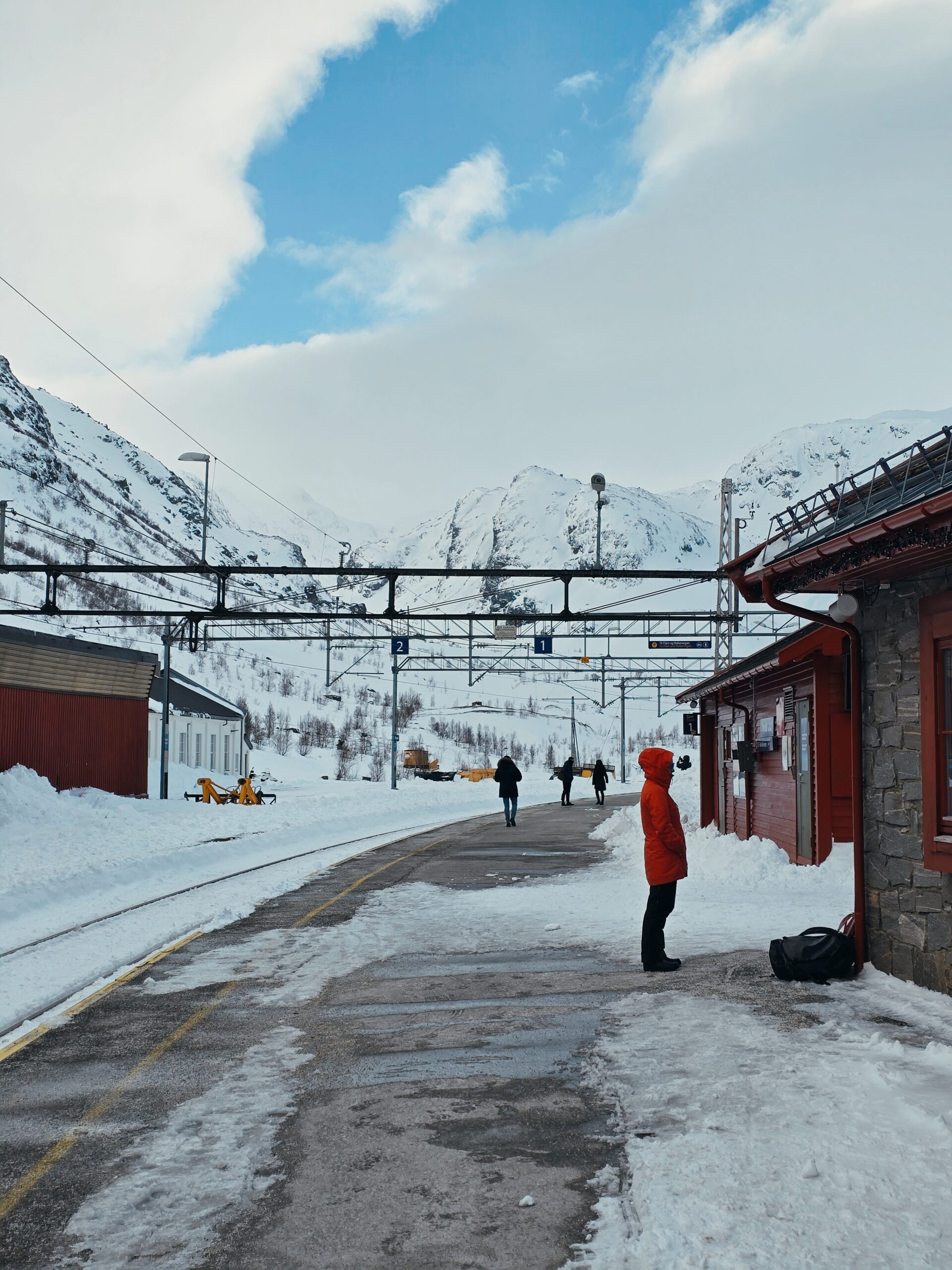
The ride ends at Myrdal Station, which sits at 864 meters above sea level. There’s no road access to this station, as it only exists to connect the Flåm Railway with the main Bergen Line (Bergensbanen).
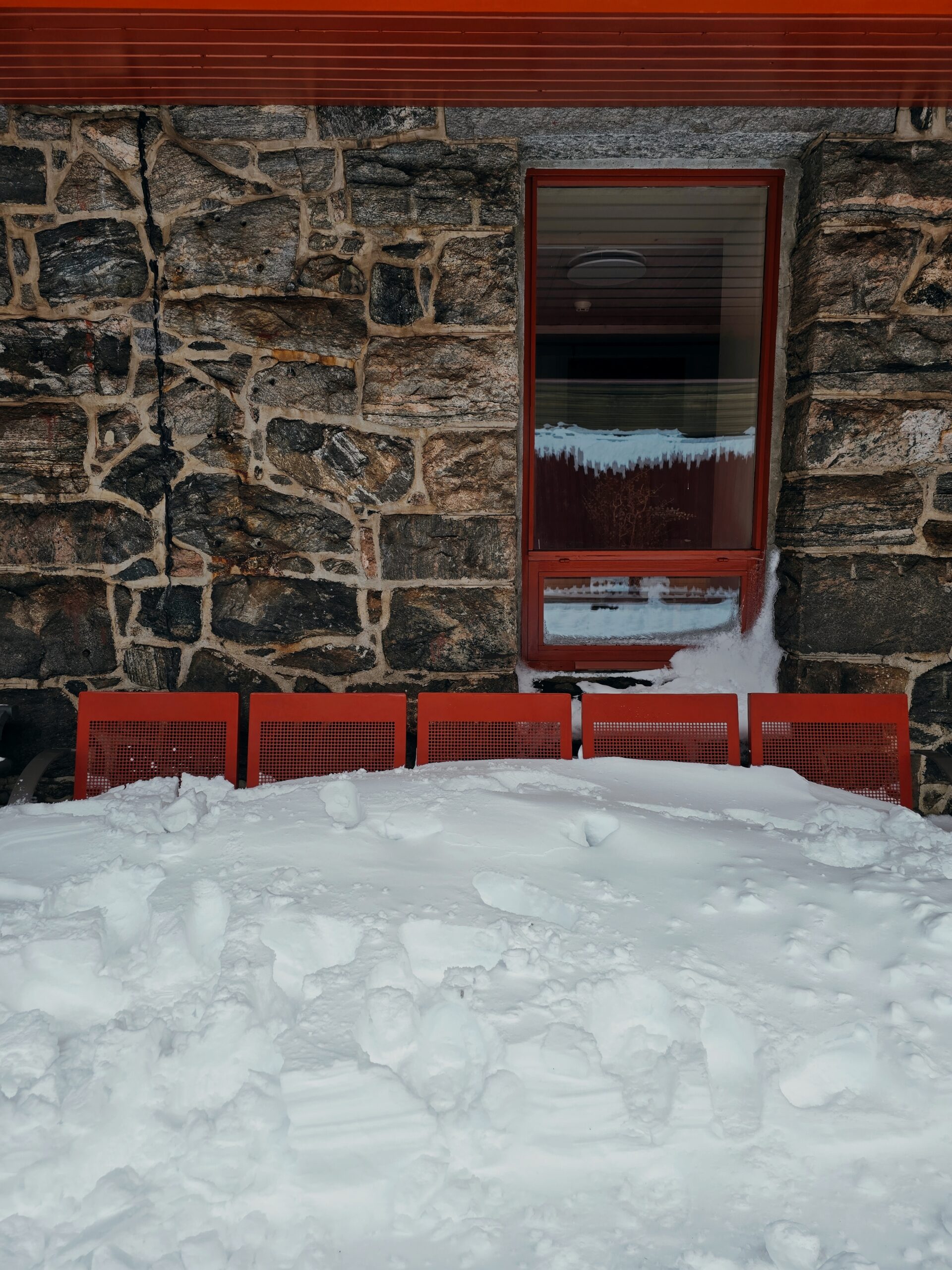
Most people were going back Flåm, taking a train to Oslo or the fast train to Bergen so we ended up almost alone in a station covered in snow. It has vending machines and tables to sit and relax until its your time to board, but it all felt quite post-apocalyptic very quickly.
So was it worth it?
It’s definitely a beautiful ride, worth of its place in your itinerary. When you think of Norway, this is the scenery that comes to mind (along with the fjords cruise), and it doesn’t disappoint.
Whether you’re a train enthusiast or just a traveler looking for that perfect window view, the Flåmsbana is one of those rare experiences that actually lives up to its “world’s most beautiful” title. It’s the perfect high-altitude finale to a trip that started at sea level.