Dublin to the Dark Hedges: A 3-Day Irish adventure
I
never experienced such a chill travel in such short trip. After Bali I wanted something more relaxed, just a short break from what is considered the hottest month to be in Cyprus. Ireland and Northern Ireland had two bucket list goals so, as soon as I found cheap tickets it was a no-brainer.
I will tell you this; I do a lot of 3-day trips, and this was one of the very few where I left wanting more.
I don’t know what you may be expecting from the capital of Ireland, but I was surprised. I was indifferent about it, but I ended up falling head over heels for it, just by witnessing daily life in the city center and around it. A chill, open-minded, multicultural city, a bit like London but without the overtourism. In fact, Dublin could be the love child of London and Amsterdam.
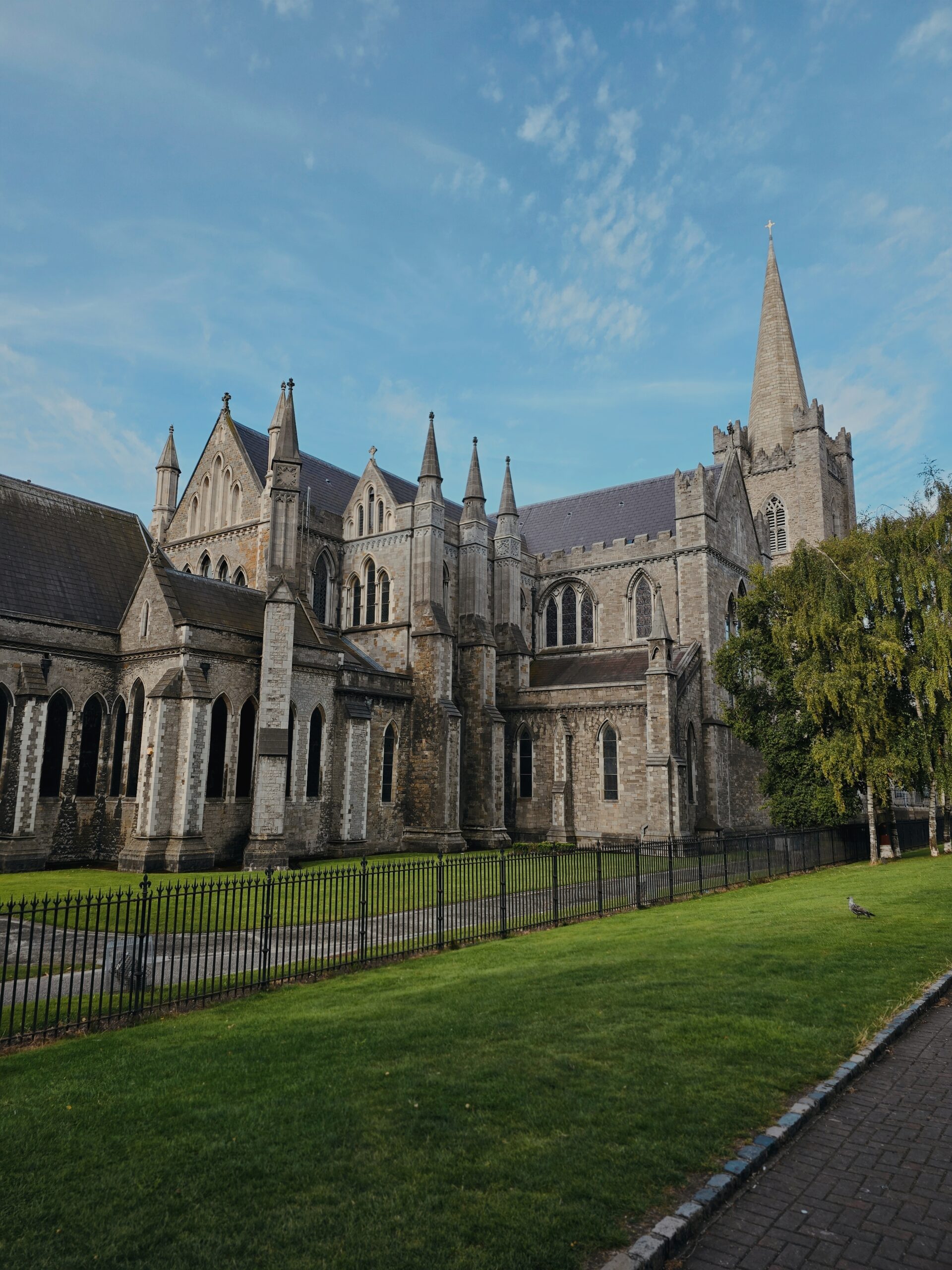
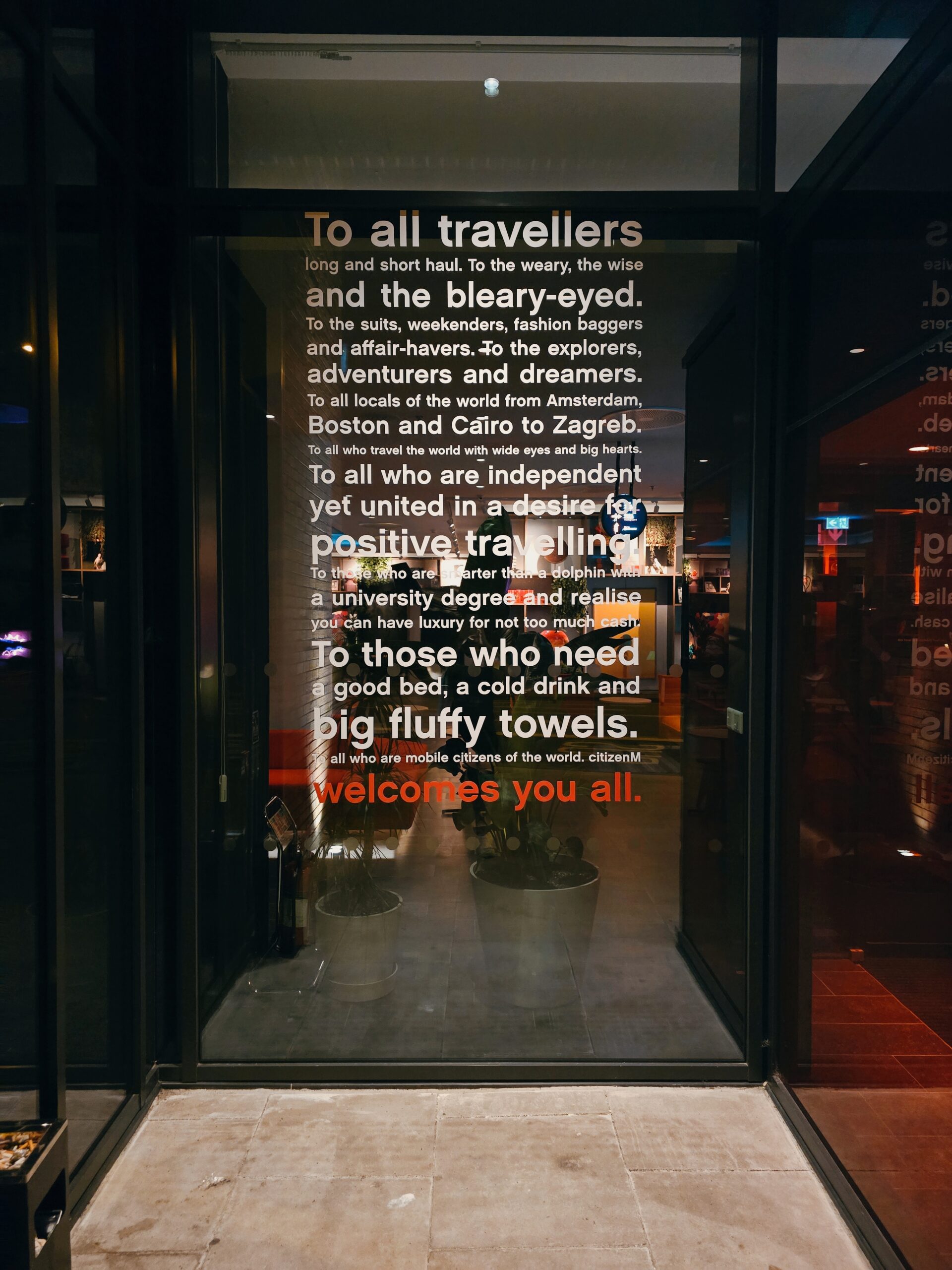
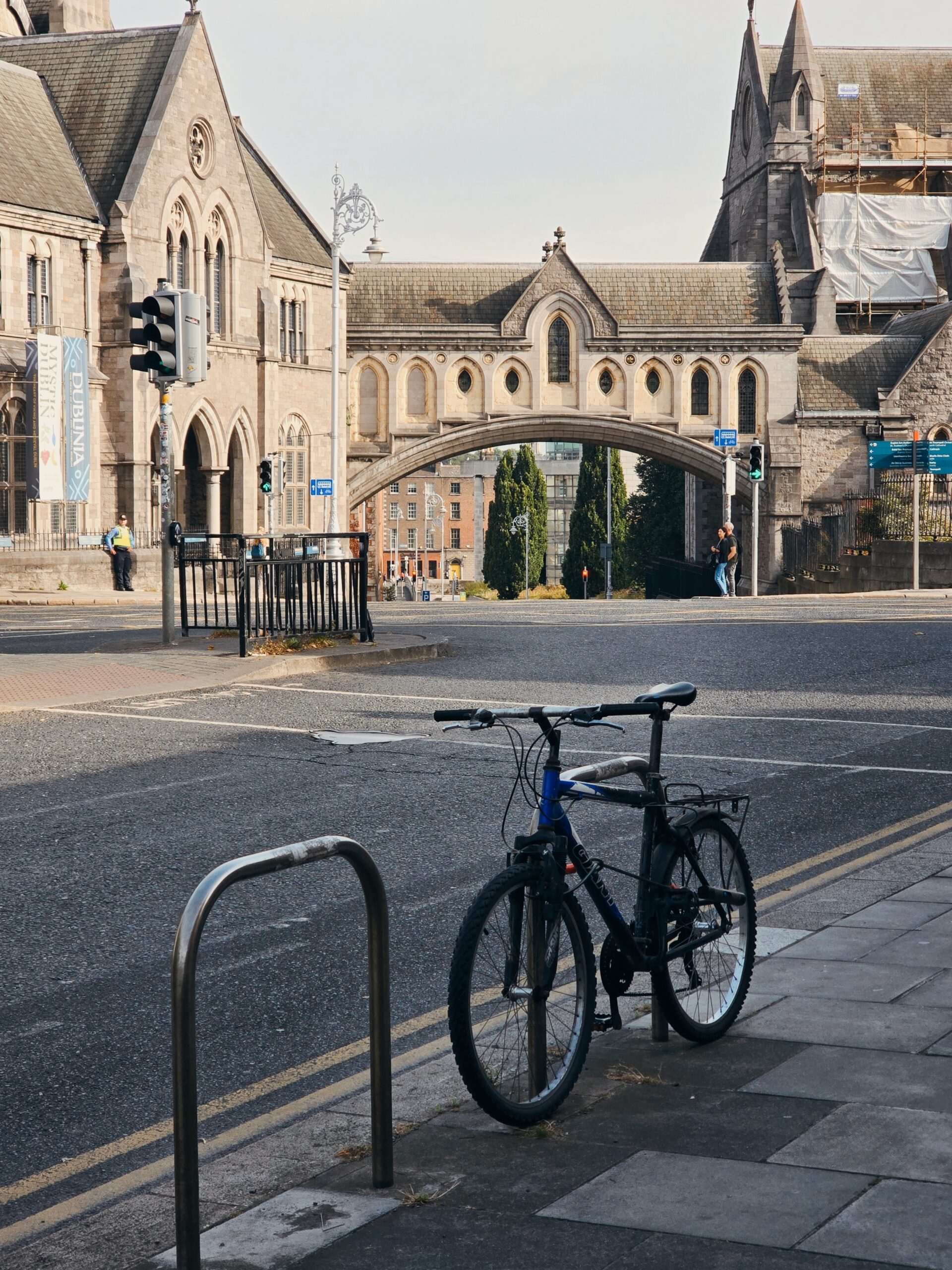
We arrived late at night at our hotel, the newly opened CitizenM – thanks to the 30% discount. We previously booked a room right in the city center but changed it to avoid all the noise from the pubs. This was a 10-minute walk from everything and right across St. Patrick’s Cathedral.
St. Patrick's Cathedral
CitizenM Hotel
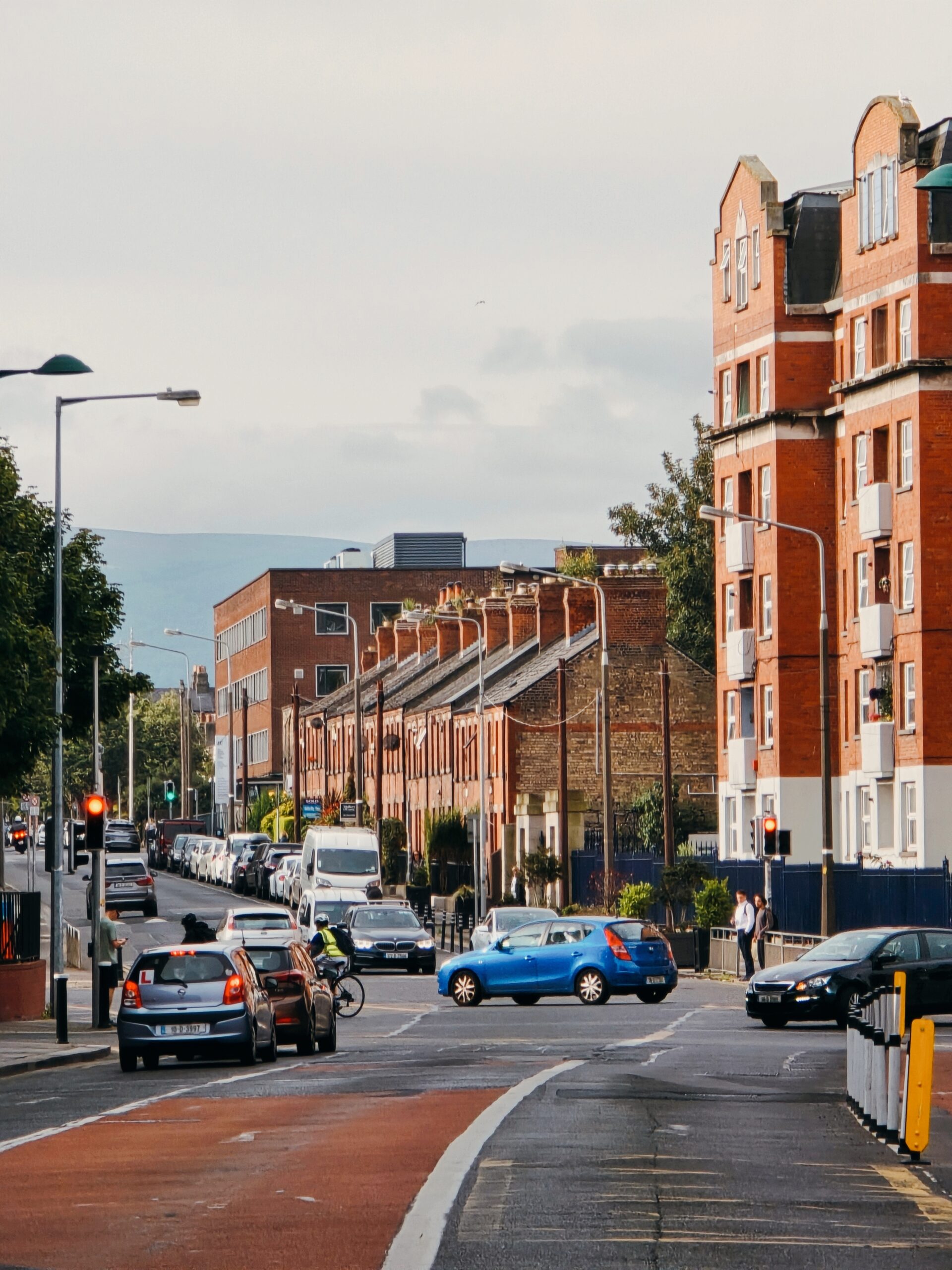
Our neighborhood
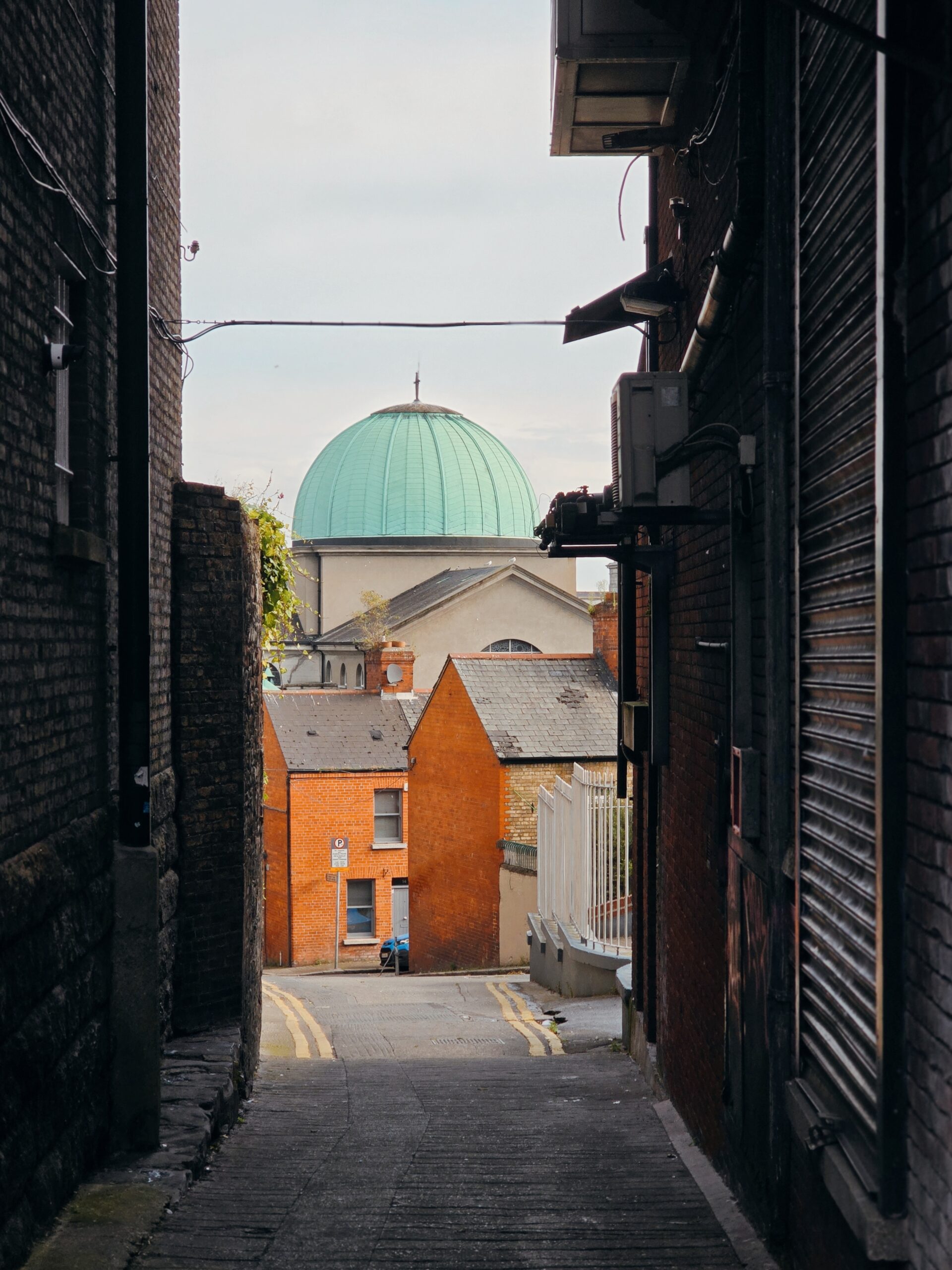
The green dome of the Church of the Immaculate Conception (Adam & Eve's)
The famous arched footbridge at Christ Church Cathedral
DAY 1
The first day there included my Dublin goal: step dancing lessons. We had a quick (but delicious) brunch at Urbanity then walked over to the Docklands for EPIC The Irish Emigration Museum. EPIC – voted as “Europe’s Leading Tourist Attraction” at the 2019, 2020 and 2021 World Travel Awards – features 20 interactive, immersive galleries inviting visitors to explore Irish diaspora.
They, also, give you a printed passport to stamp in every gallery. The whole experience is a unique and innovative way to discover Ireland’s history.
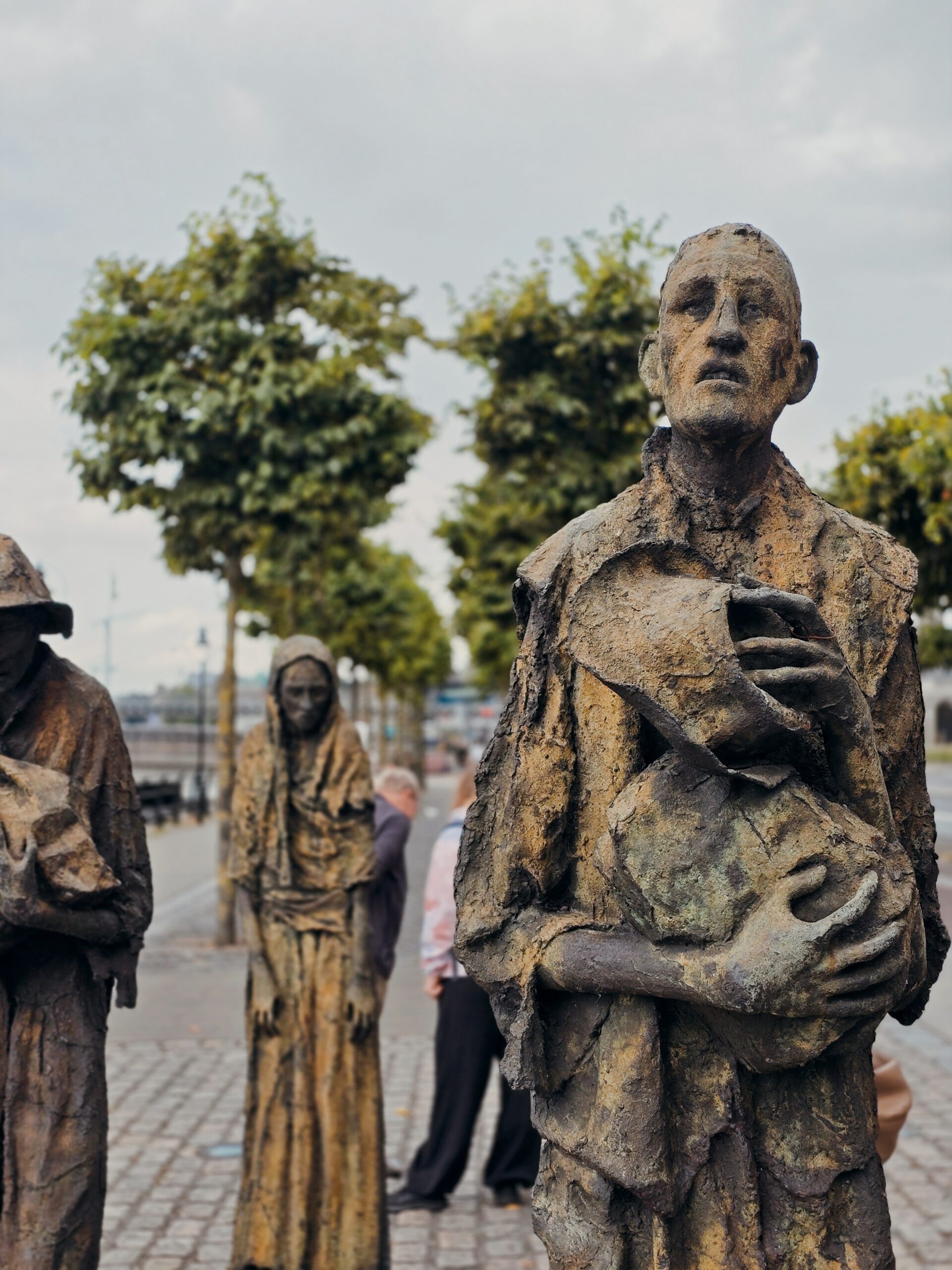
Outside, you’ll come across the haunting Famine Memorial.
These figures, designed and crafted by sculptor Rowan Gillespie, commemorate the most profound disaster in Irish history, when Ireland lost more than one million citizens to starvation.
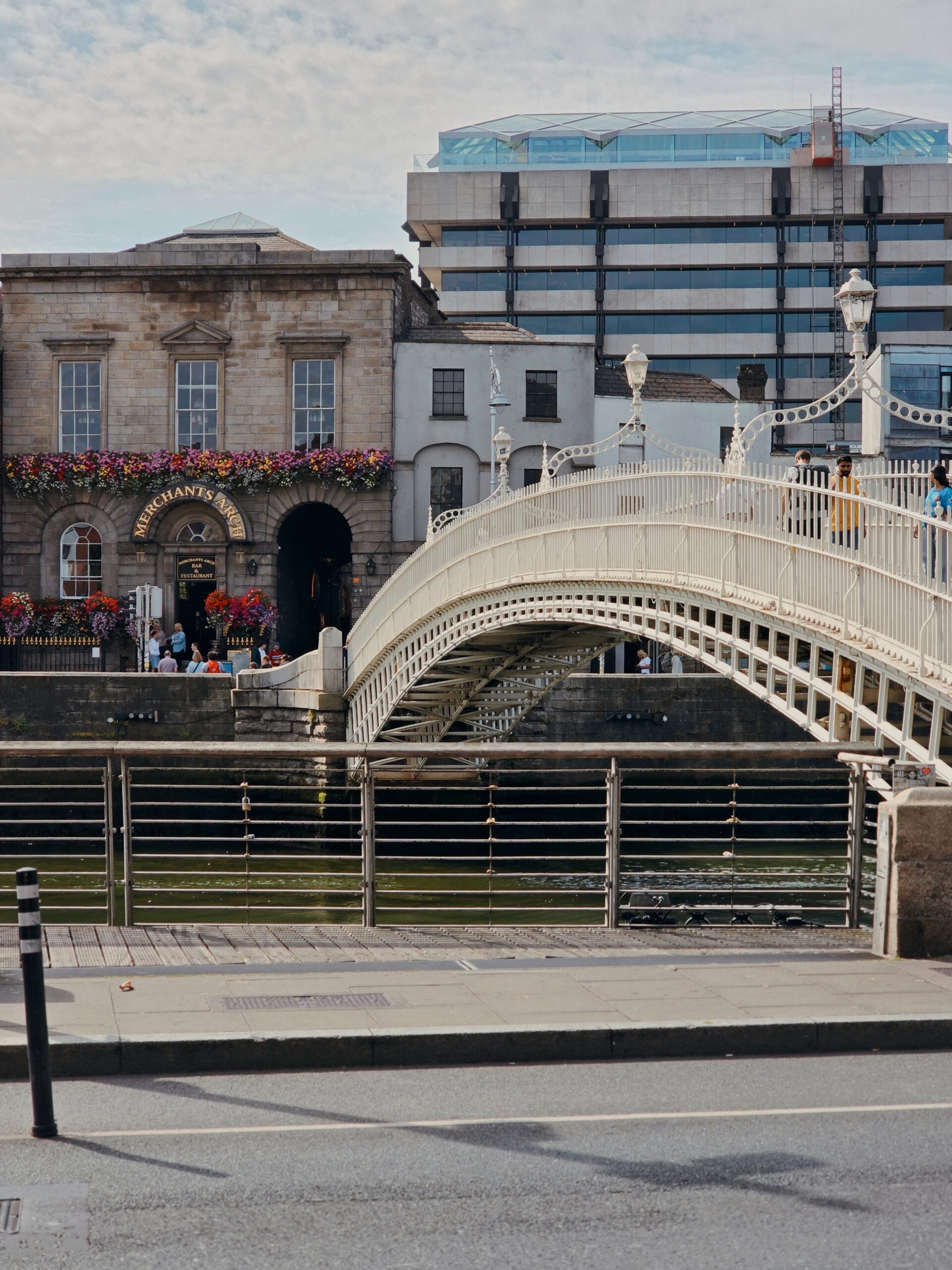
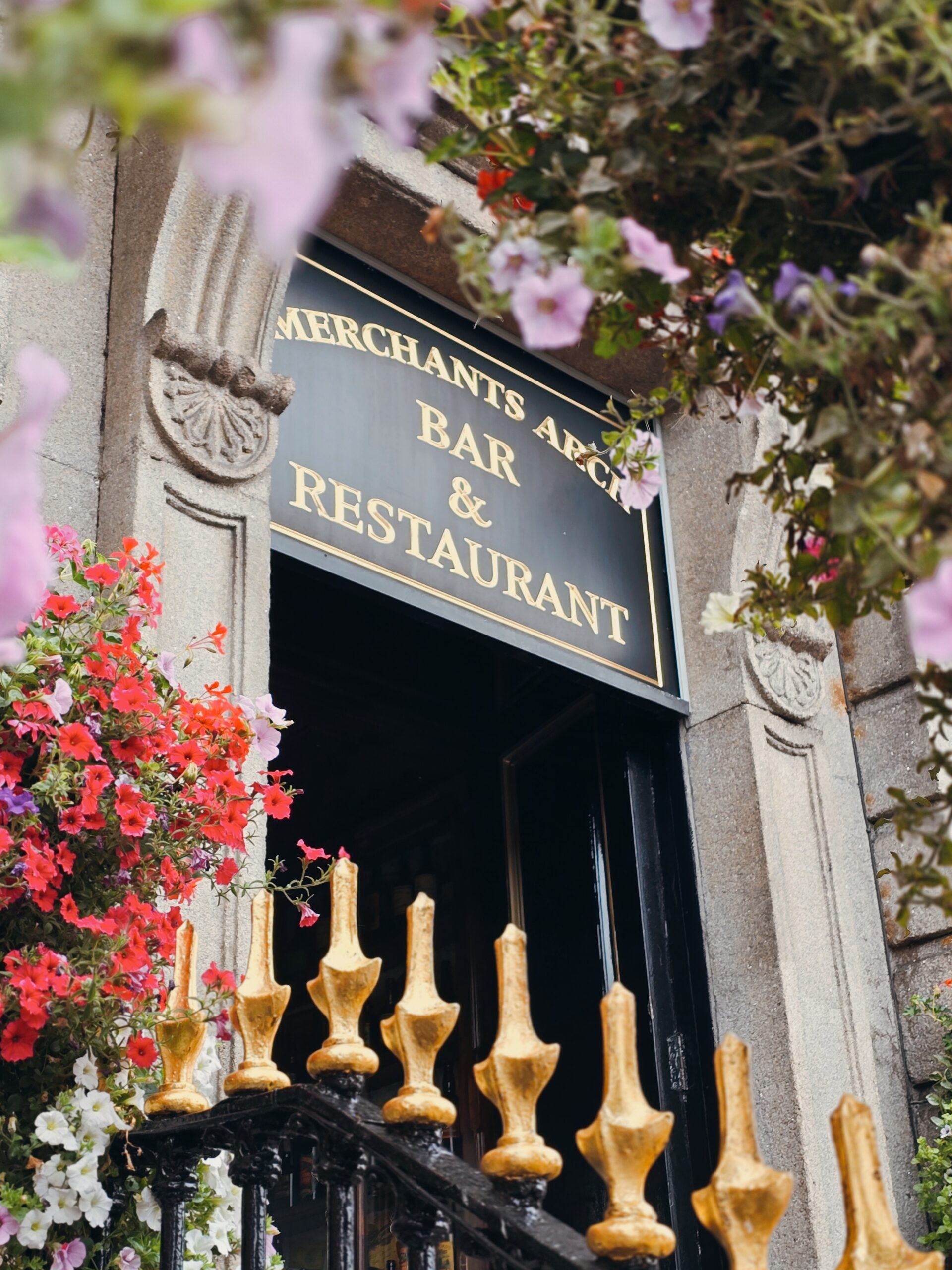
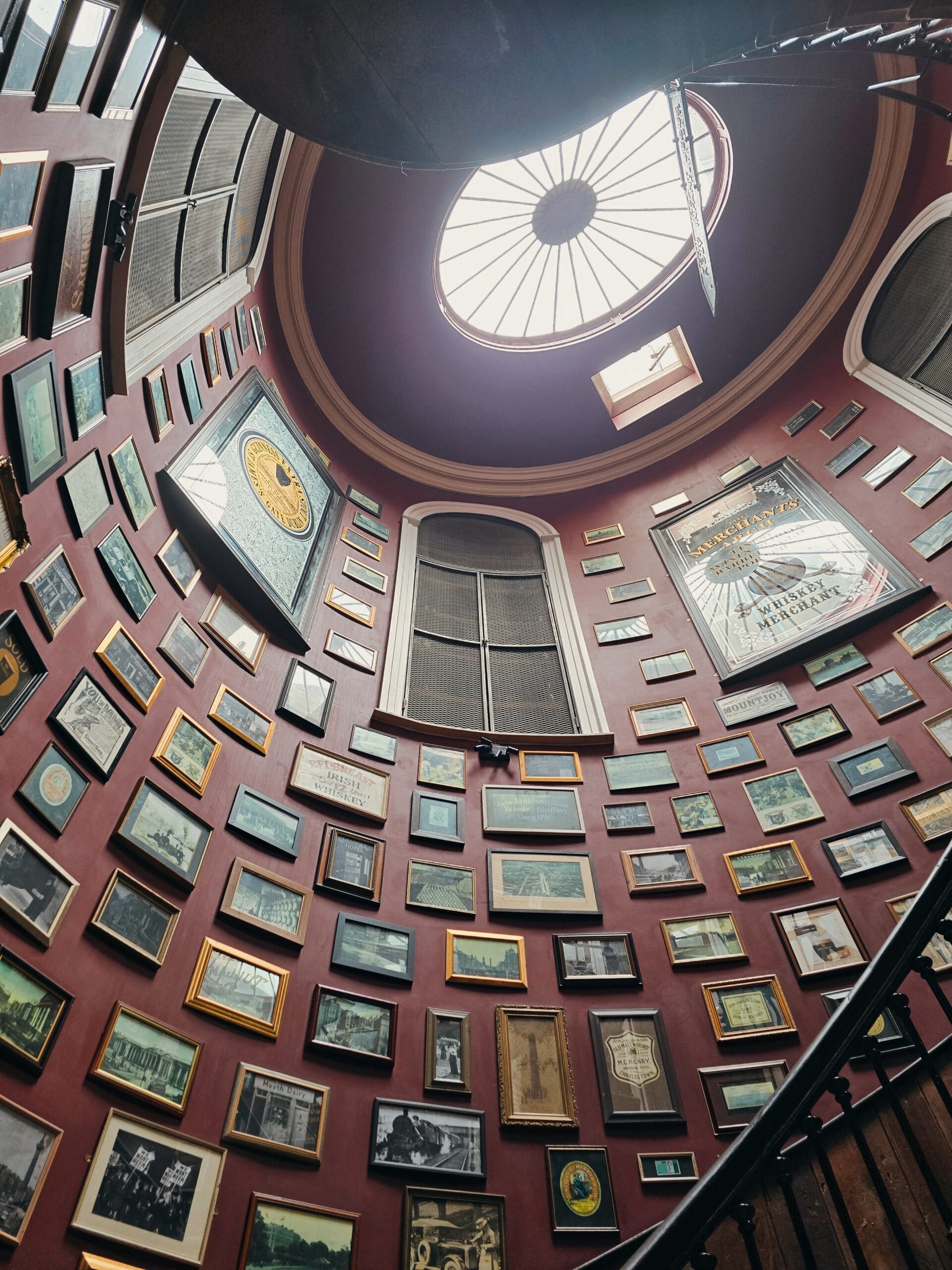
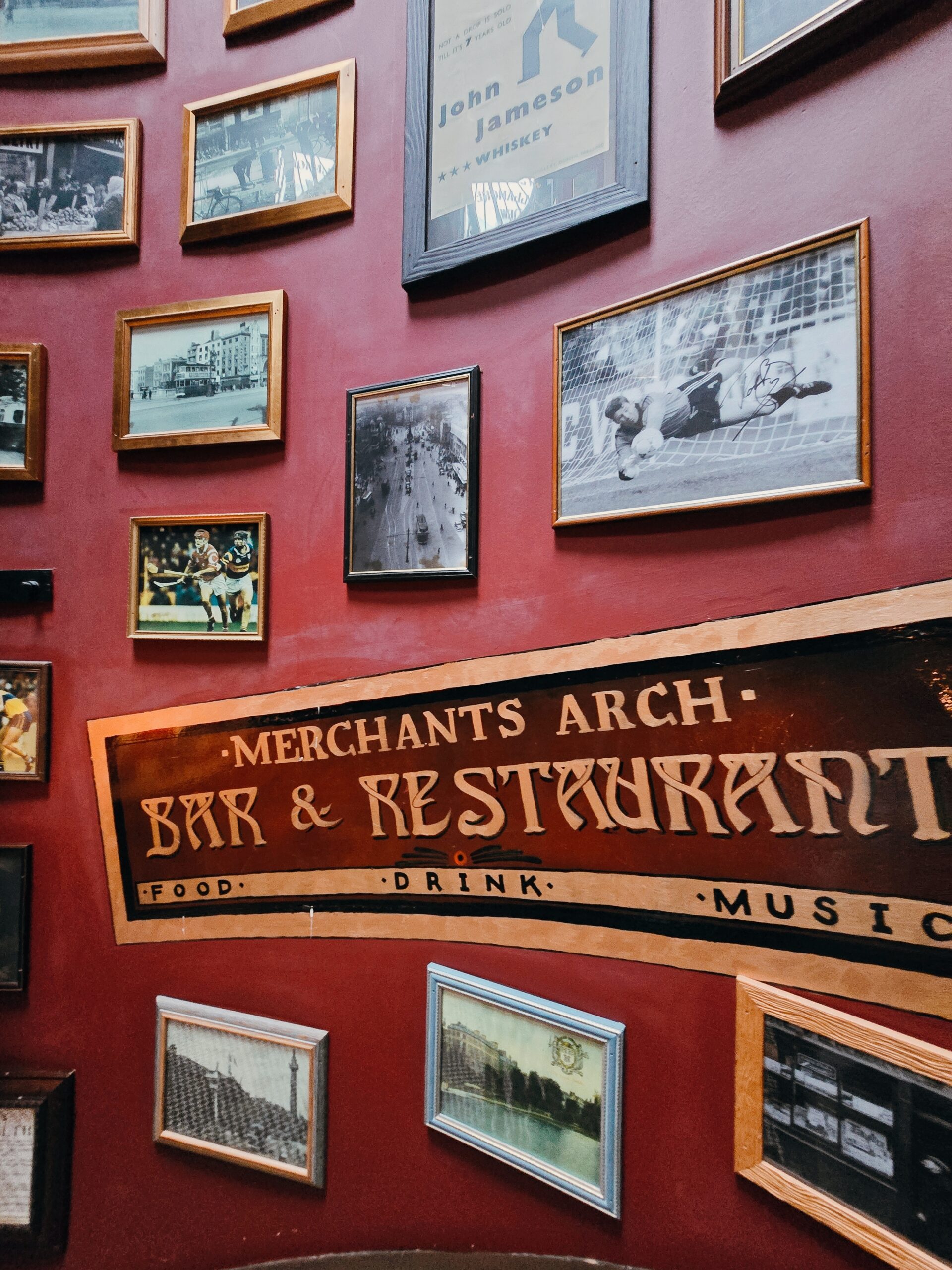
We walked back to the center and crossed the iconic Ha’ Penny Bridge (originally named Half Penny because that’s the amount you had to pay to cross) to get to the famous Merchant’s Arch pub for our dancing lessons. It was basically a big party, the singer was singing Irish songs – with the necessary interactive parts from us – and in-between the dancers put on a show then called us in for our lessons. The whole experience was fun and new, I’ve been wanting to learn step-dancing for so many years it was surreal when I was there. Long story short, I can’t learn choreo, I have no co-ordination or grace, but it was fun, nevertheless, I crossed that off my list, while enjoying a glass of Guinness.
Afterwards we wandered around the city center, grabbing a quick lunch at Five Guys. We passed by the Auld Dubliner for some pictures, then landed at George’s Street Arcade when the rain started. George’s Street Arcade opened in 1881 as South City Markets and earned fame as Dublin’s first purpose‑built Victorian shopping centre—later rebuilt using local craftsmen after a fire in 1892. Here you can find everything from smaller local stores to second-hand shops and from souvenir shops to old bookstores. I discovered a fantastic Pokemon hoodie in Rare, a small store full of accessories, toys and clothes inspired by Japanese and Korean pop culture.
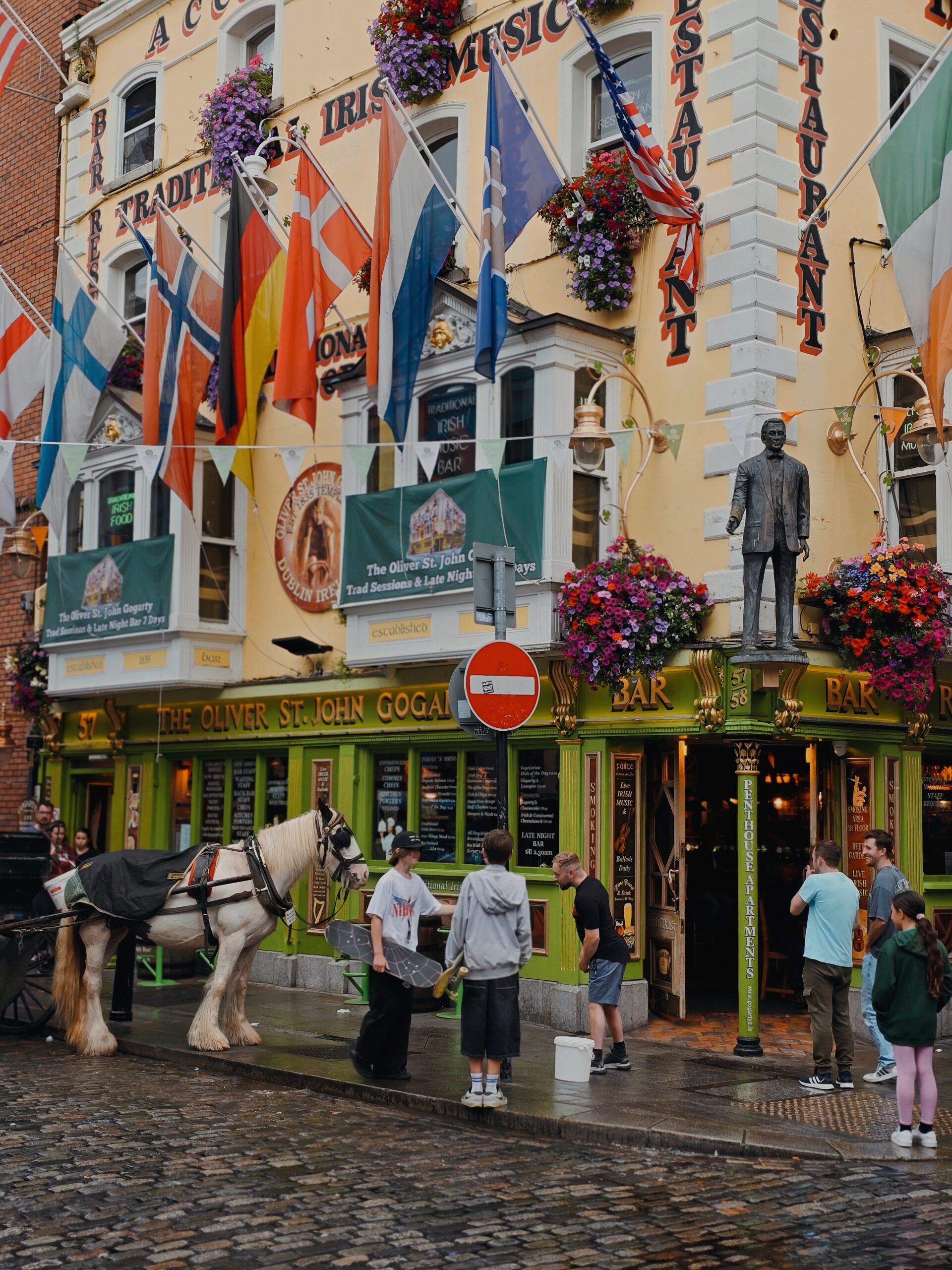
The Oliver St. John Gogarty pub
With my new Pokemon hoodie
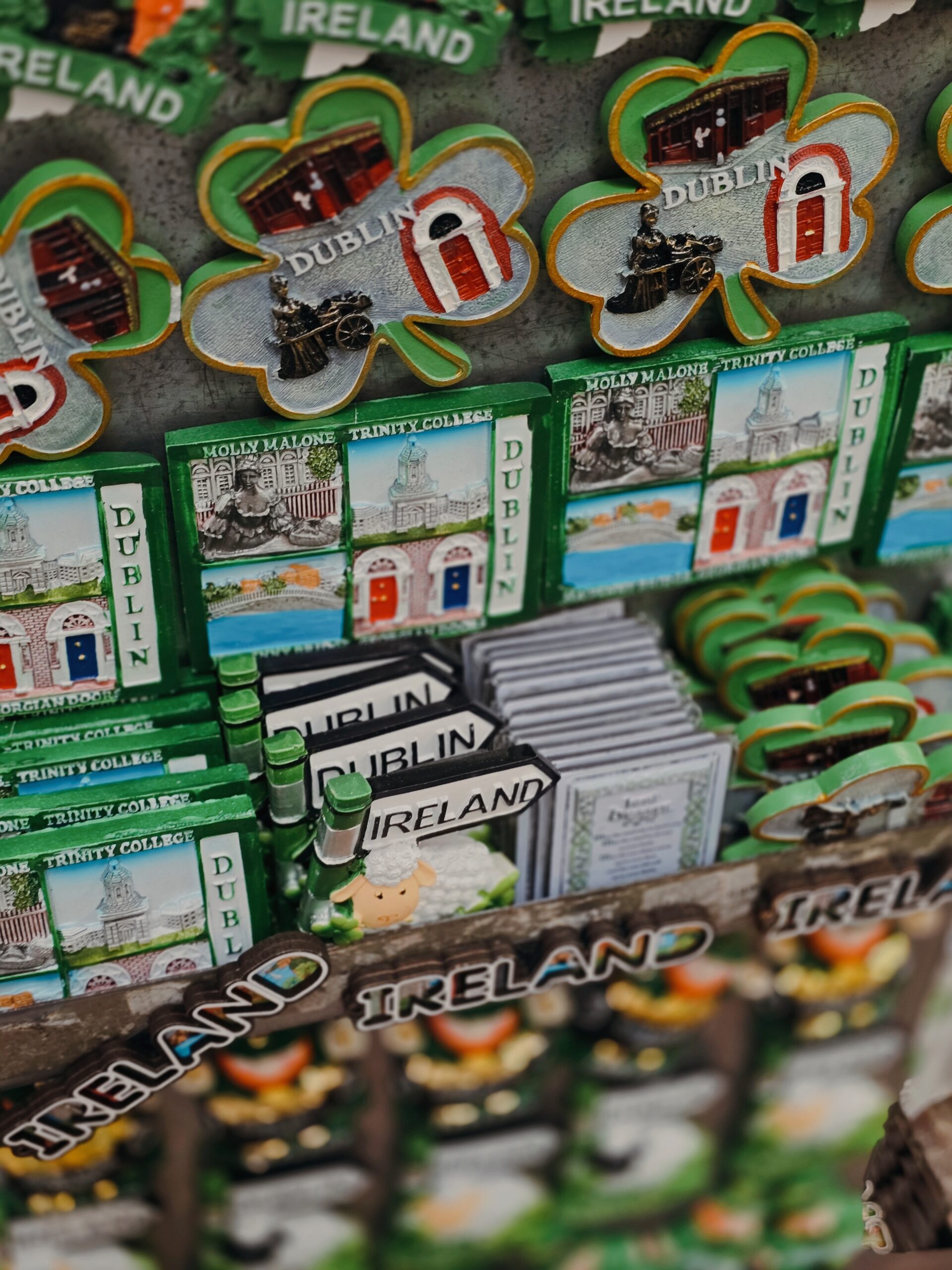
Souvenirs at George's Street Arcade
DAY 2
For the second day we were going to cross over back to the UK for Northern Ireland. The Dark Hedges were part of my bucket list for so long, I was witnessing time taking its toll on those trees and fearing I’ll never get to see it live.
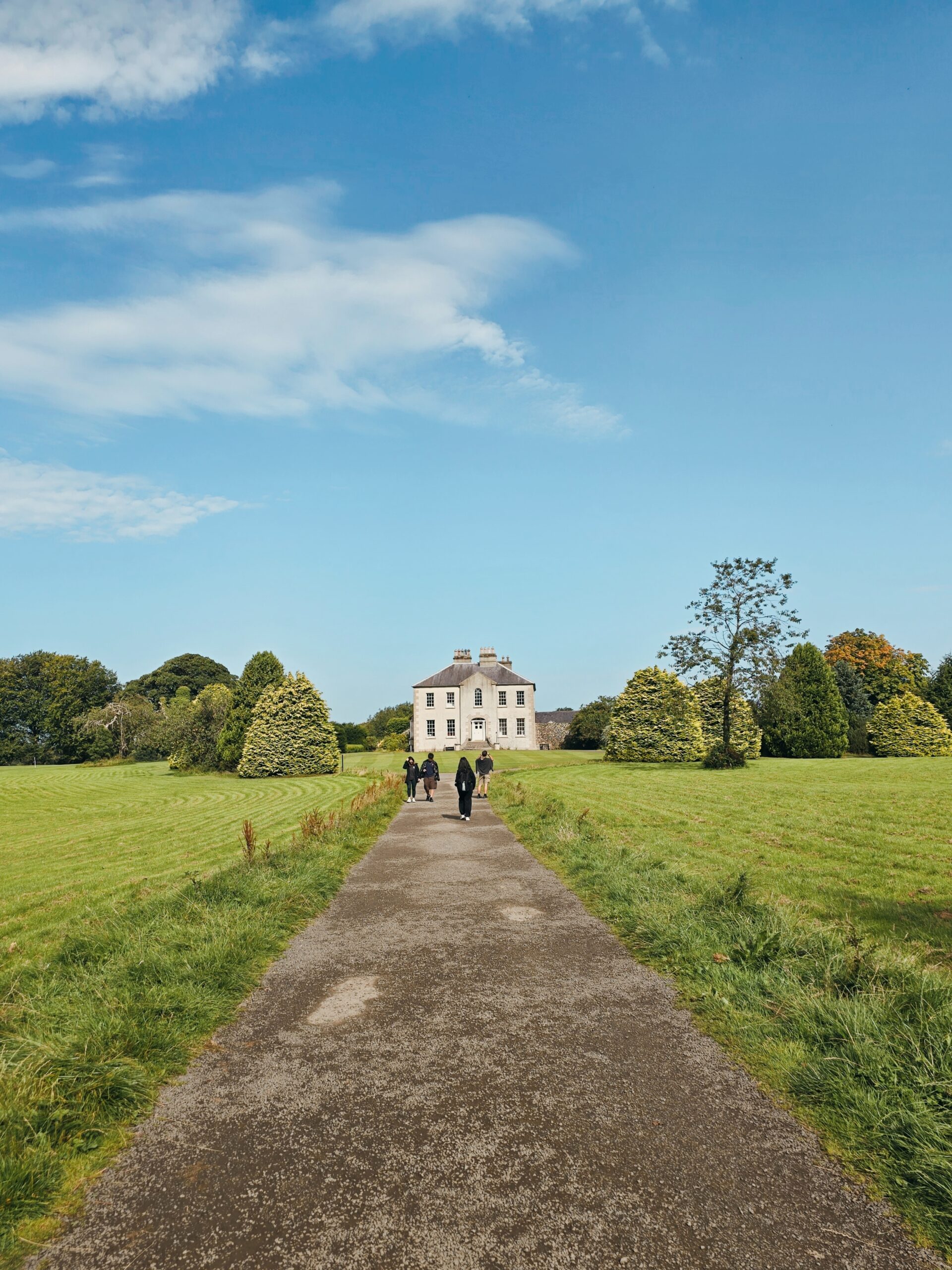
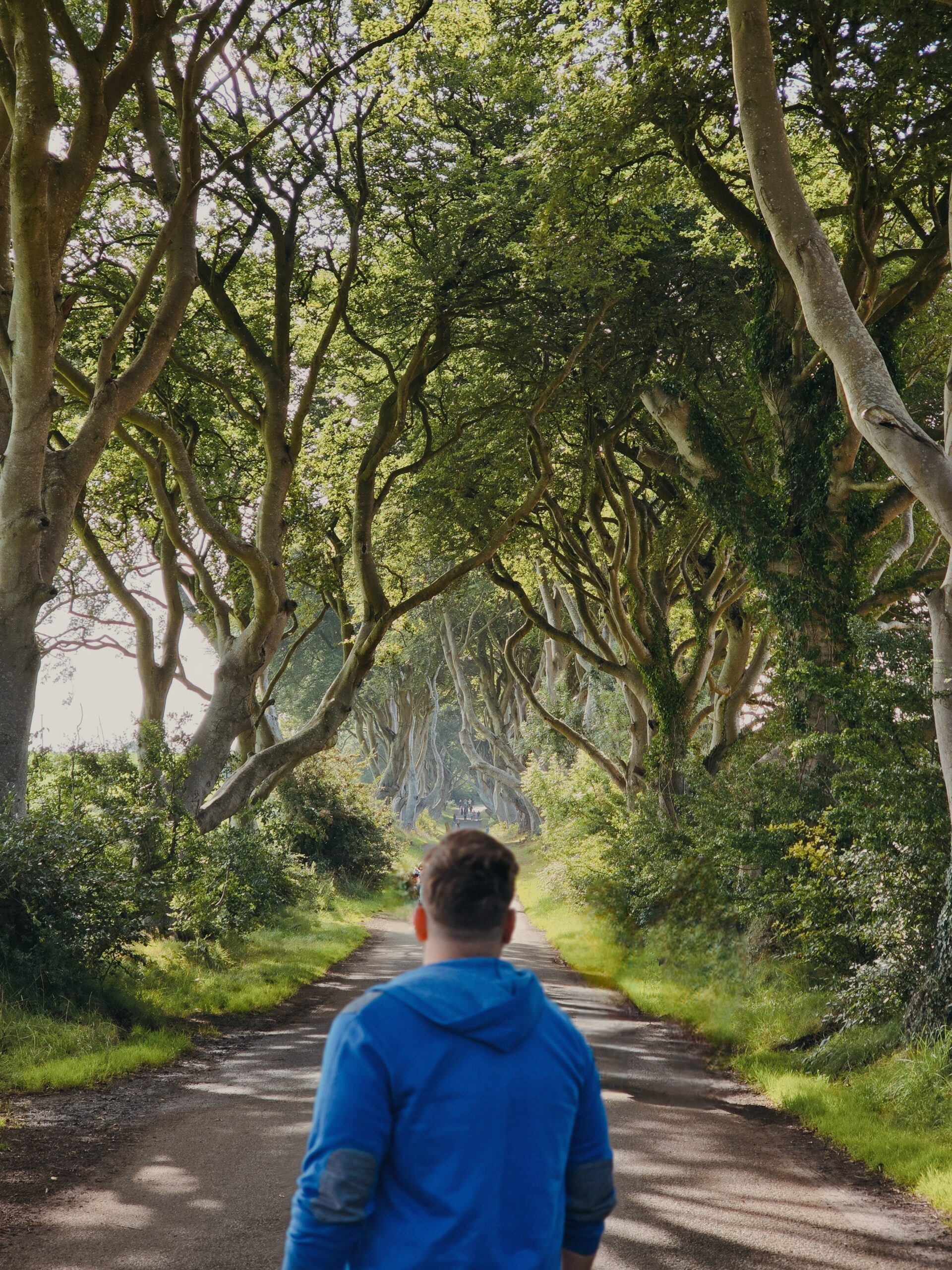
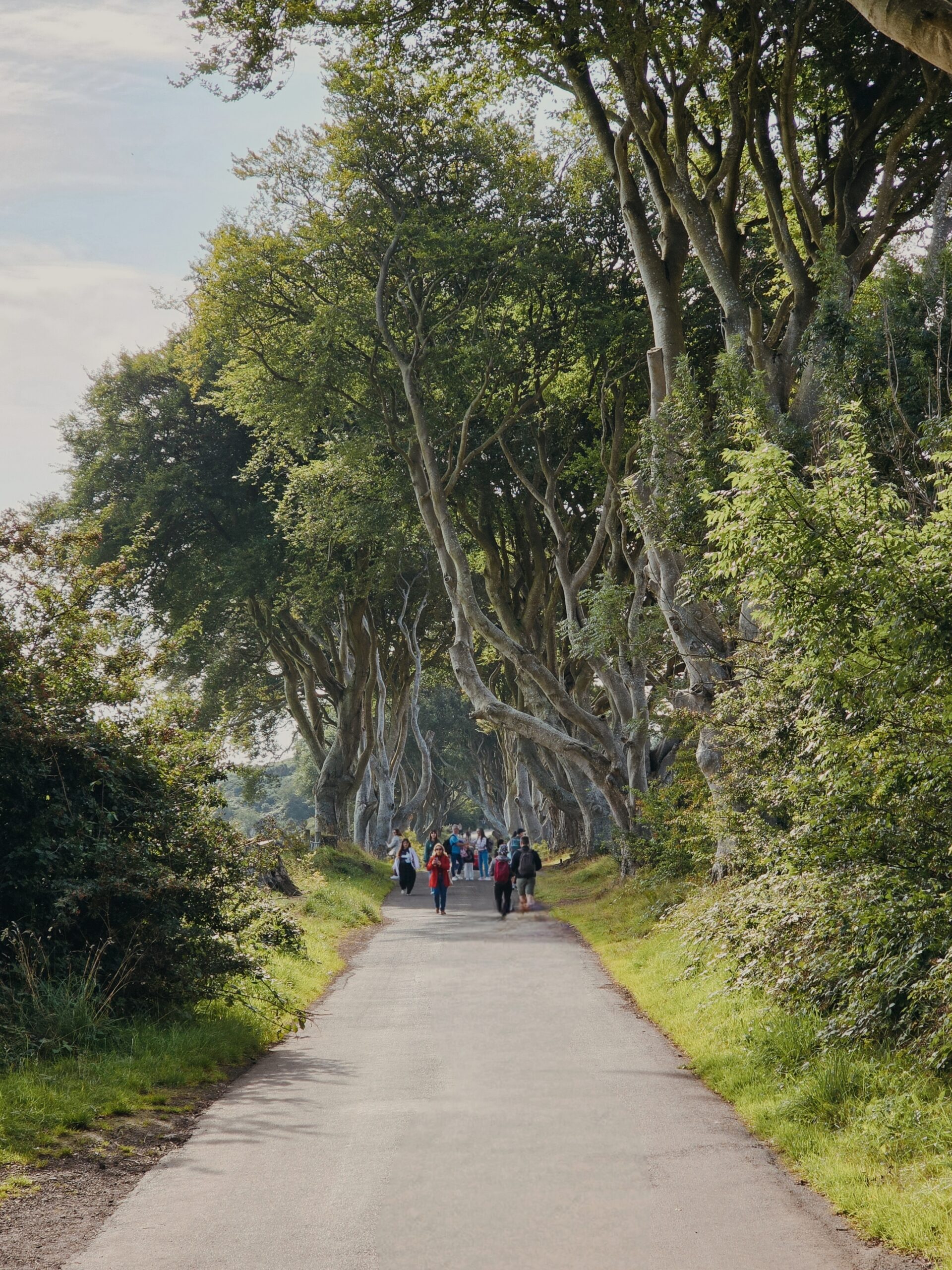
Located in Ballymoney, the Dark Hedges is a hauntingly beautiful avenue of beech trees planted by the Stuart family in the 18th century to impress visitors as they approached their mansion, Gracehill House (which is still there). Over the centuries, the trees have grown into a natural tunnel with twisted, interlocking branches, creating an ethereal atmosphere.
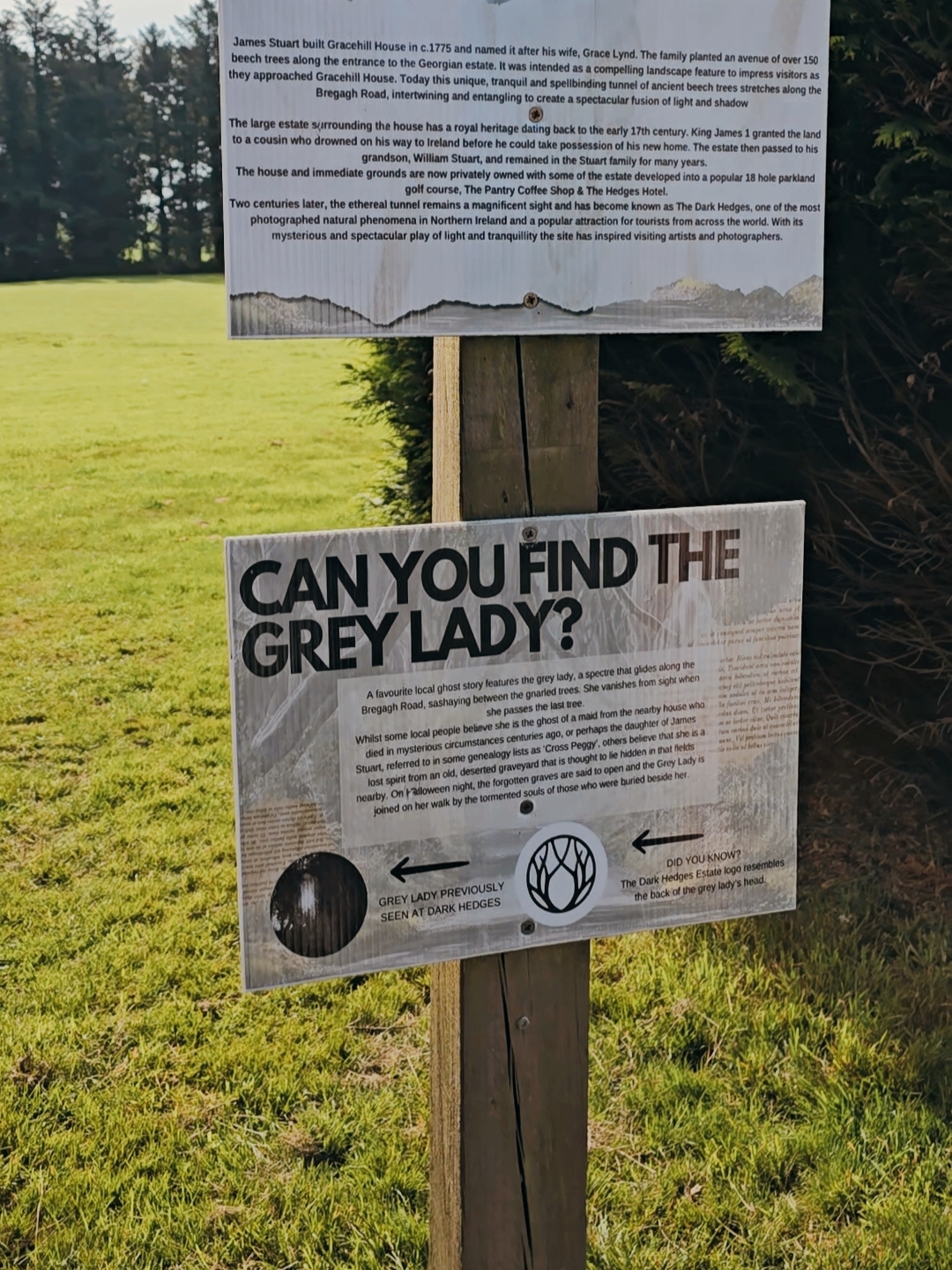
The site gained worldwide fame after appearing as the Kingsroad in Game of Thrones. Local legend speaks of a ghostly figure known as the “Grey Lady” who is said to glide silently along the road at dusk. We did not see the Grey Lady. The trees are not that dense anymore (some were cut due to aging) but thankfully, it was so much better than I was expecting it.
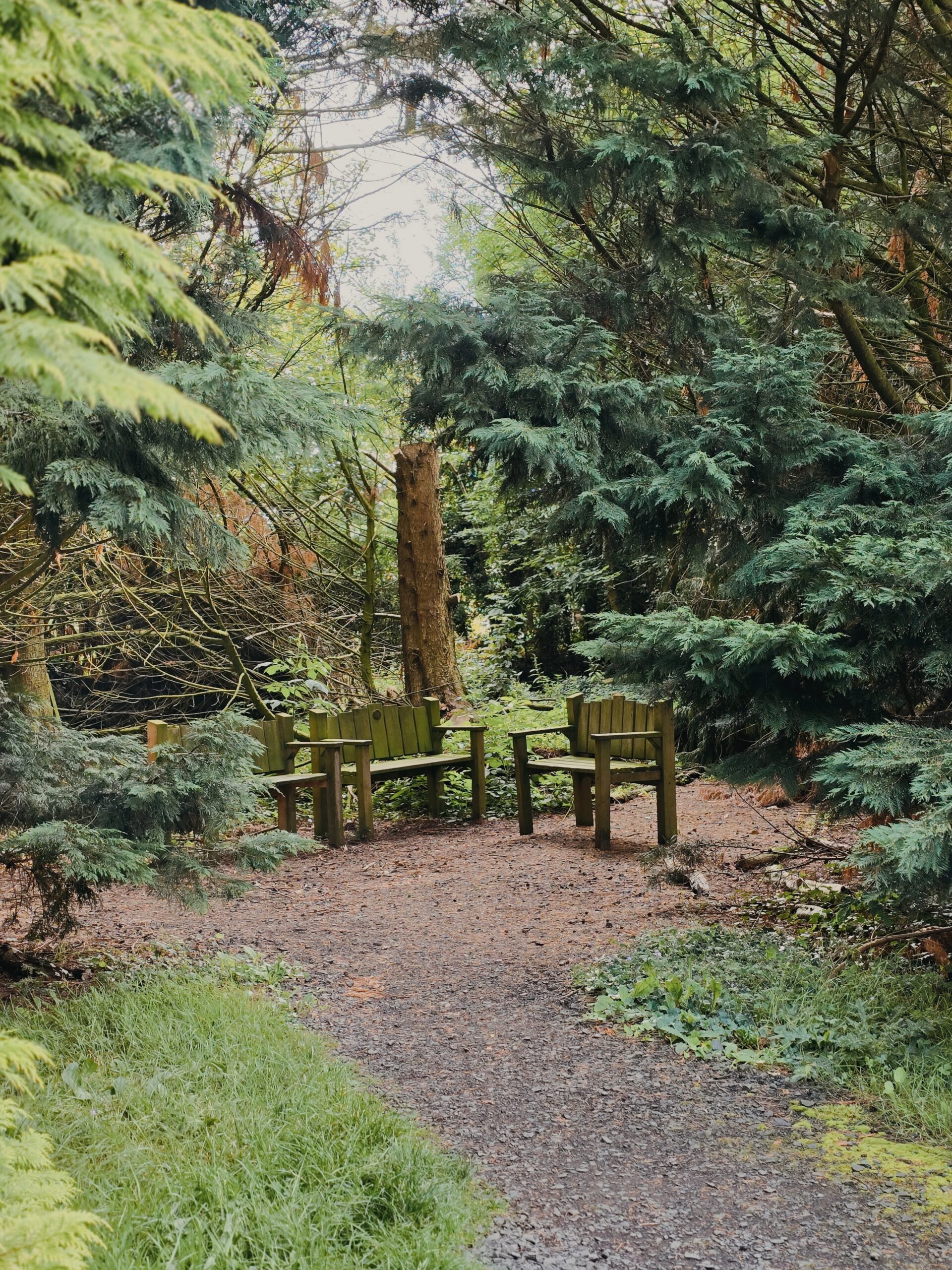
We did not
On the way to the Hedges
The Gracehill House
I can't believe I was there
One more thing off my bucket list
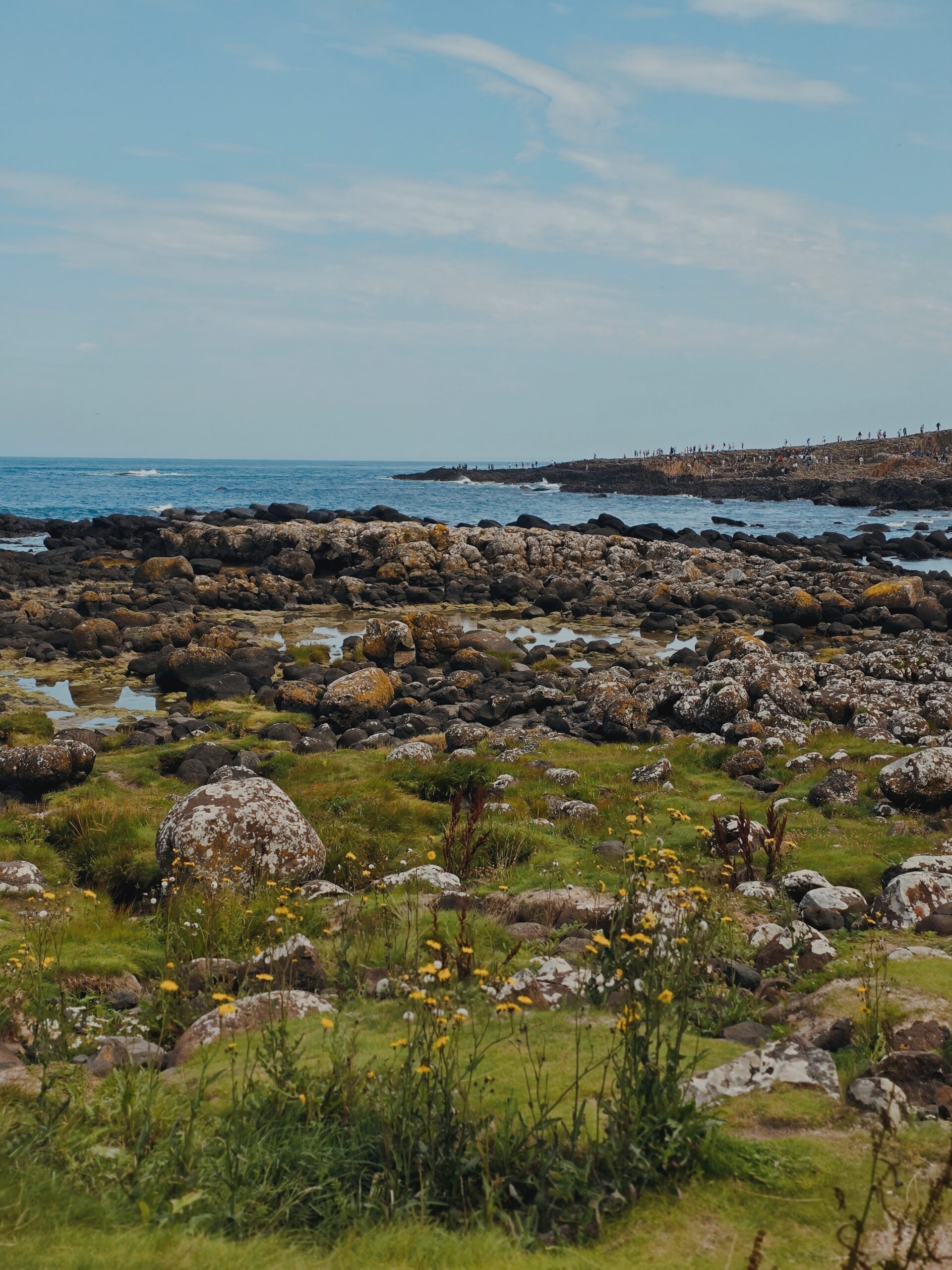
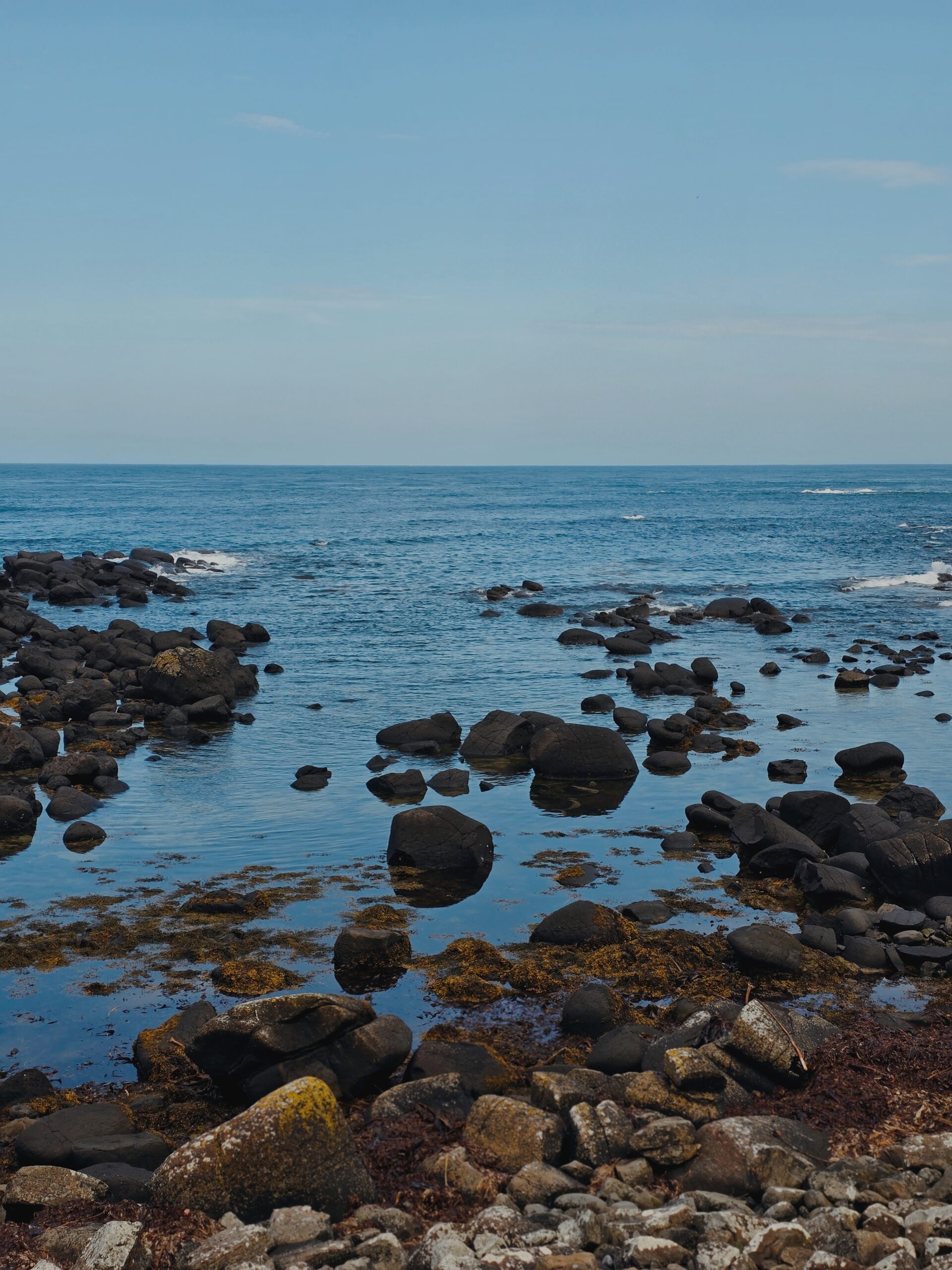
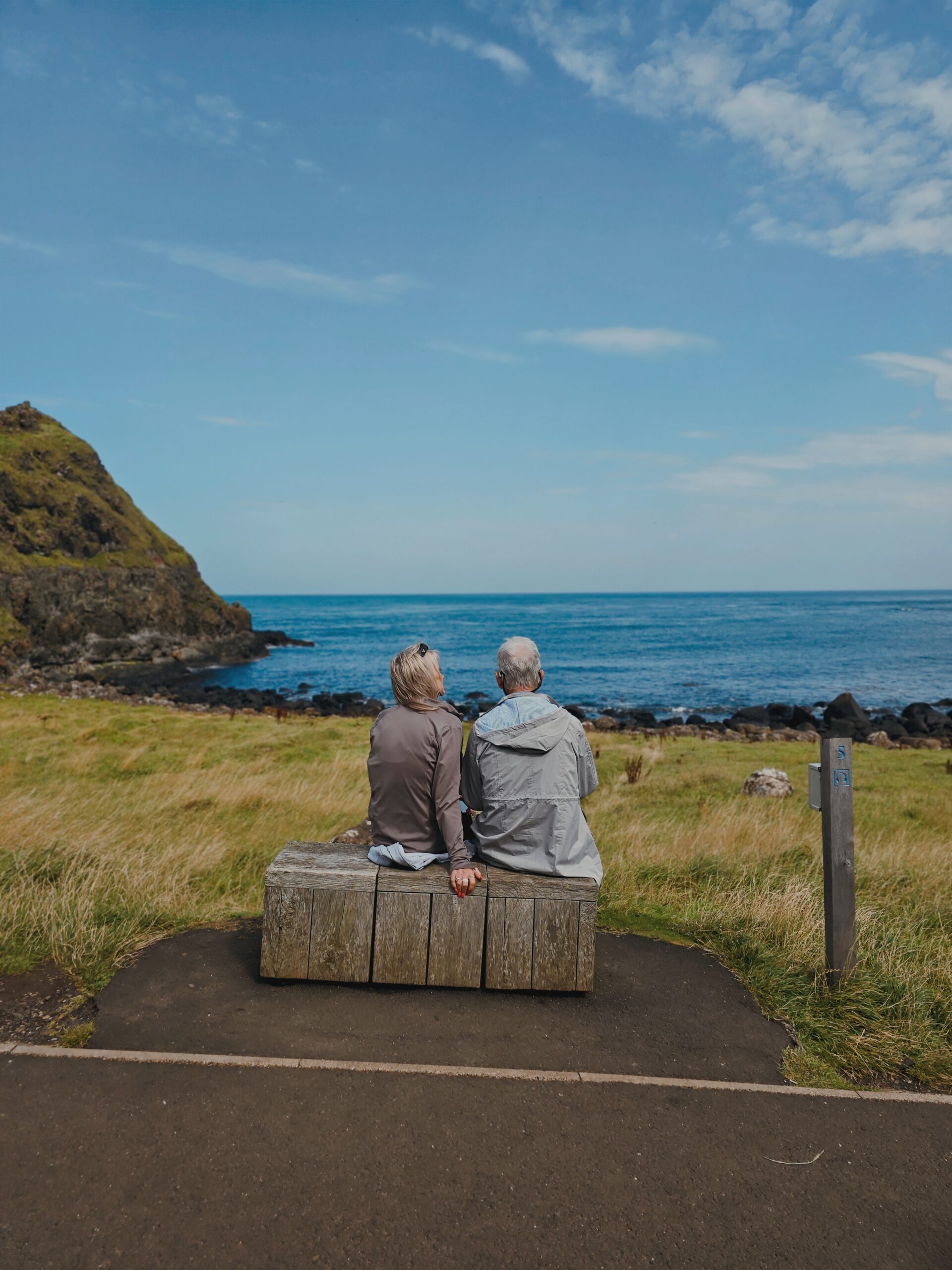
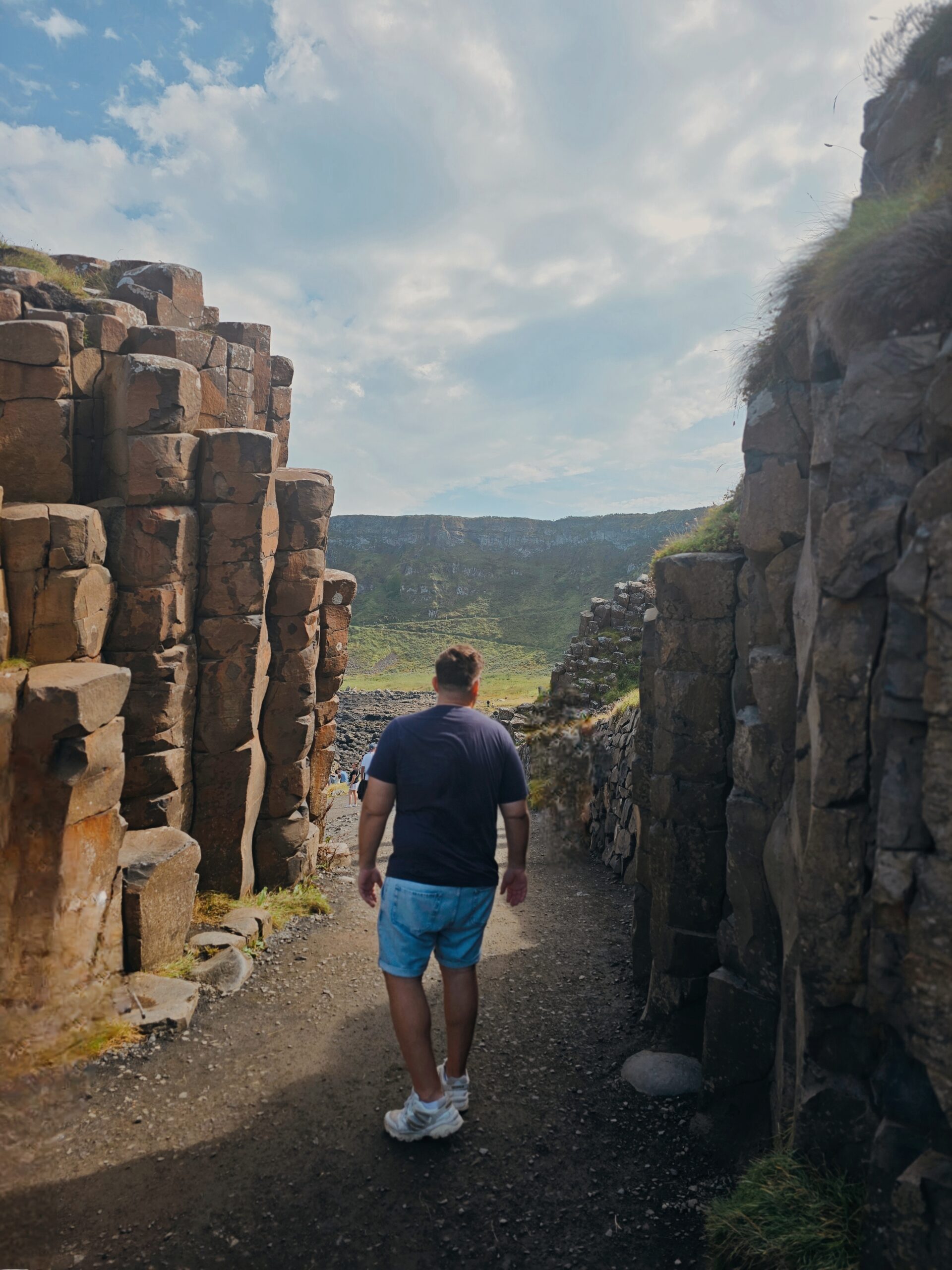
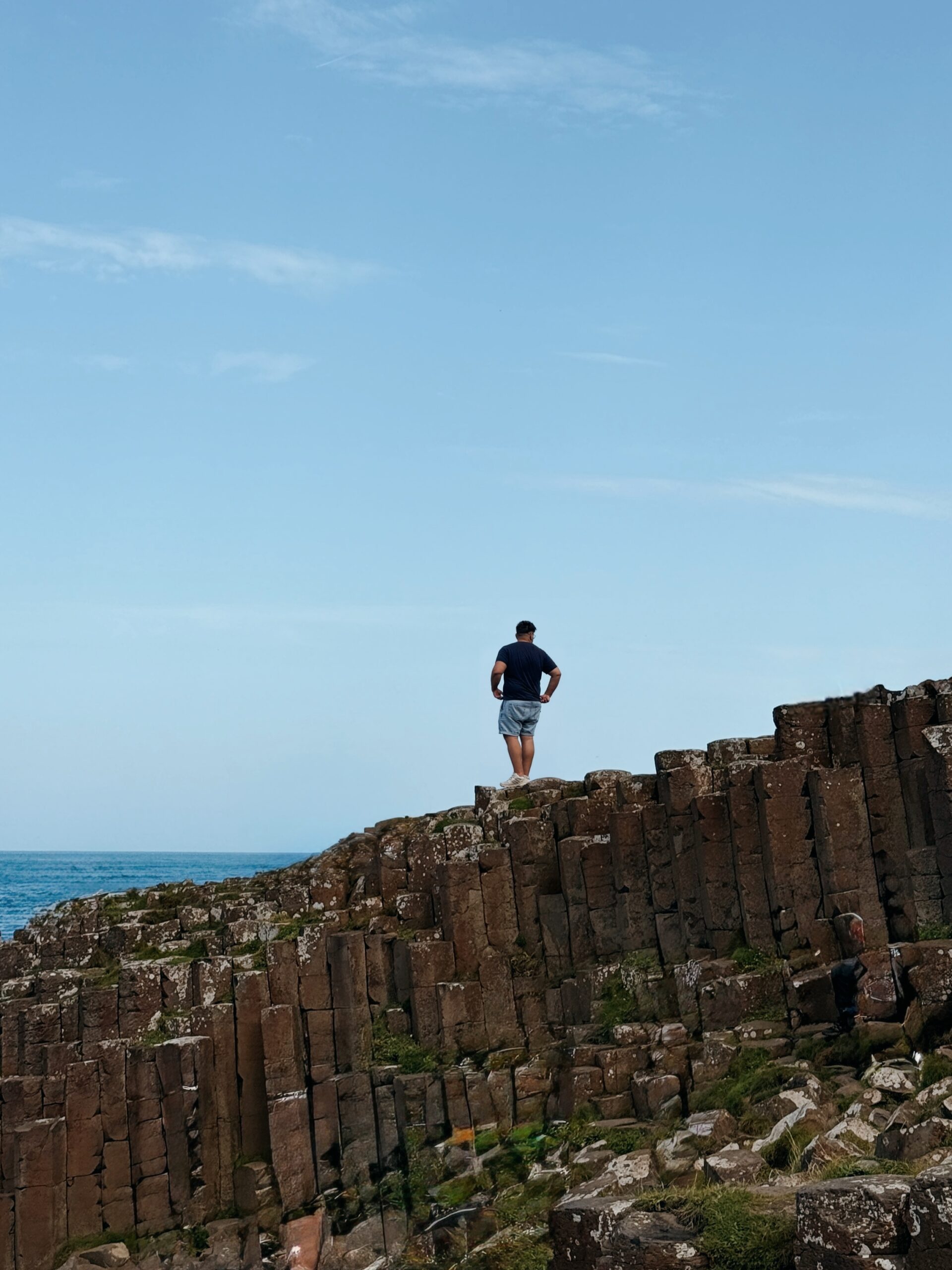
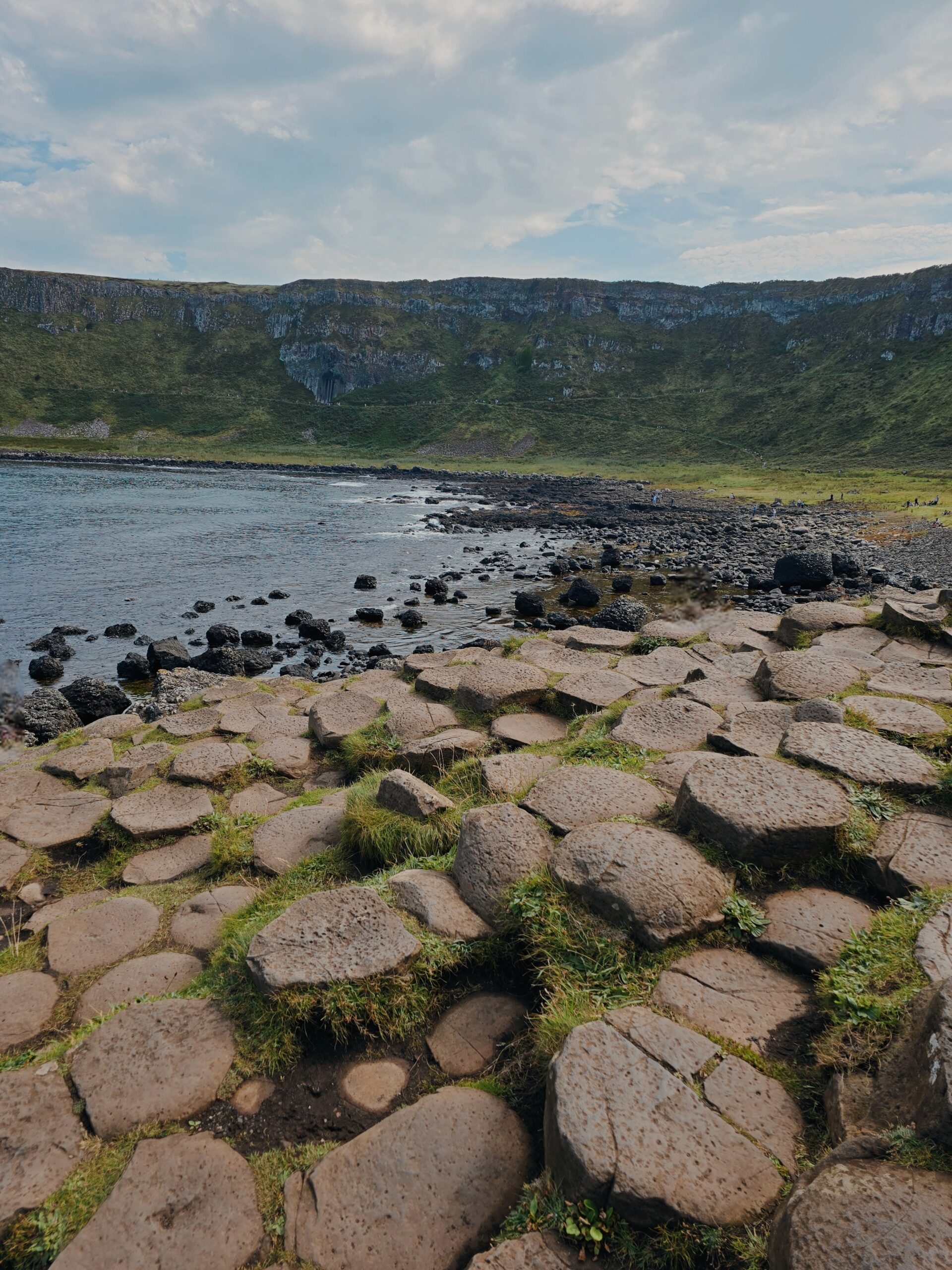
Next stop was Giant’s Causeway and for that we had to walk for a bit. We arrived at the visitors’ center and chose to take the path from the road (there’s another one going up the hills). It’s a scenic place either way. You can walk down (15 minutes) for free or pay for a shuttle bus (£1 each way). The scenery is worth the walk though. When we finally arrived at the main attraction, the extraordinary number of people there put me a bit off, but I guess this is expected.
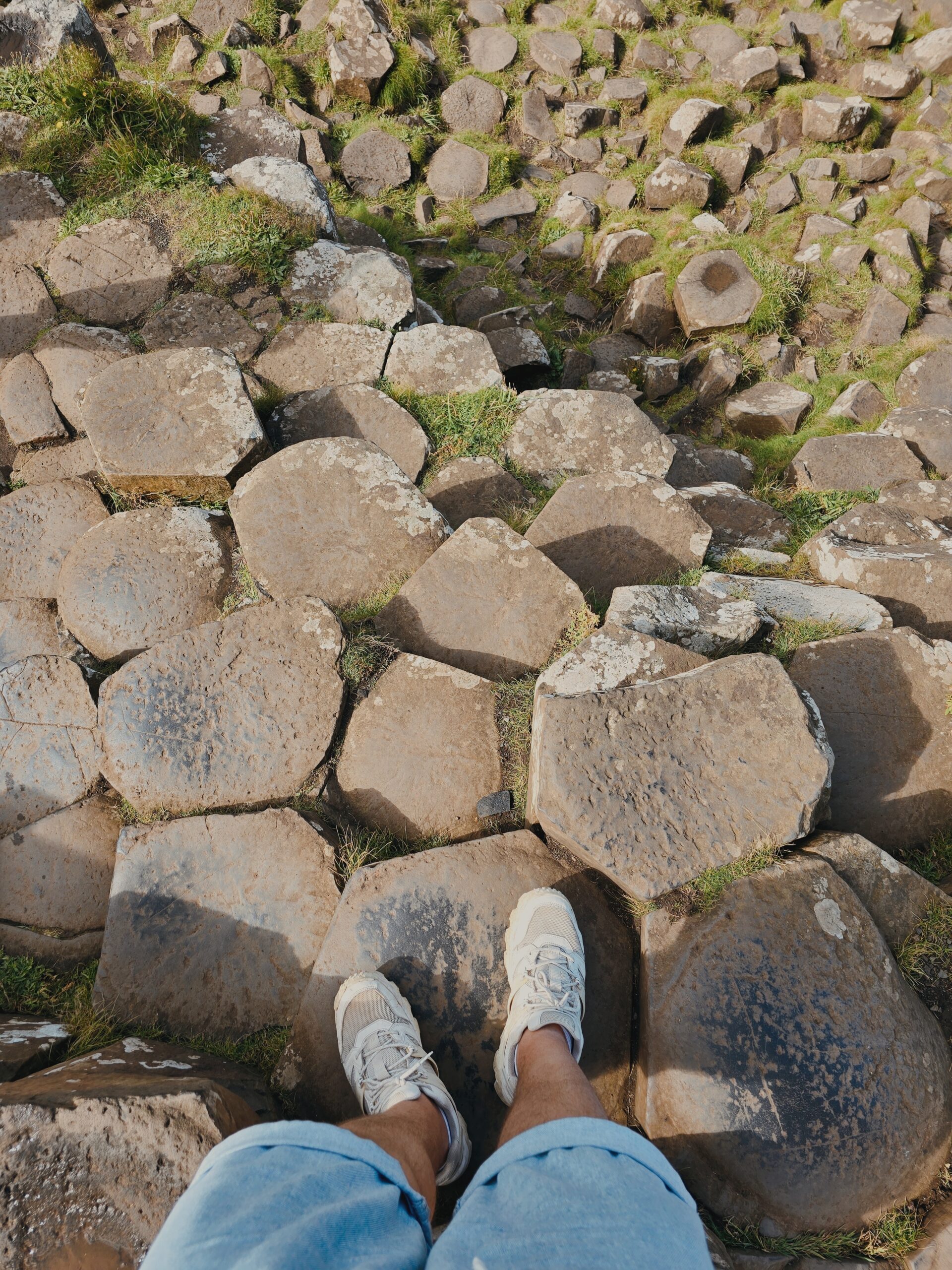
A UNESCO World Heritage Site famous for its roughly 40,000 basalt columns, formed around 60 million years ago by intense volcanic activity. According to legend, the columns were built by the Irish giant Fionn mac Cumhaill (Finn McCool) as a path to Scotland to challenge his rival, Benandonner.
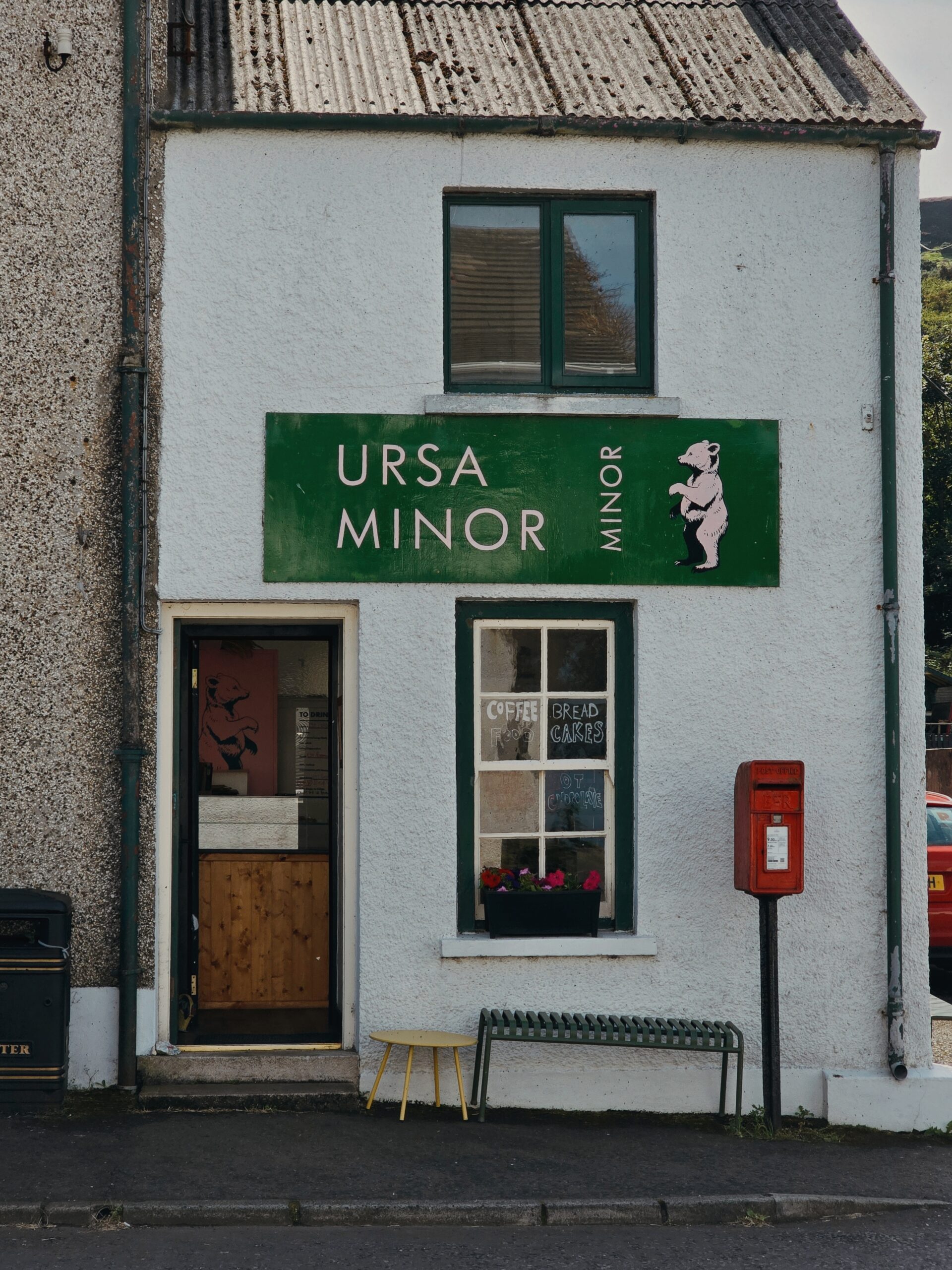
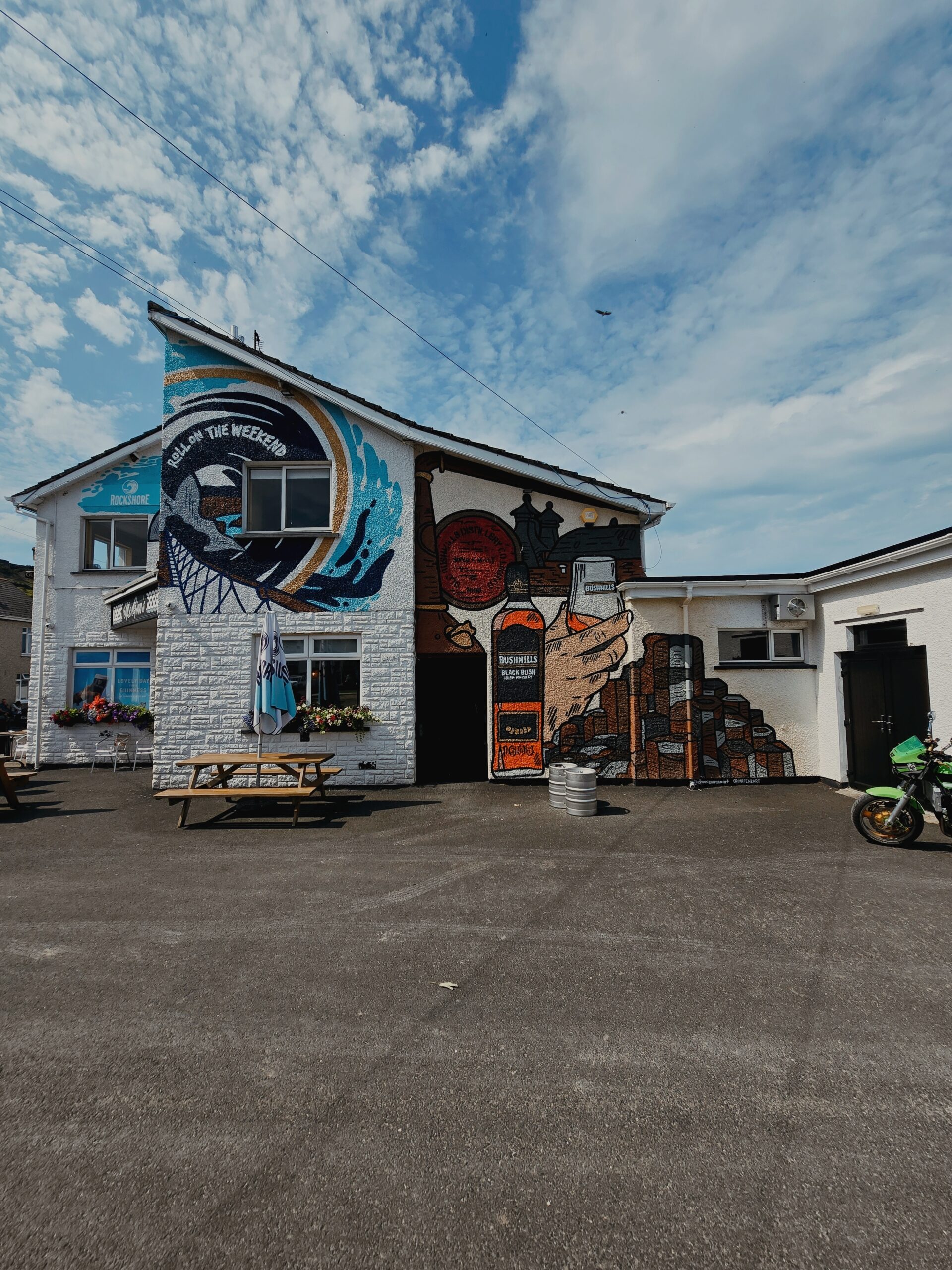
We stopped for a quick lunch break at the picturesque and tiny village of Ballintoy, at Carrick-A-Rede Bar and Restaurant (watch out for the beautiful mural by Danni Simpson). We enjoyed baked goods from Ursa Minor before we went our way.
Behind a house, casually
Baked goods here
Danni Simpson's art
Our last stop was Belfast, the capital of Northern Ireland. The city has a rich and complex history, from its origins as a 17th-century trading town to its central role in the Industrial Revolution, when it became a global shipbuilding powerhouse—most famously as the birthplace of the RMS Titanic.
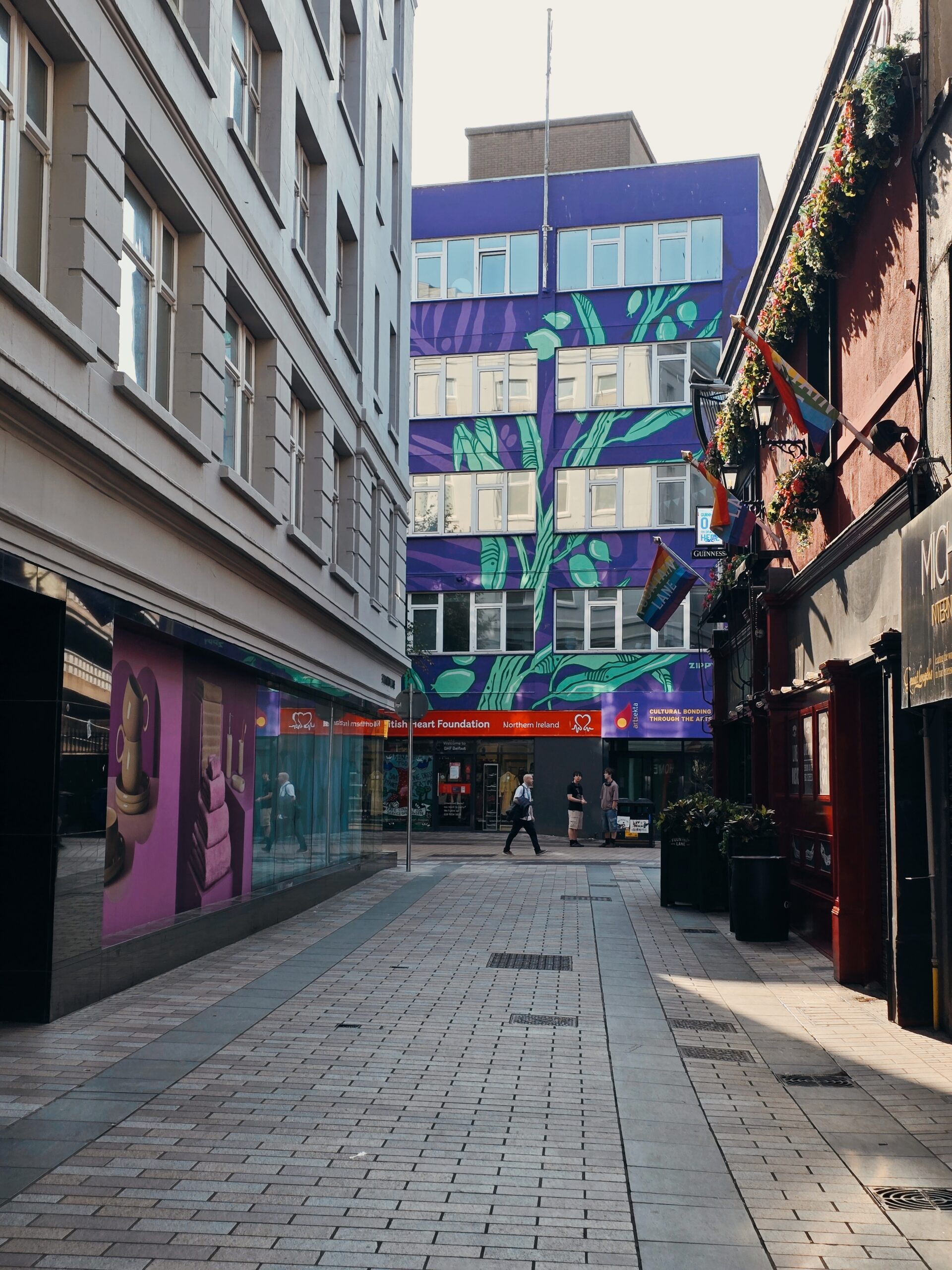
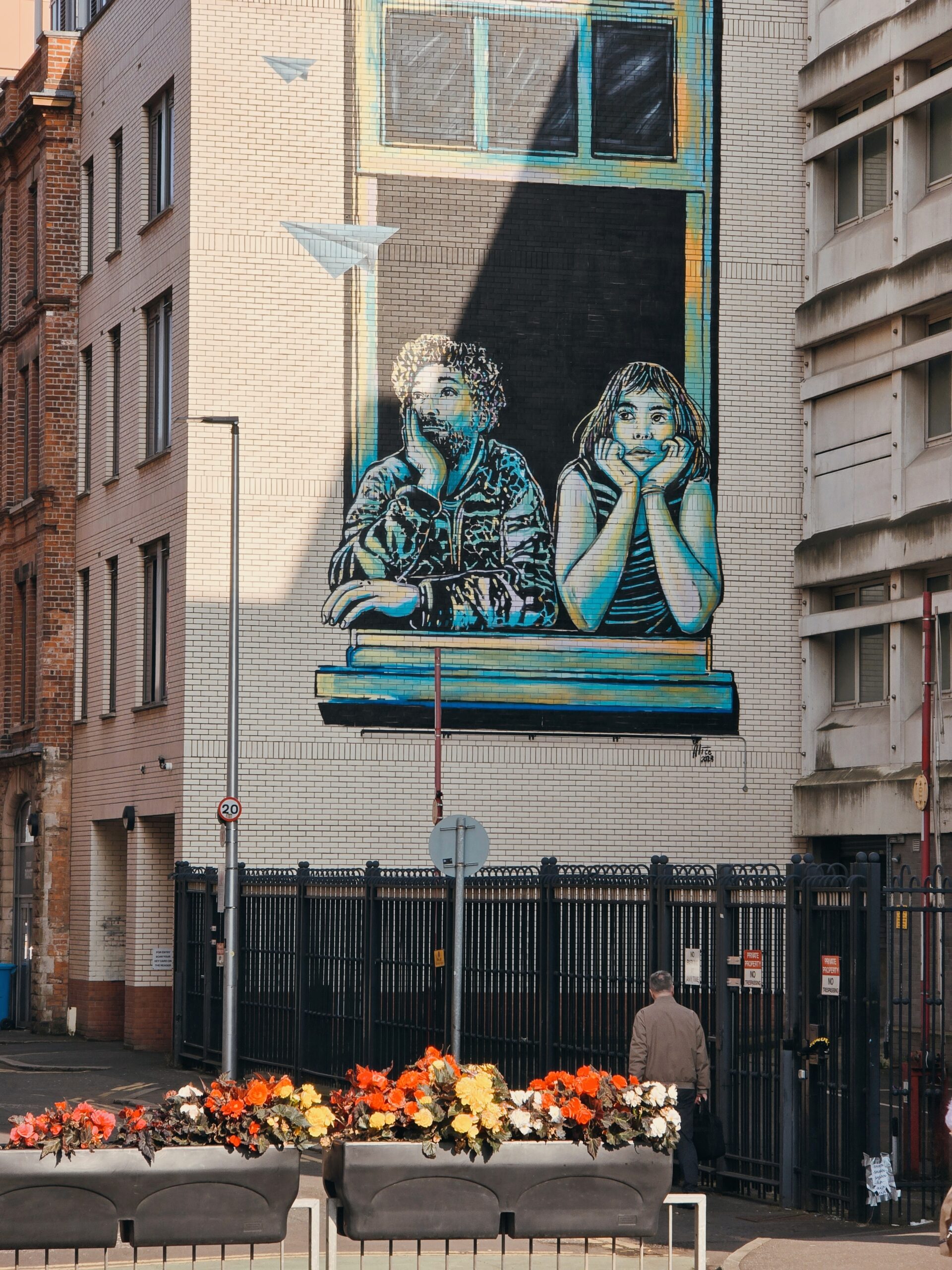
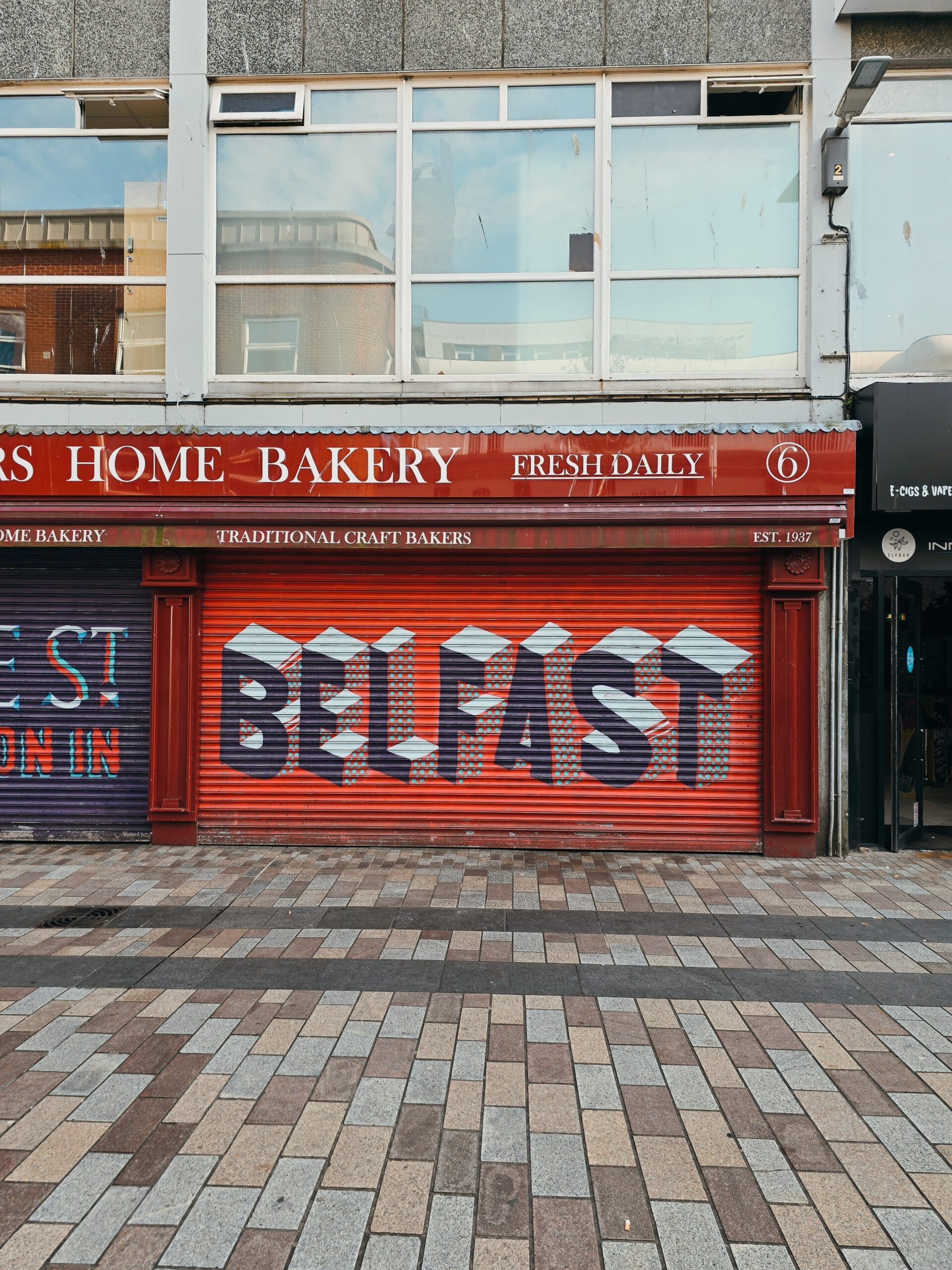
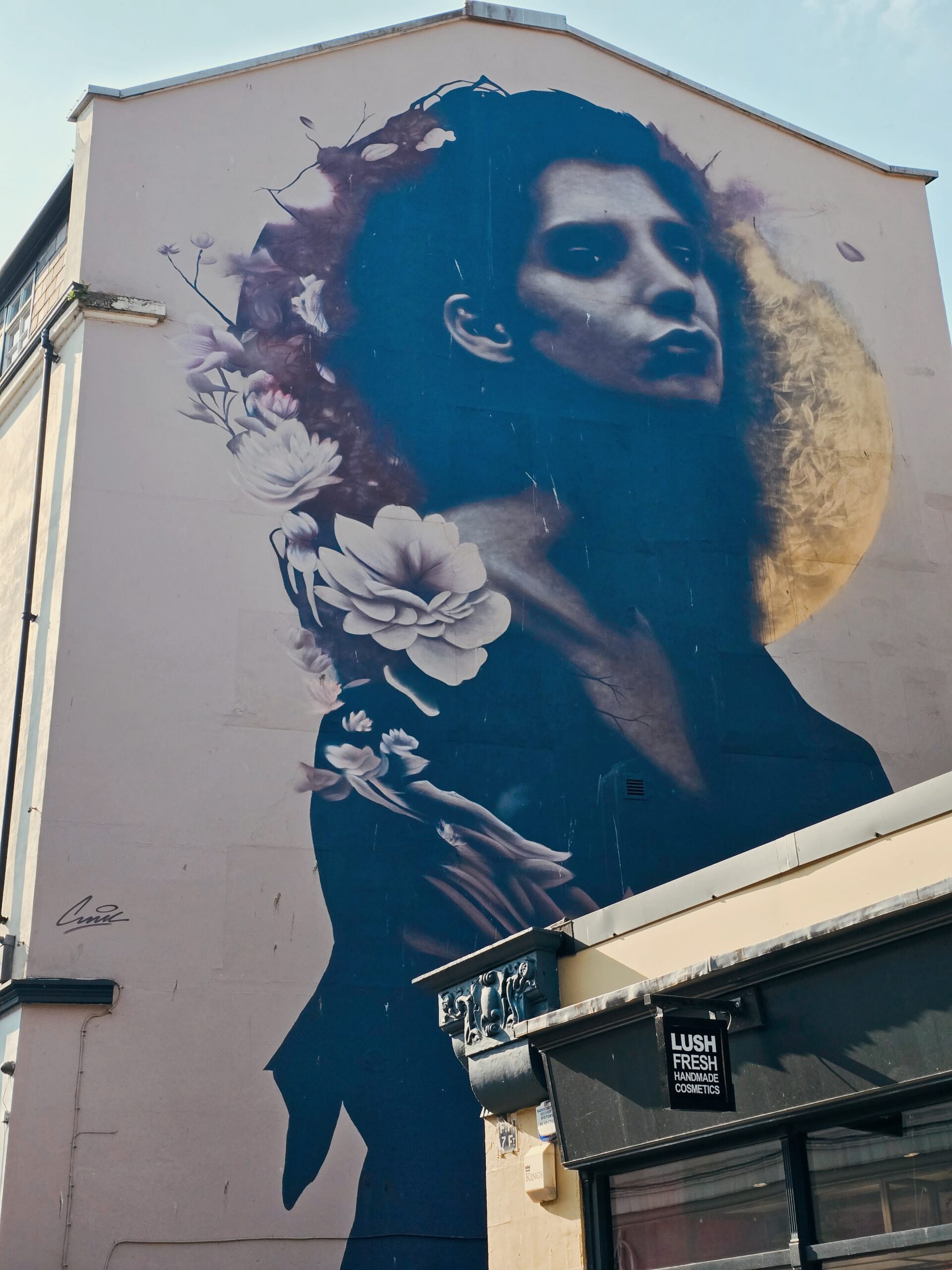
In recent years, Belfast has transformed into a vibrant cultural hub known for its street art, music, and food scene. It’s a busy city, blending architecture with street art – look out for some incredible murals in the city center. You will find many scattered around the city, some depicting parts of its troubled history.
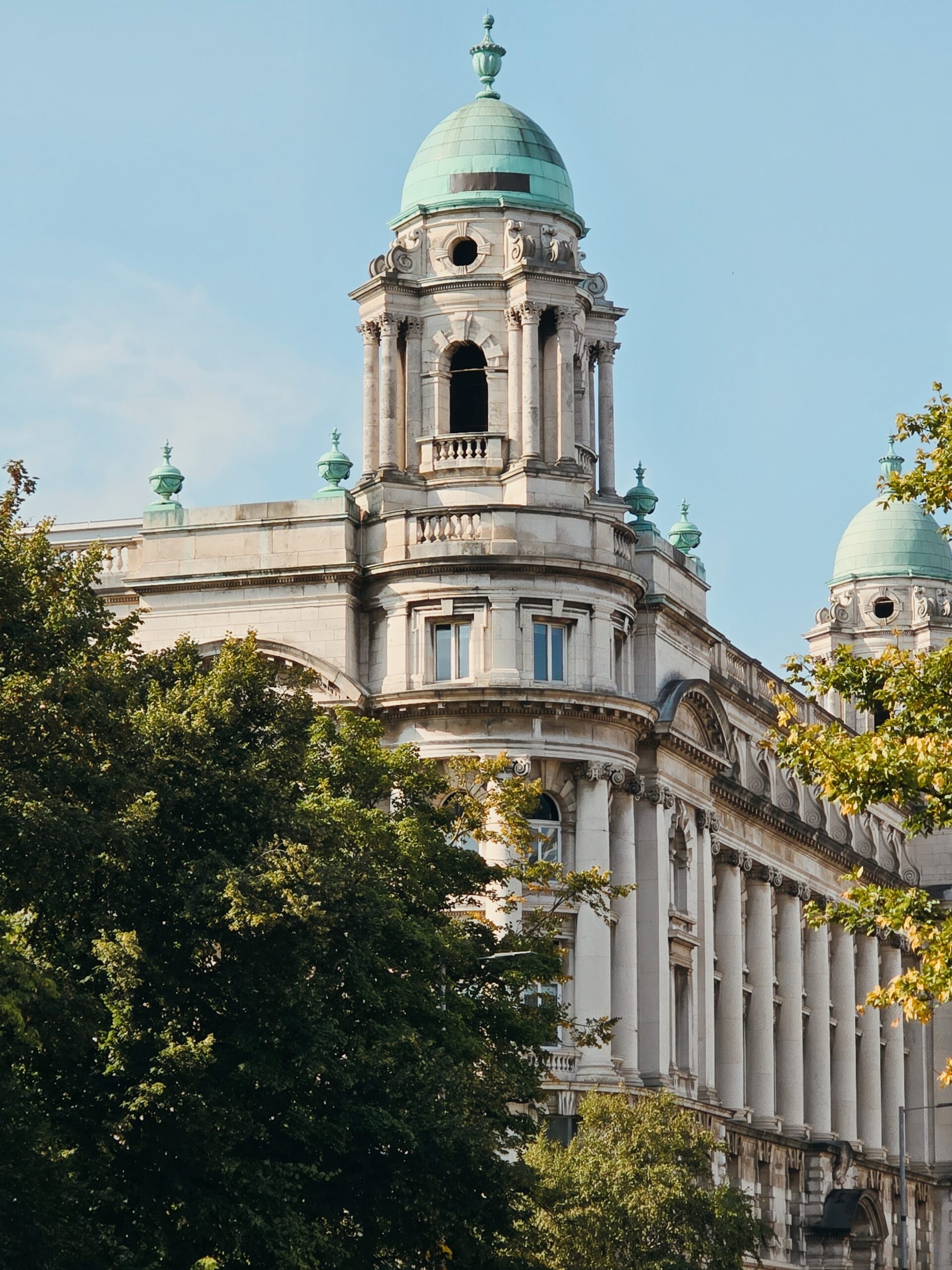
The City Hall
The Spirit of Belfast
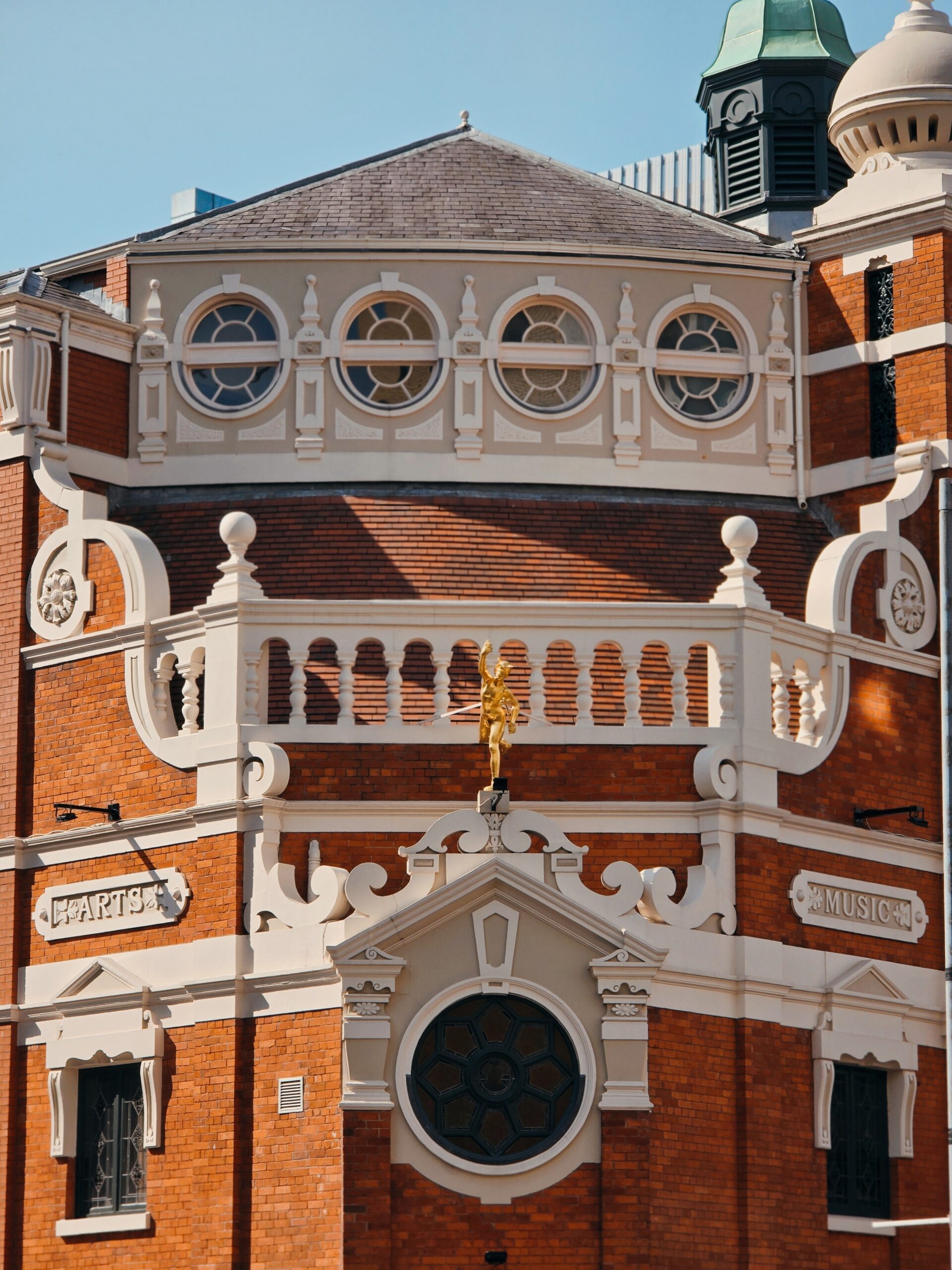
The Grand Opera House
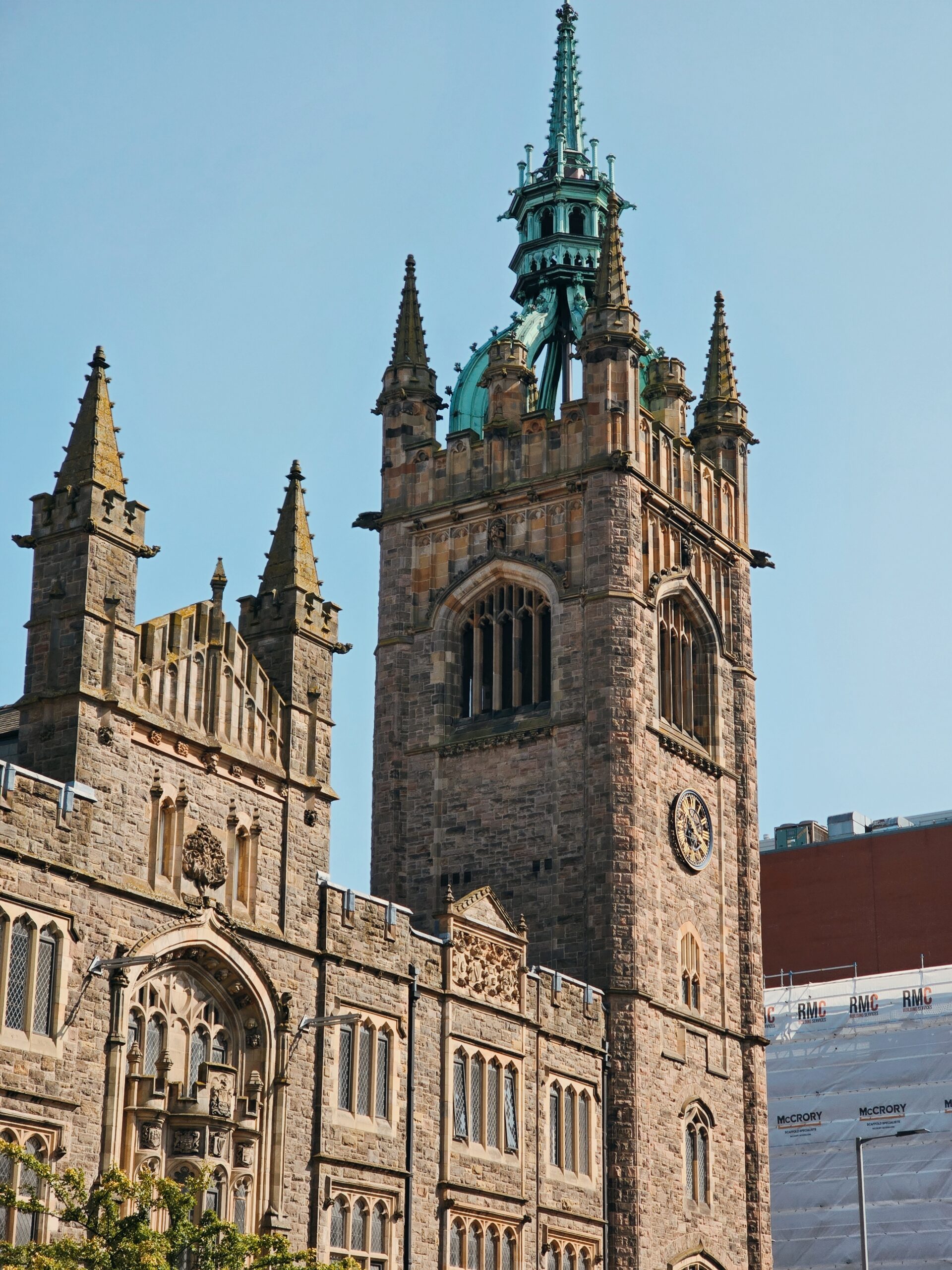
The Assembly Buildings
By Alice Pasquini + UNO
The Spiritual & Temporal, by emic
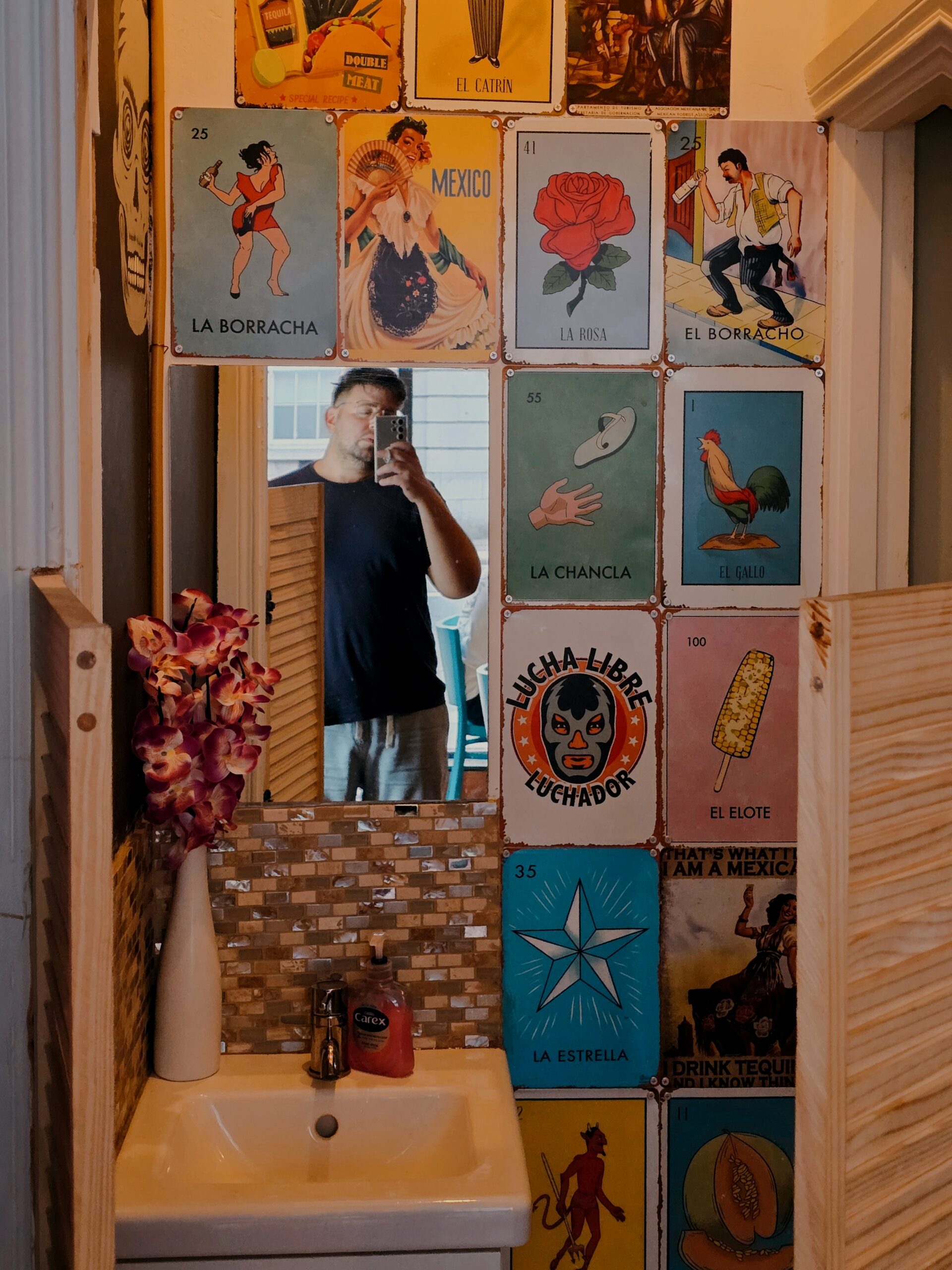
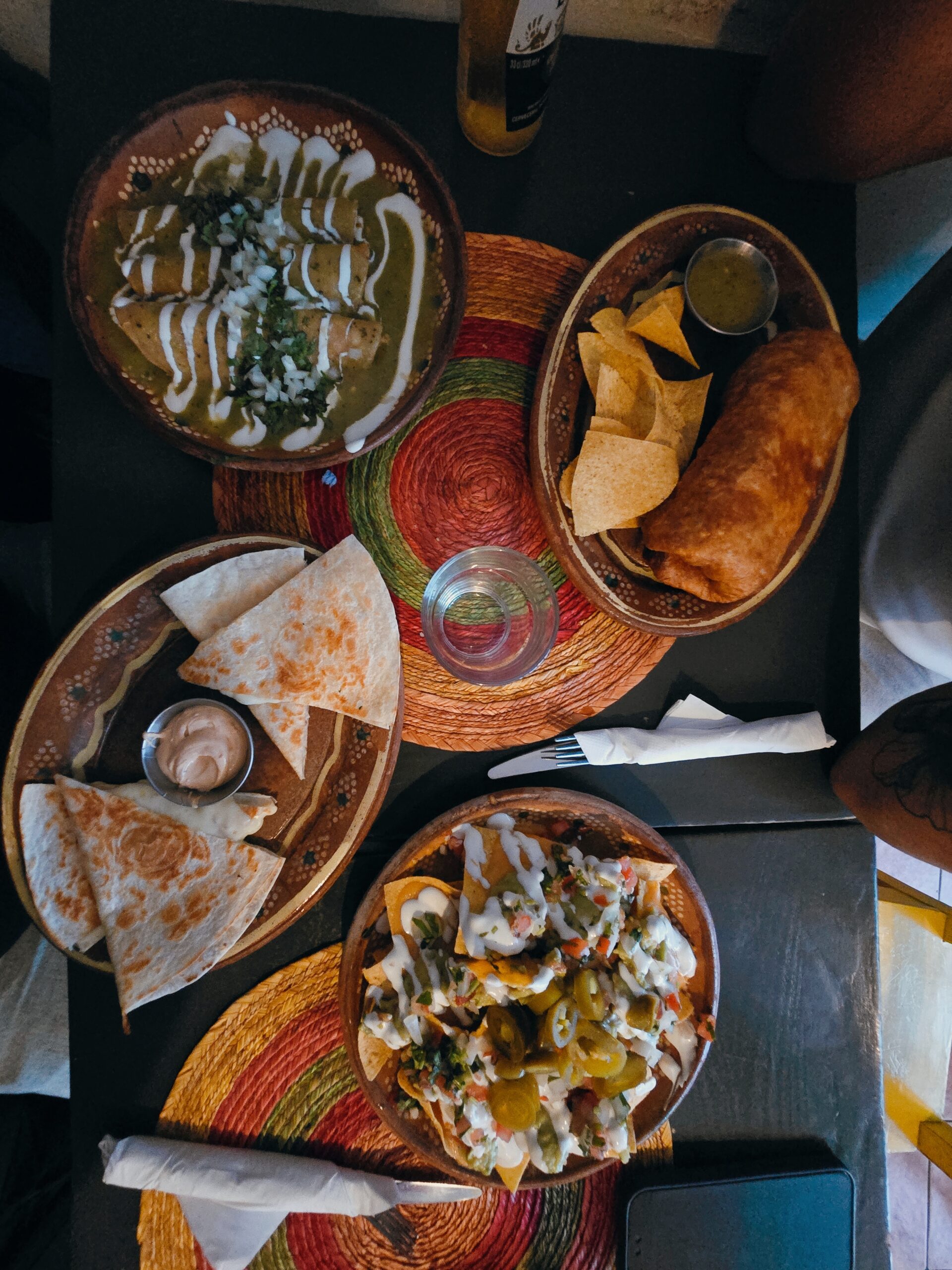
The day ended at Agave, a small but exceptional Mexican restaurant, the go-to if you want authentic tastes from Mexico.
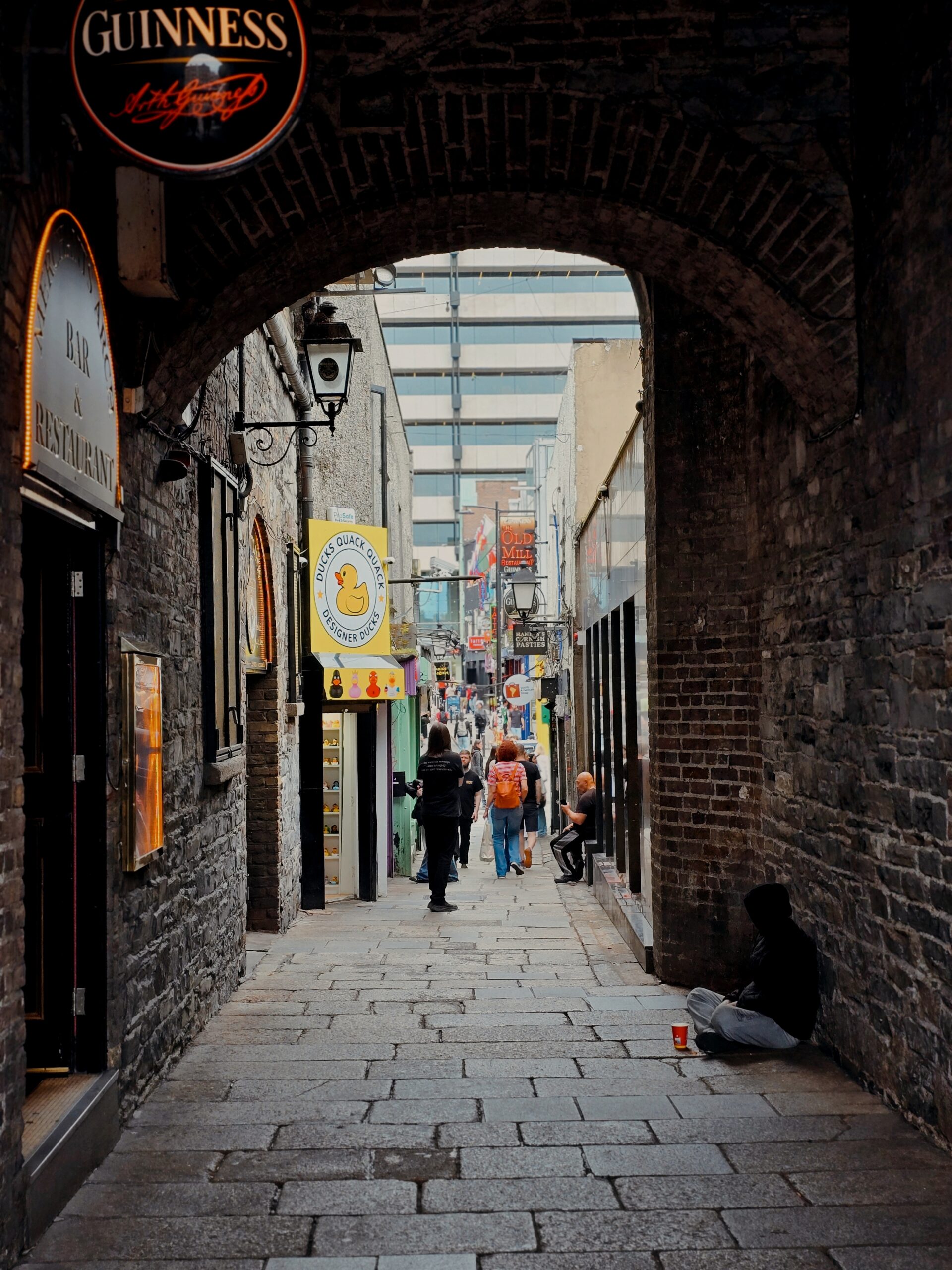
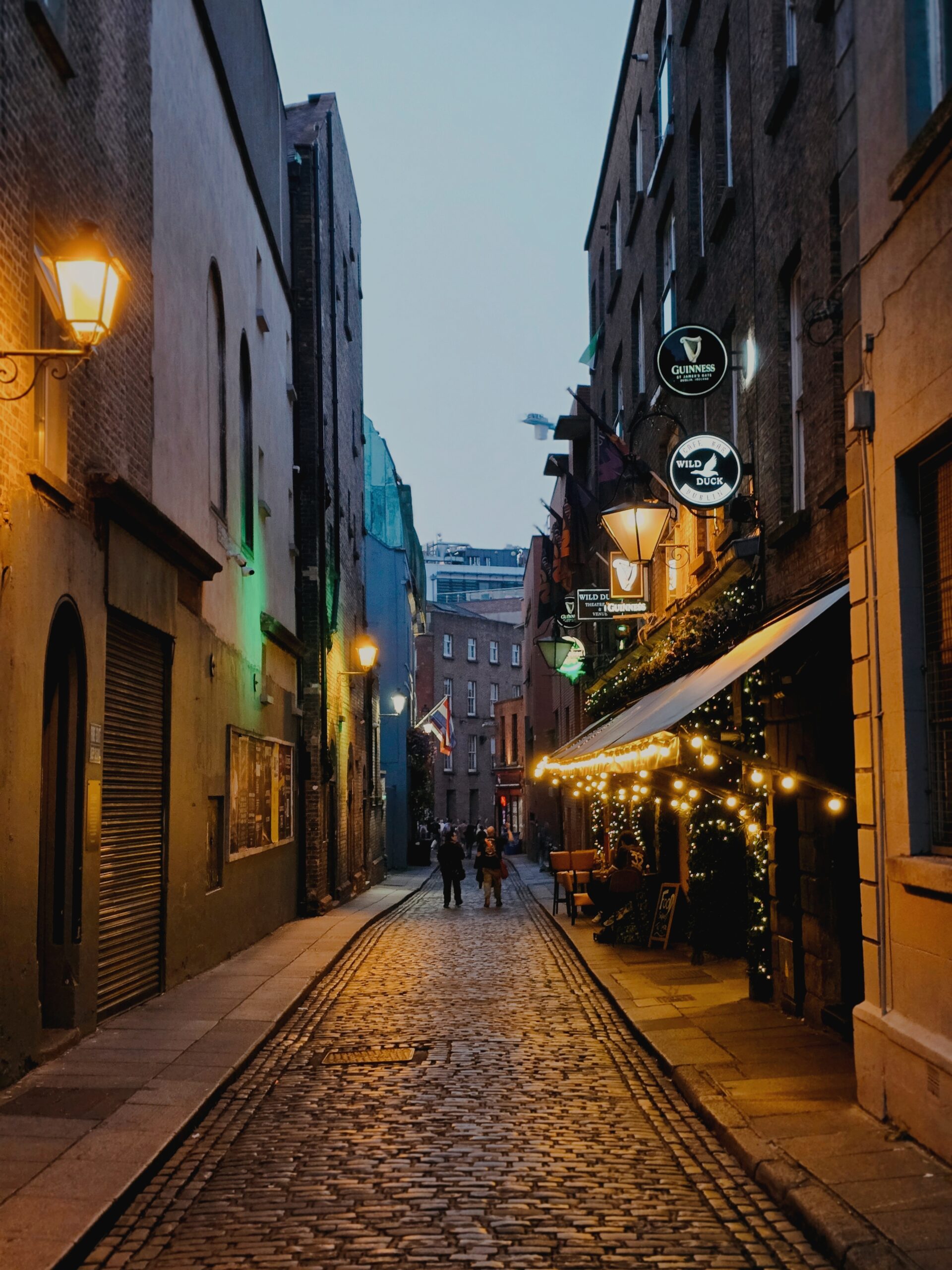
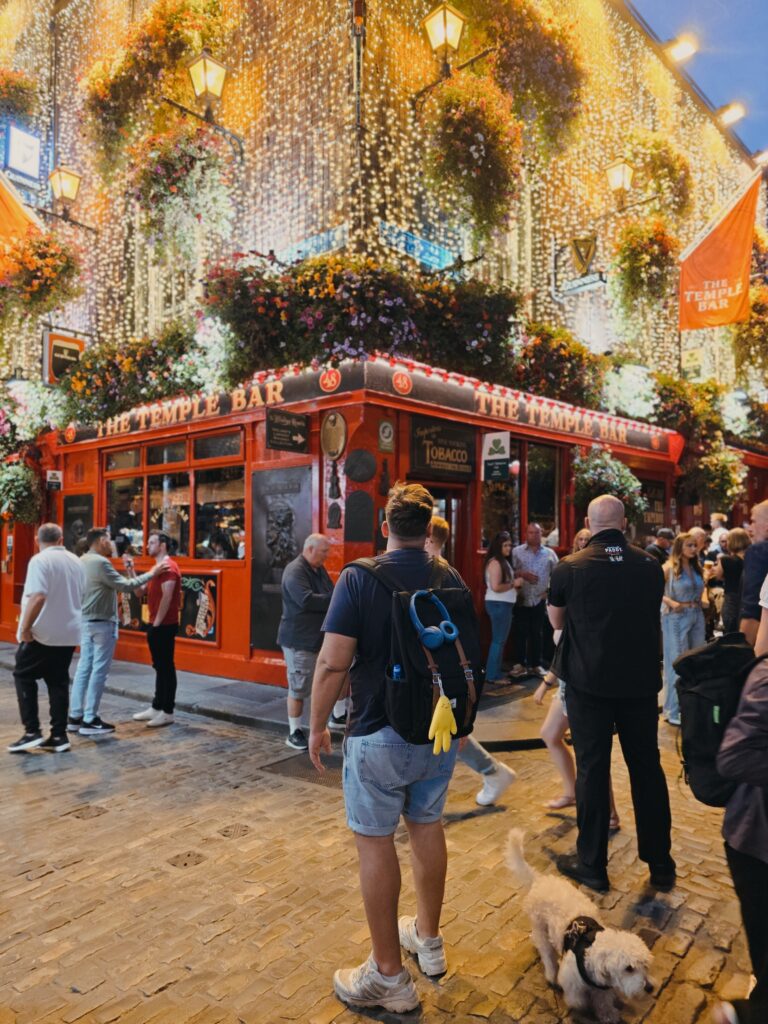
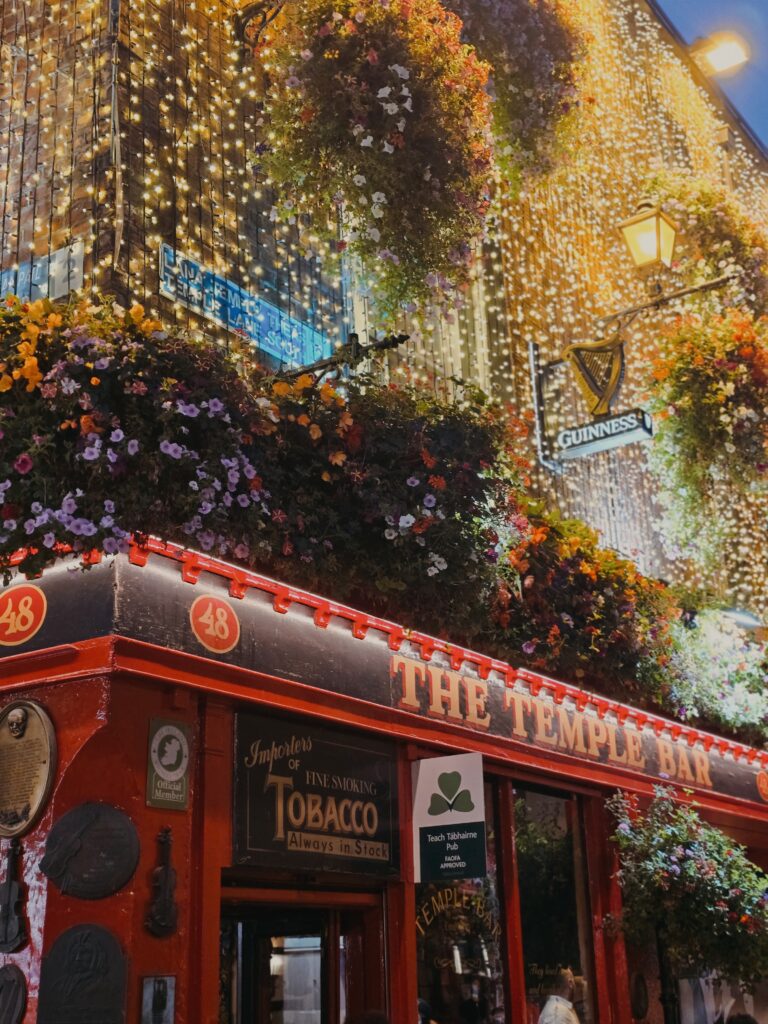
Our last walk of the day brought us to the most vibrant part of the city, the neighborhood with the iconic Temple Bar. Besides the fact that the pub itself is covered in fairy lights and has huge crowds taking pictures, the street is full of restaurants, pubs, and people enjoying themselves.
The iconic pub, dating back to 1840, is one of Dublin’s most historic and vibrant pubs, located in the heart of the city’s cultural quarter. Though the area itself has medieval roots, the pub gained renewed fame in the 1990s as the Temple Bar district was revitalized into a hub for arts, nightlife, and tourism
At Agave
Authentic and delicious Mexican food
Dublin by night
DAY 3
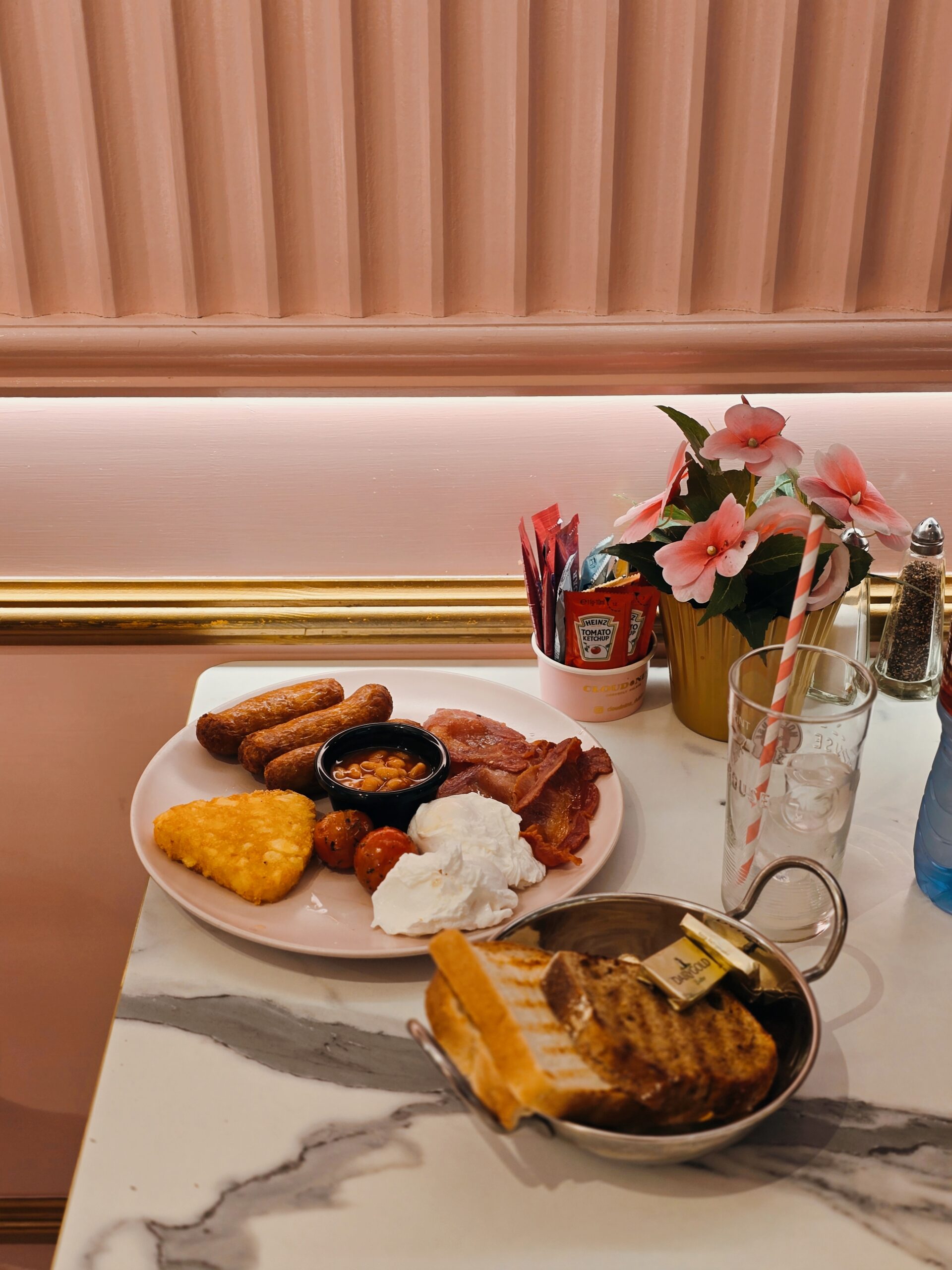
After an exciting and full day, we let our last day be more relaxed. Our first stop was back at the Temple Bar street, for an Irish breakfast at Buzz – a very pink and bright café. Then we walked over to find the portal, on the other side of River Liffey.
The Portal, designed by Benediktas Gylys, in Dublin is a large digital installation located at O’Connell Street, connecting Dublin with Lithuania, Polan and New York City in real-time through a live video stream. It’s such a remarkable moment to stand in the street and interact with people in Vilnius or Lublin, you can’t help but think how far technology has come.
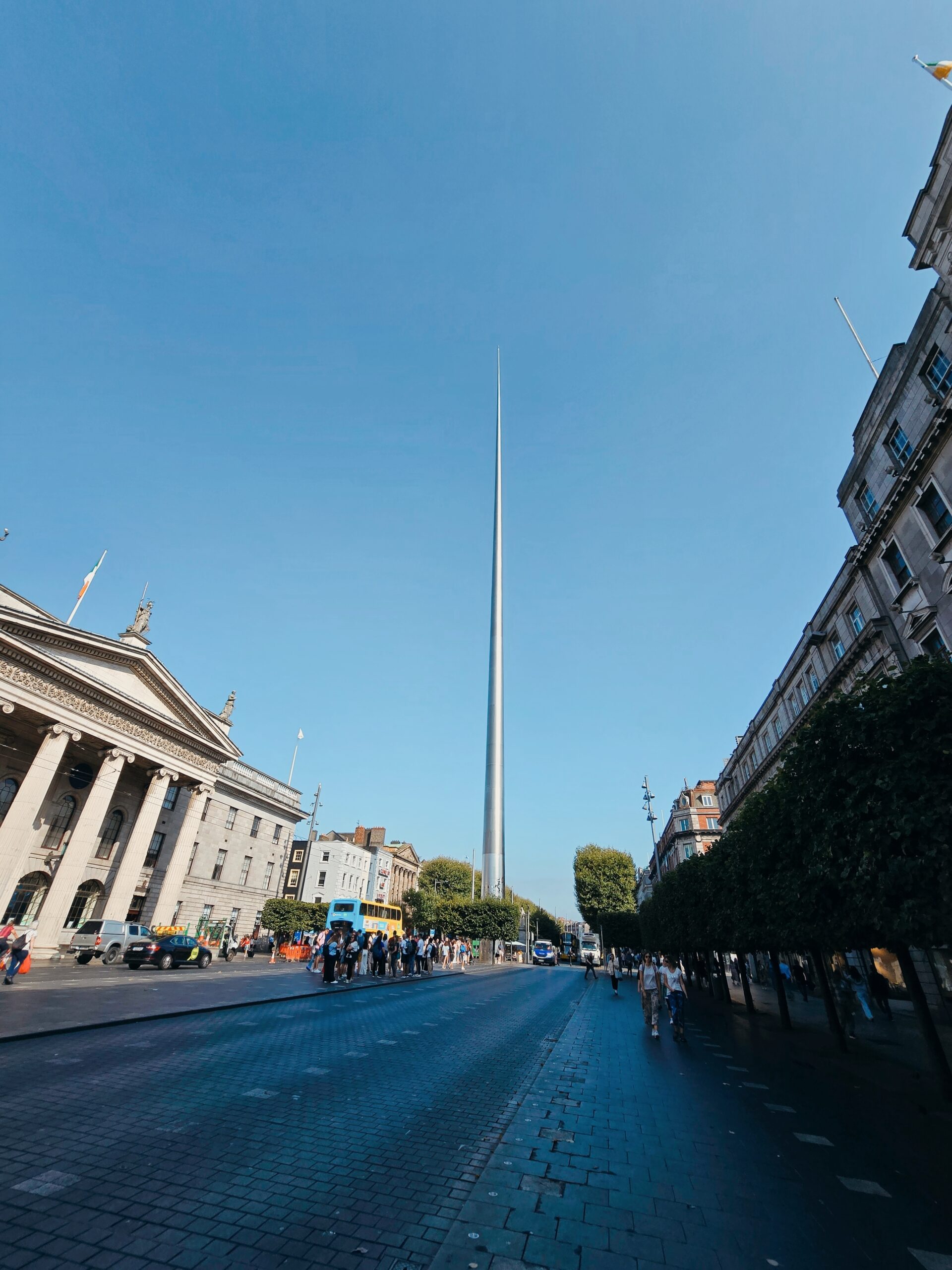
And while you’re there, you can’t not notice The Spire. The Spire of Dublin, often nicknamed “The Spike” is a 120m tall, stainless-steel monument located on O’Connell Street. Designed by Ian Ritchie Architects and completed in 2003, the Spire was part of a regeneration project for the area and now serves as a modern symbol of the city.
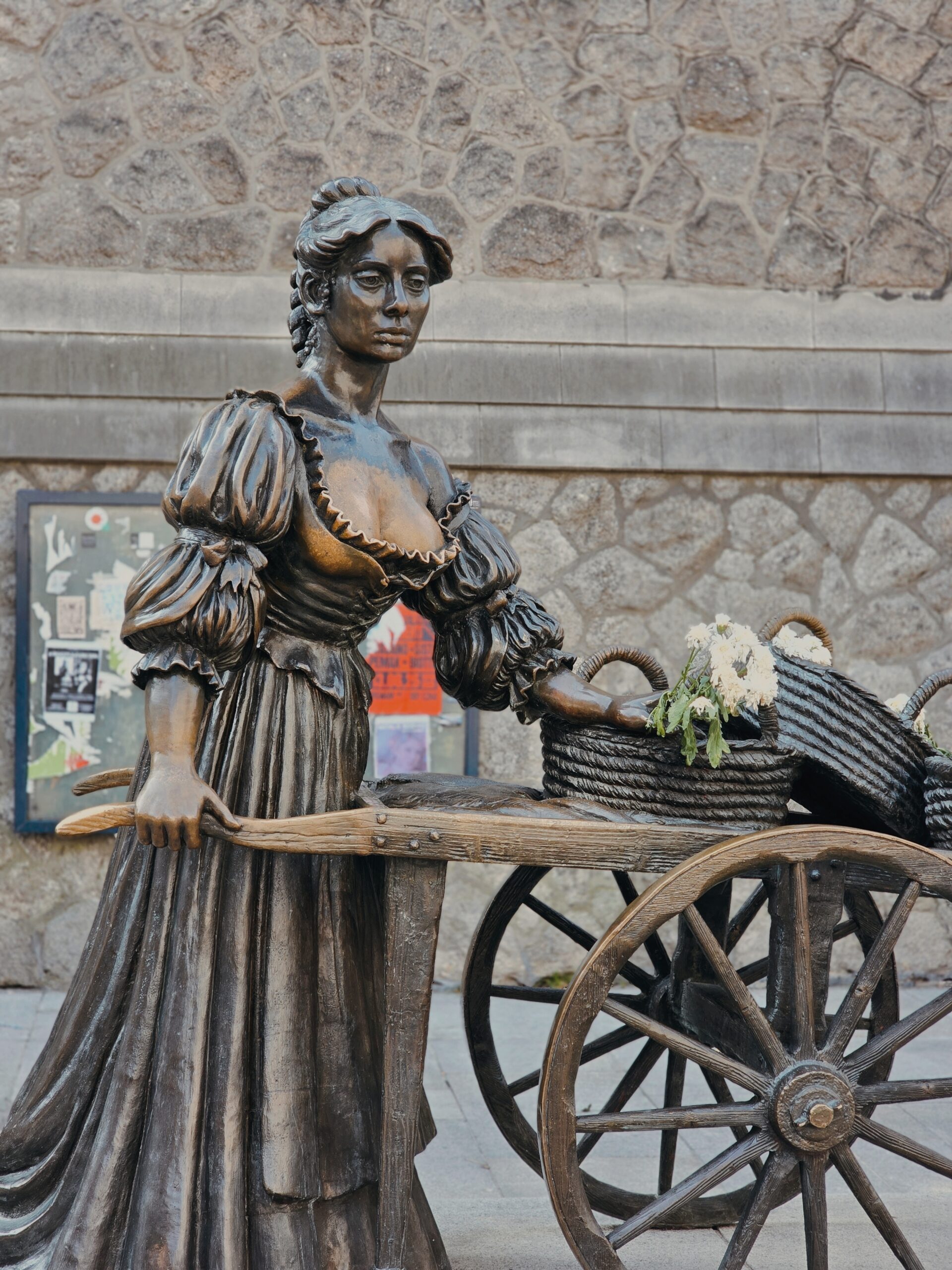
Back to the old city, we went over to Suffolk Street, to visit Molly Mahone. Molly Malone, sculpted by Jeanne Rynhart, is a famous statue commemorating a fictional fishmonger who, according to the popular Irish ballad “Cockles and Mussels,” plied her trade on the streets of Dublin and tragically died young of a fever.
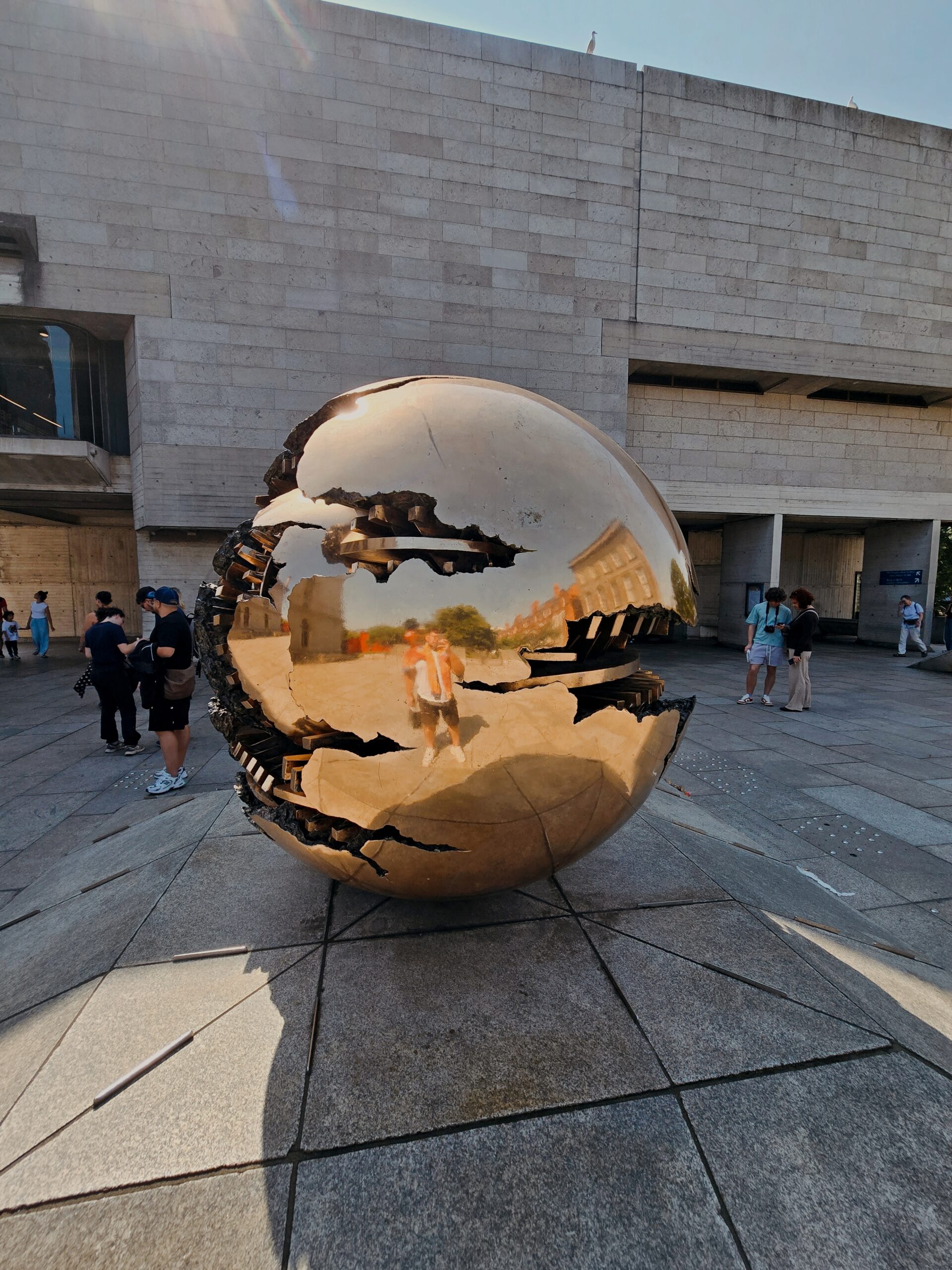
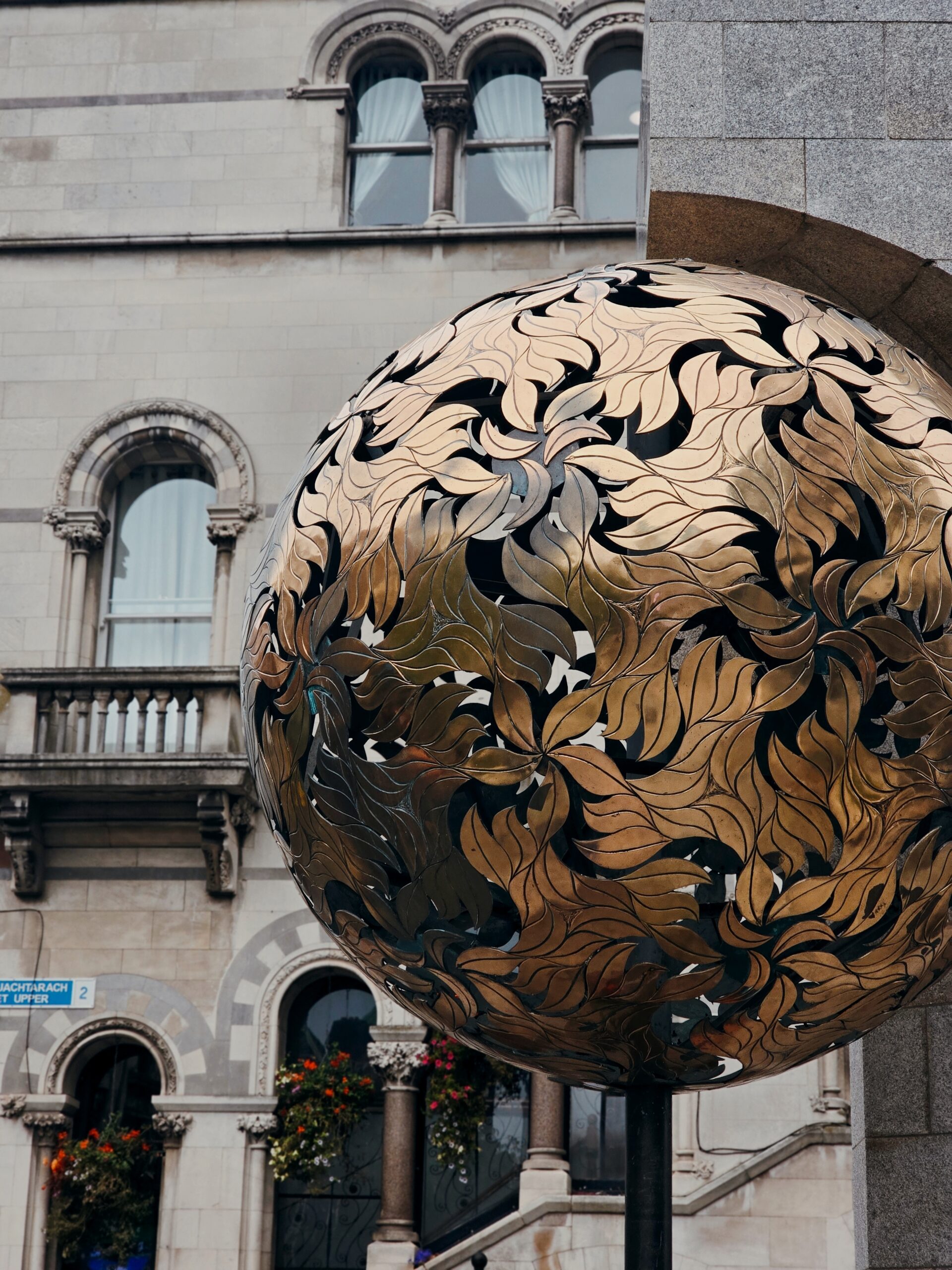
I also wanted to visit the Old Library at Trinity College (which is usually free) but it’s now paired with The Kells Experience and tickets were sold out for the day. We did find a second sphere (Sfera con Sfera), by Arnaldo Pomodoro. The first one was The Tree of Gold (Crann an Óir), by Éamonn O’Doherty located on Dame Street. That one was commissioned to celebrate Dublin’s role as European City of Culture in 1991 – a symbol of growth, prosperity, and shared wealth.
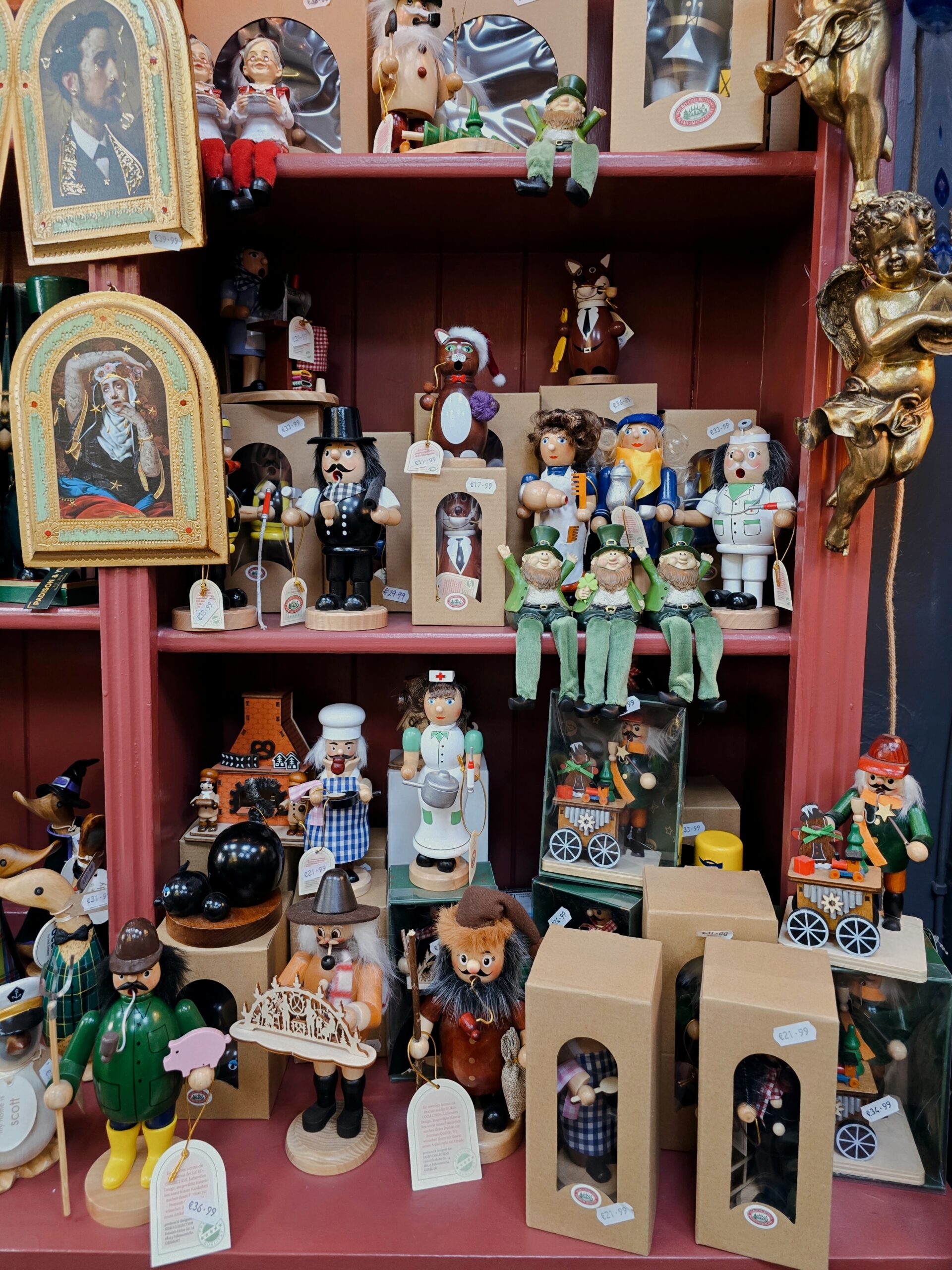
Some of the treasures at Padison & Yule
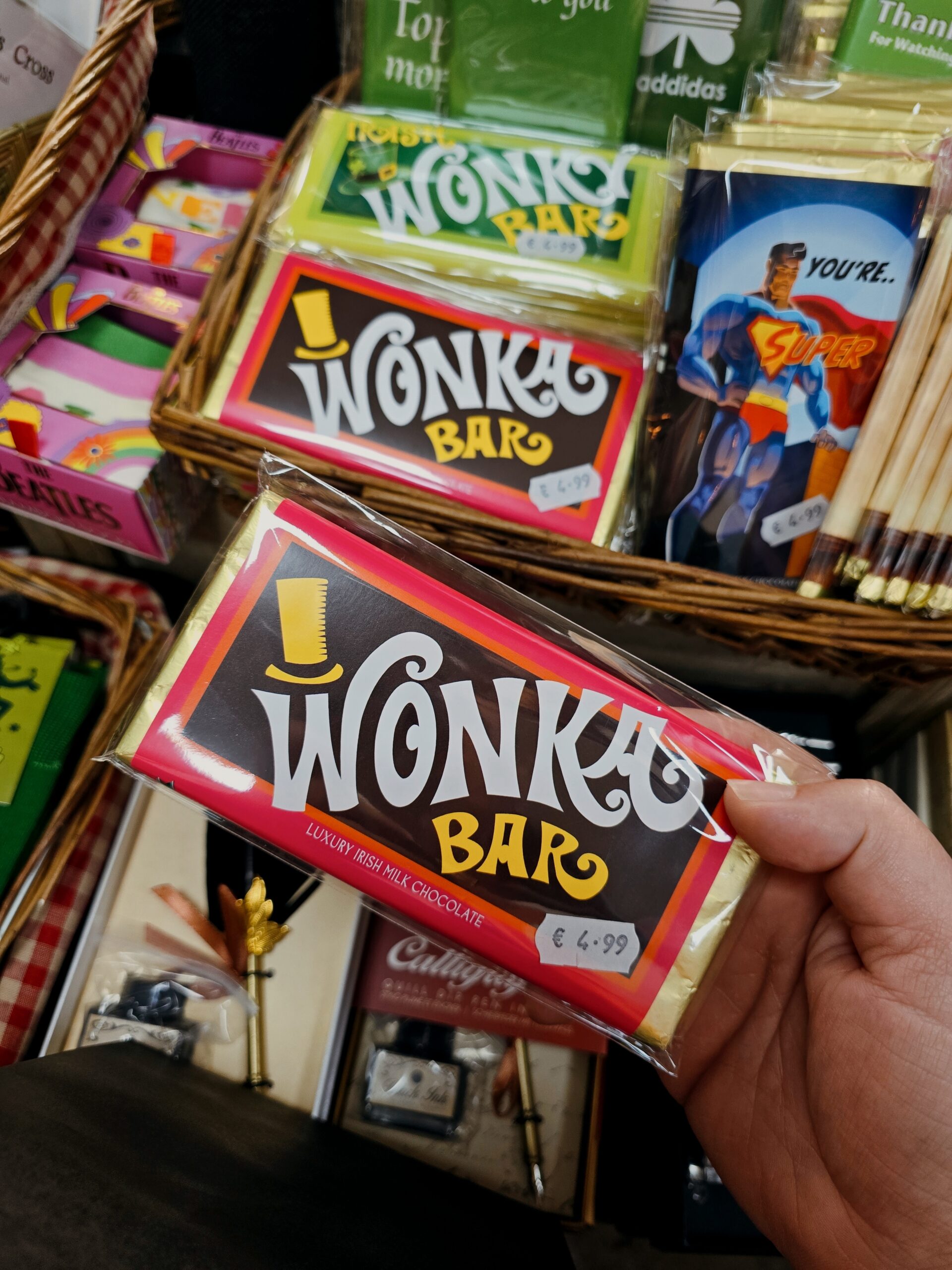
And Wonka bars (without a golden ticket)
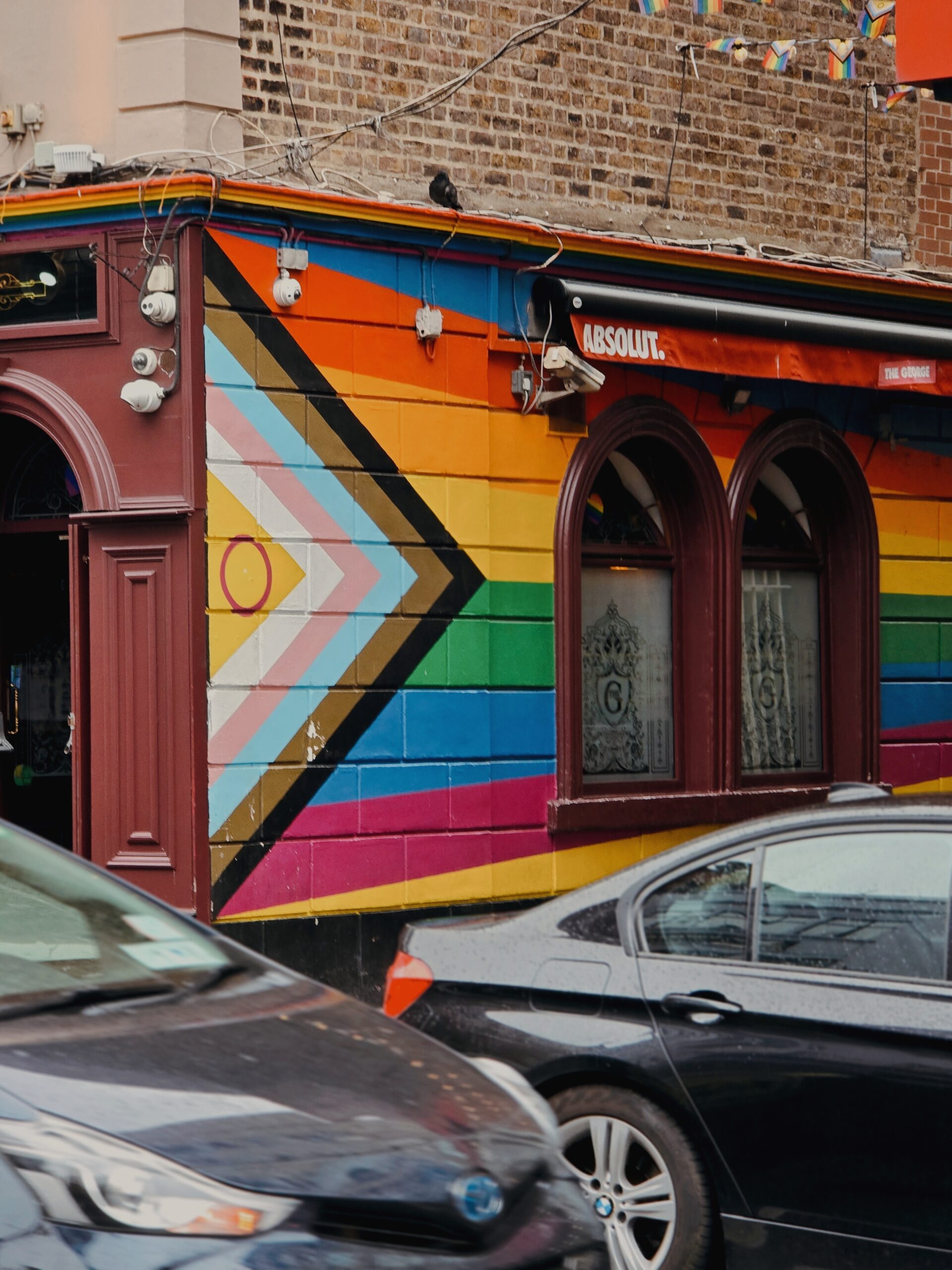
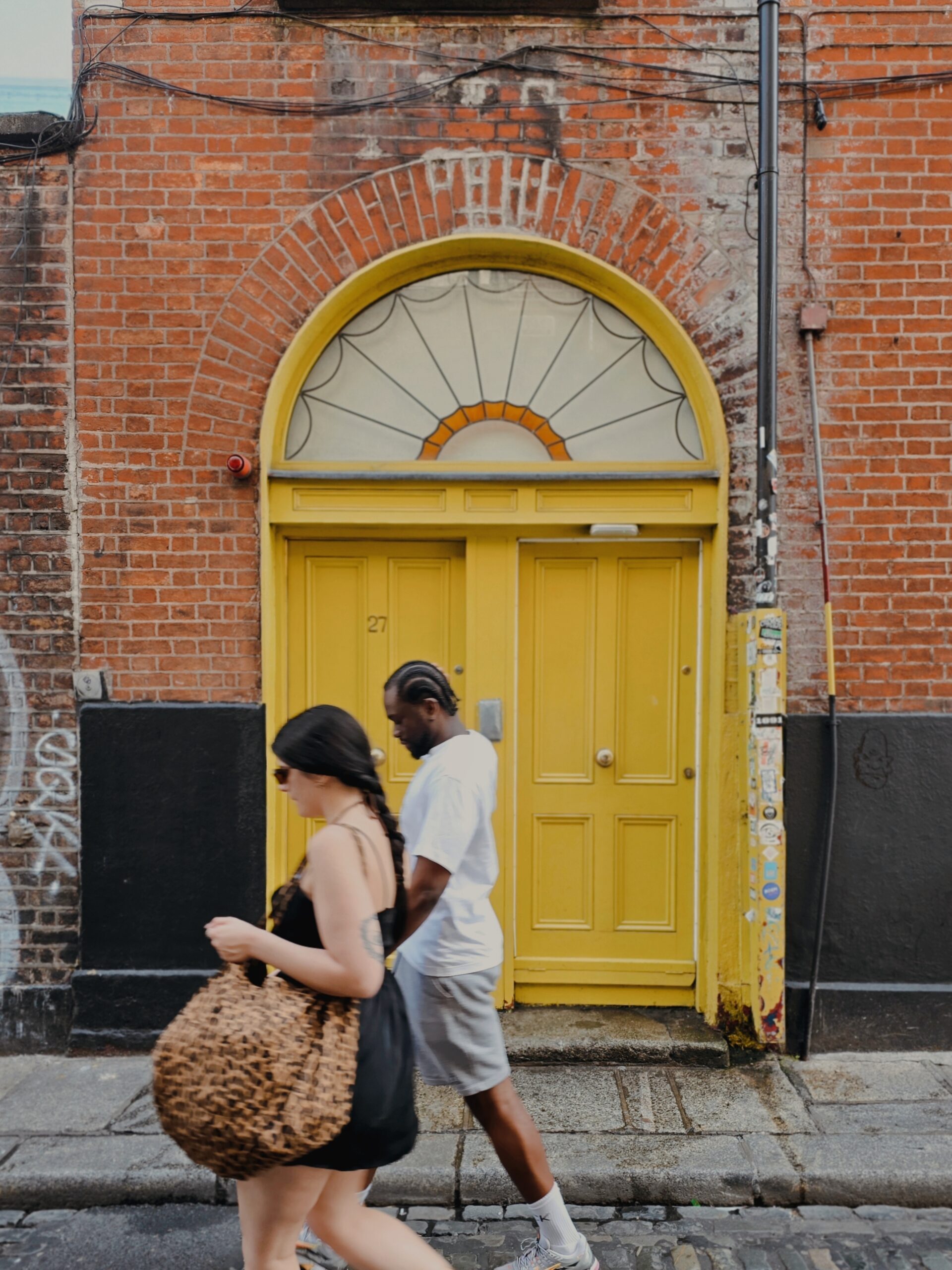
Pay attention to the doors
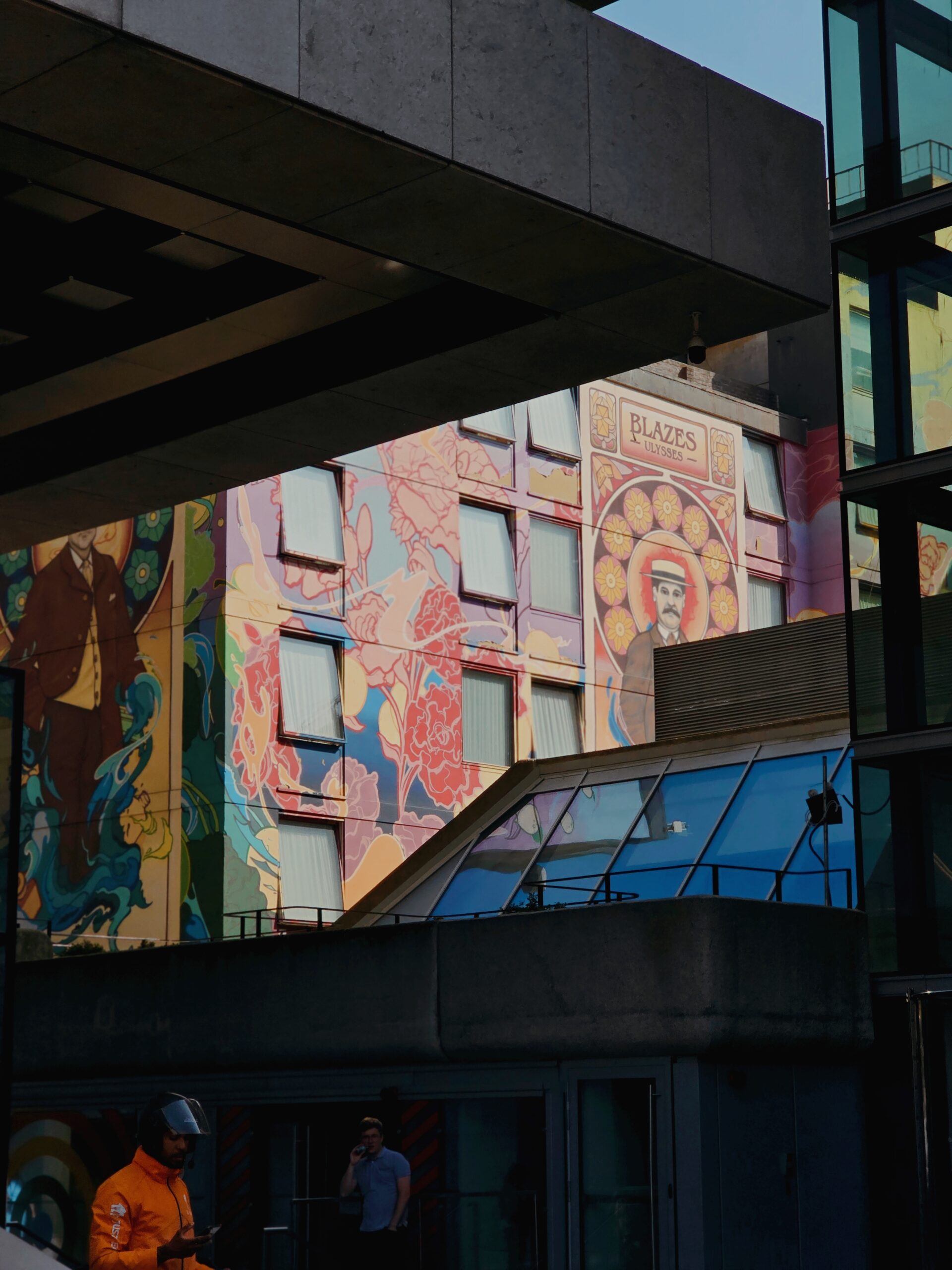
The mural at Blooms Hotel
On our more relaxed hours I had the chance to look around, to discover handmade treasures at local shops like Padison & Yule (where I found a cute leprechaun to buy) and to realize that the doors are colorful all over the city. The vibes in Dublin are unbeatable.
I will tell you this; I do a lot of 3-day trips, and this was one of the very few where I left wanting more. Not because I didn’t see or do the things I wanted to, but because I wanted to experience Dublin a bit more. Life in Dublin is a vibrant mix of old-world charm and modern energy. Rich history meets the lively pub culture. It feels both like a bustling capital and a small town, with a relaxed pace of life even though it always feels alive.