A day at Salamis: How to experience Cyprus’s historic ancient City
E
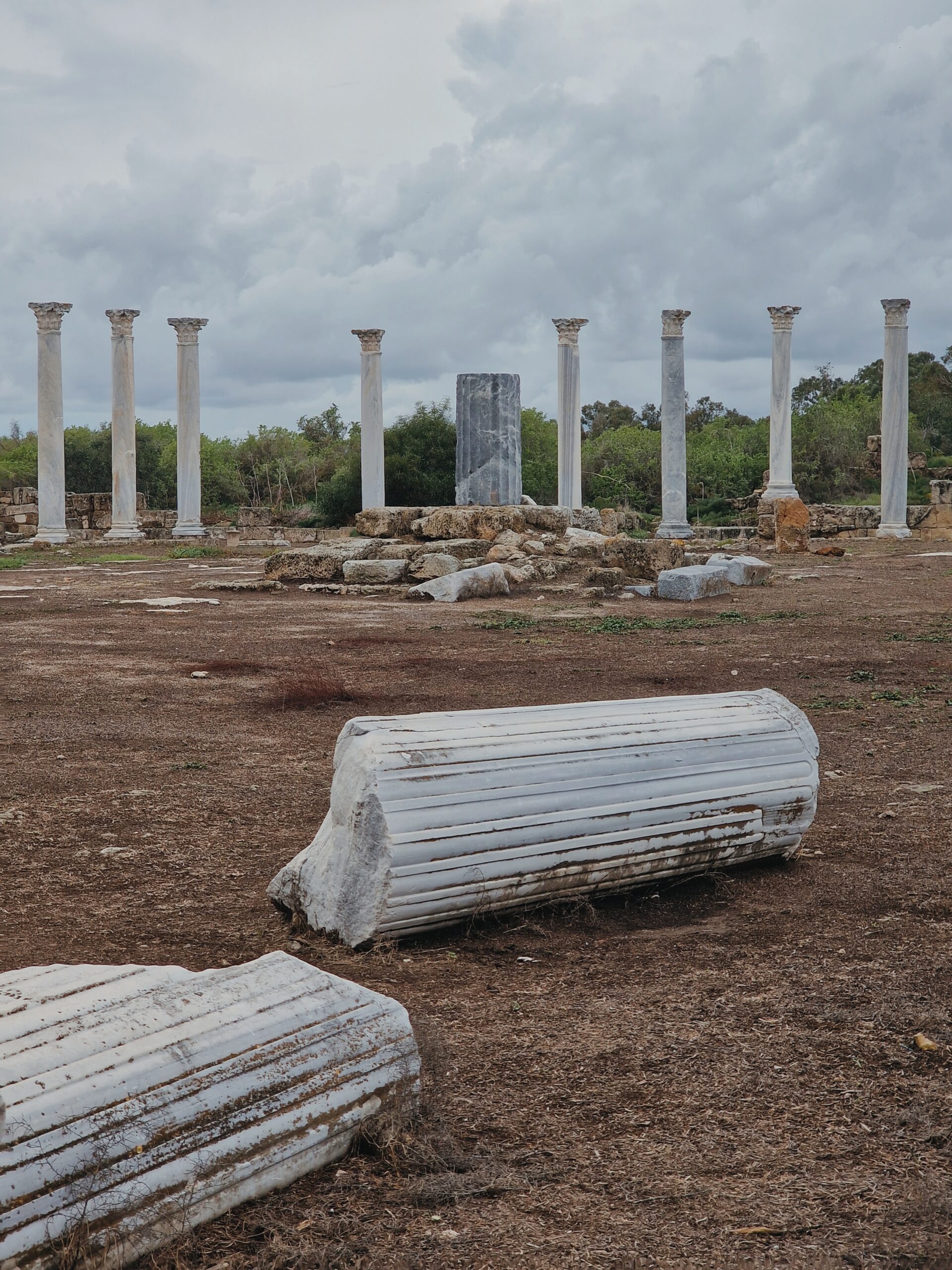
ver since I was a child, I was seeing a very specific photograph on the covers of my notebooks: the columns of Salamis, in the occupied part of Cyprus. It slipped in the back of my mind until the opportunity came up to finally visit it.
Walking between those columns, feeling the texture on my fingertips, all felt overwhelming
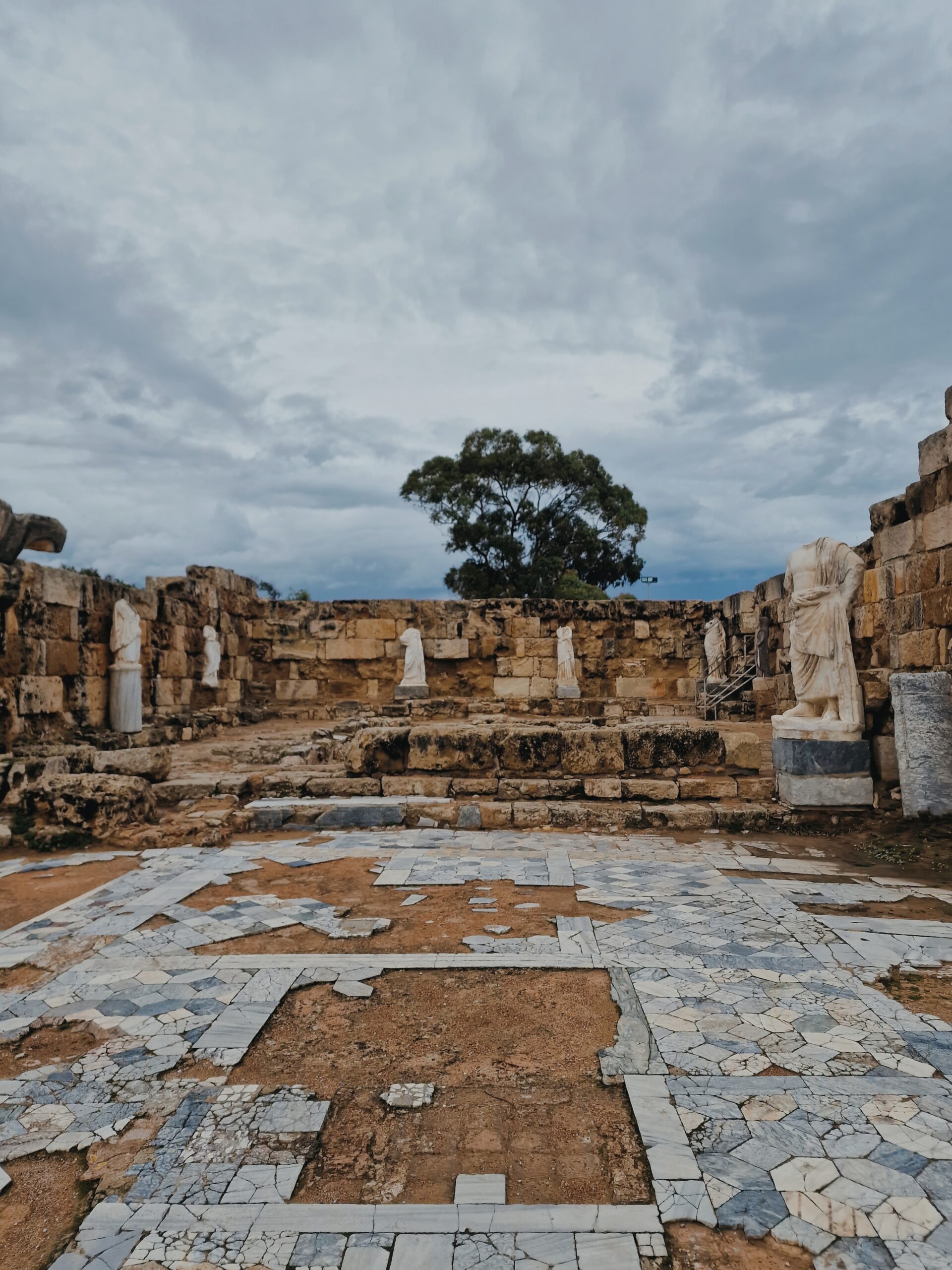
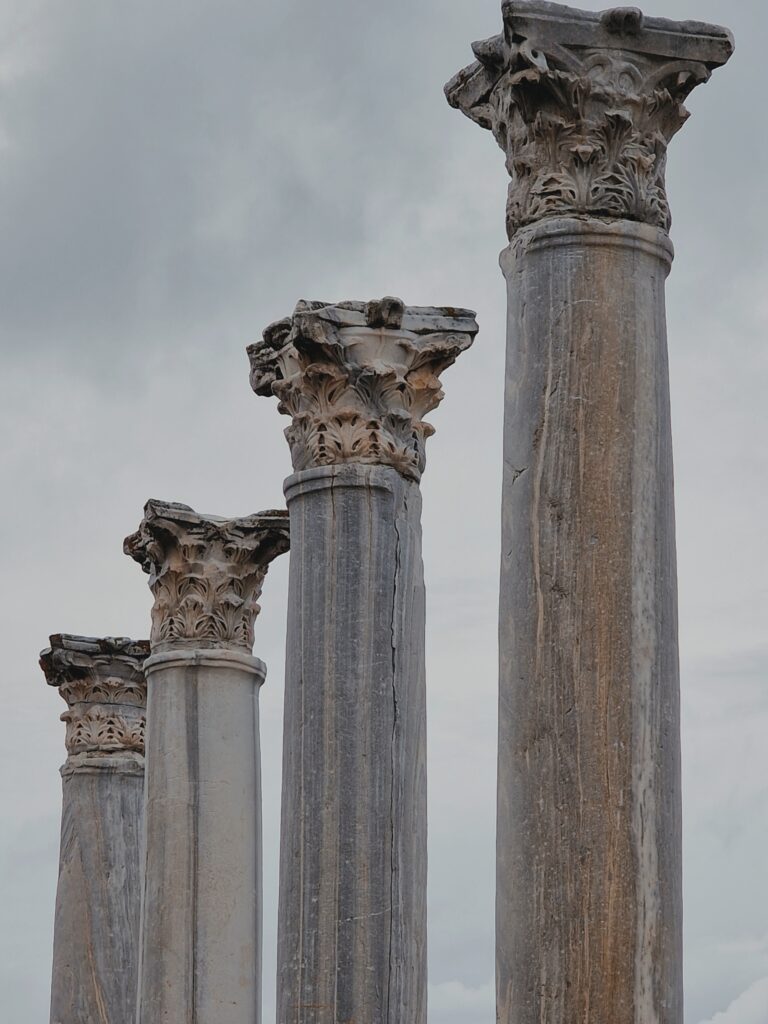
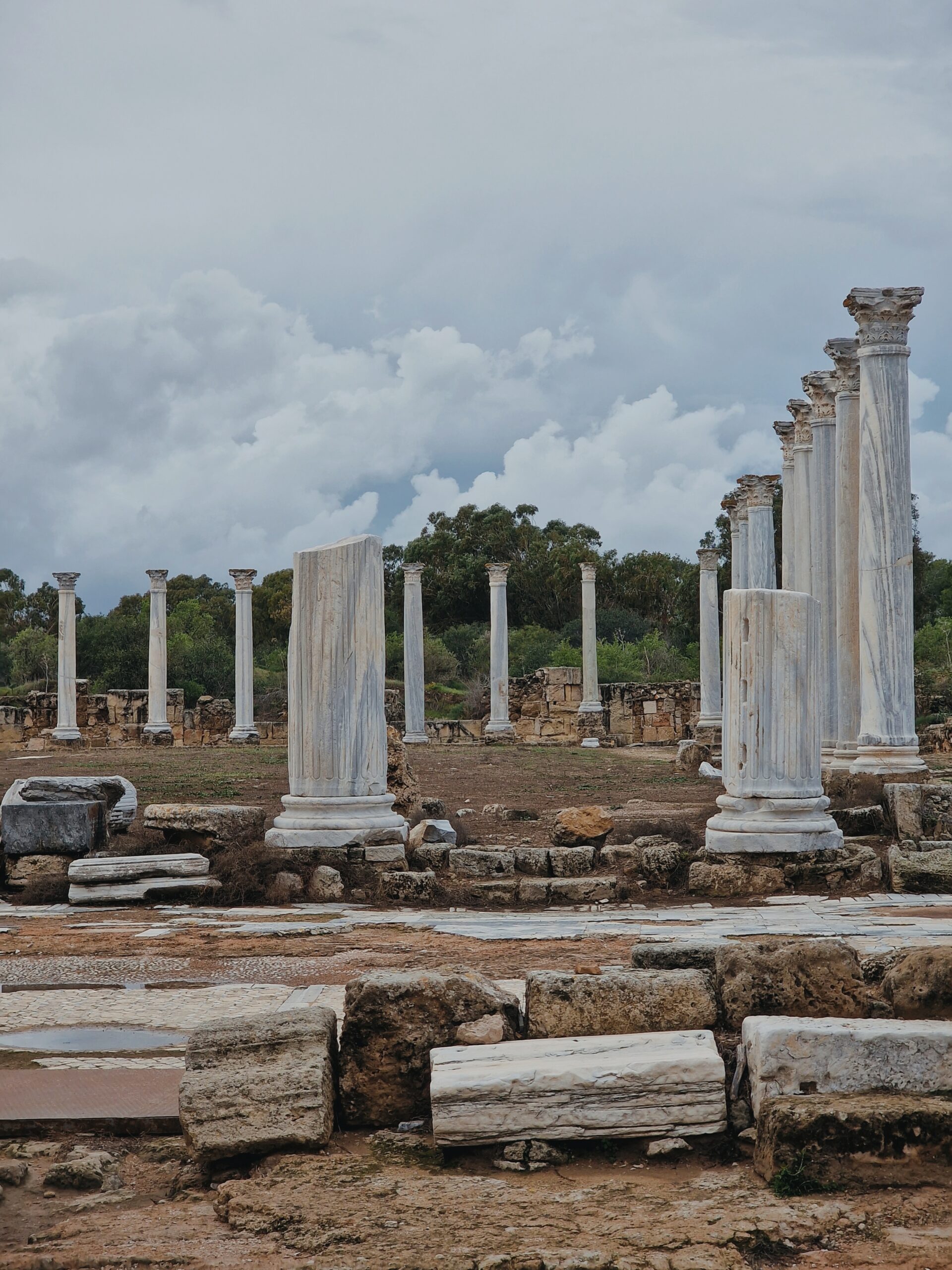
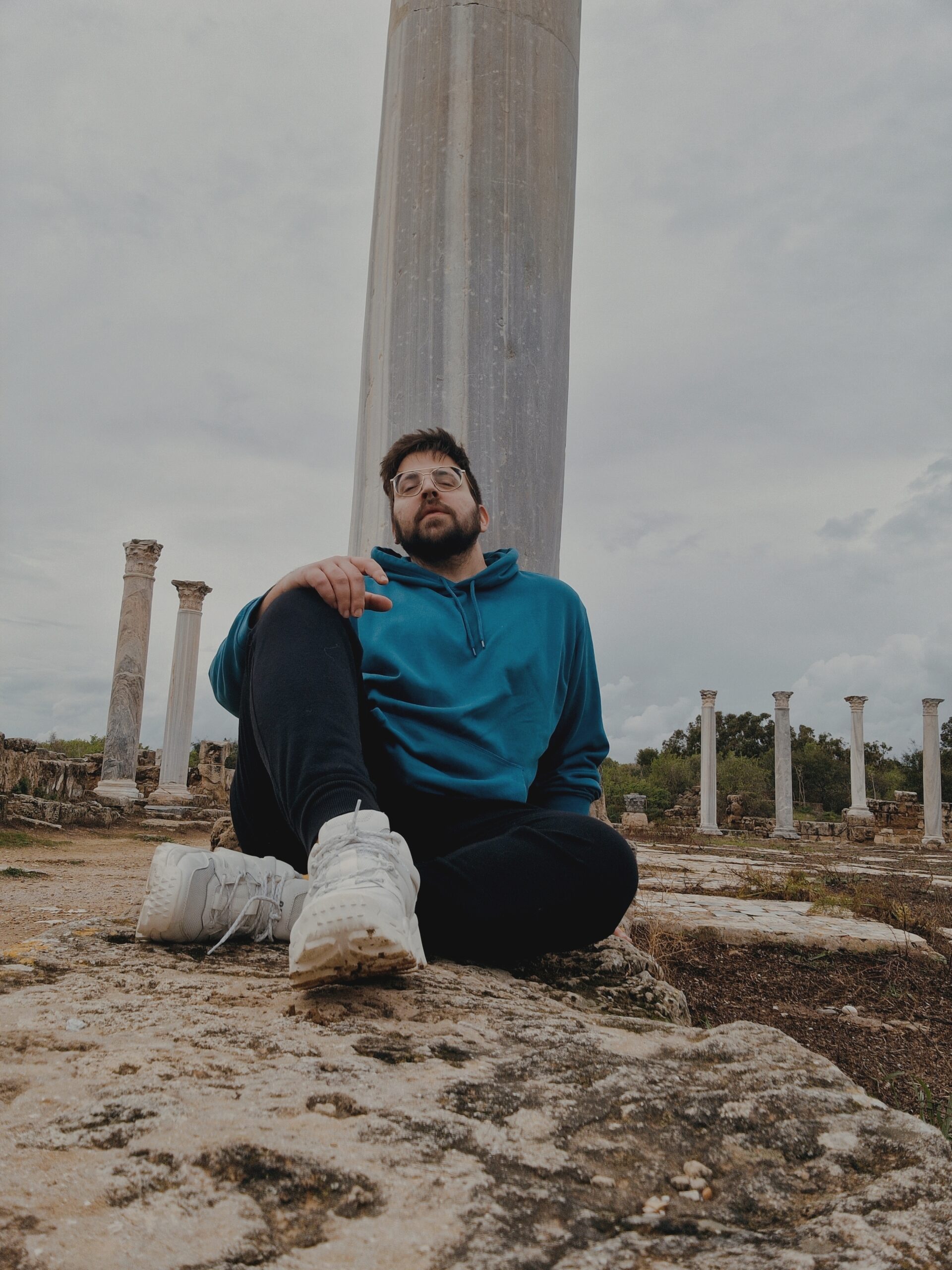
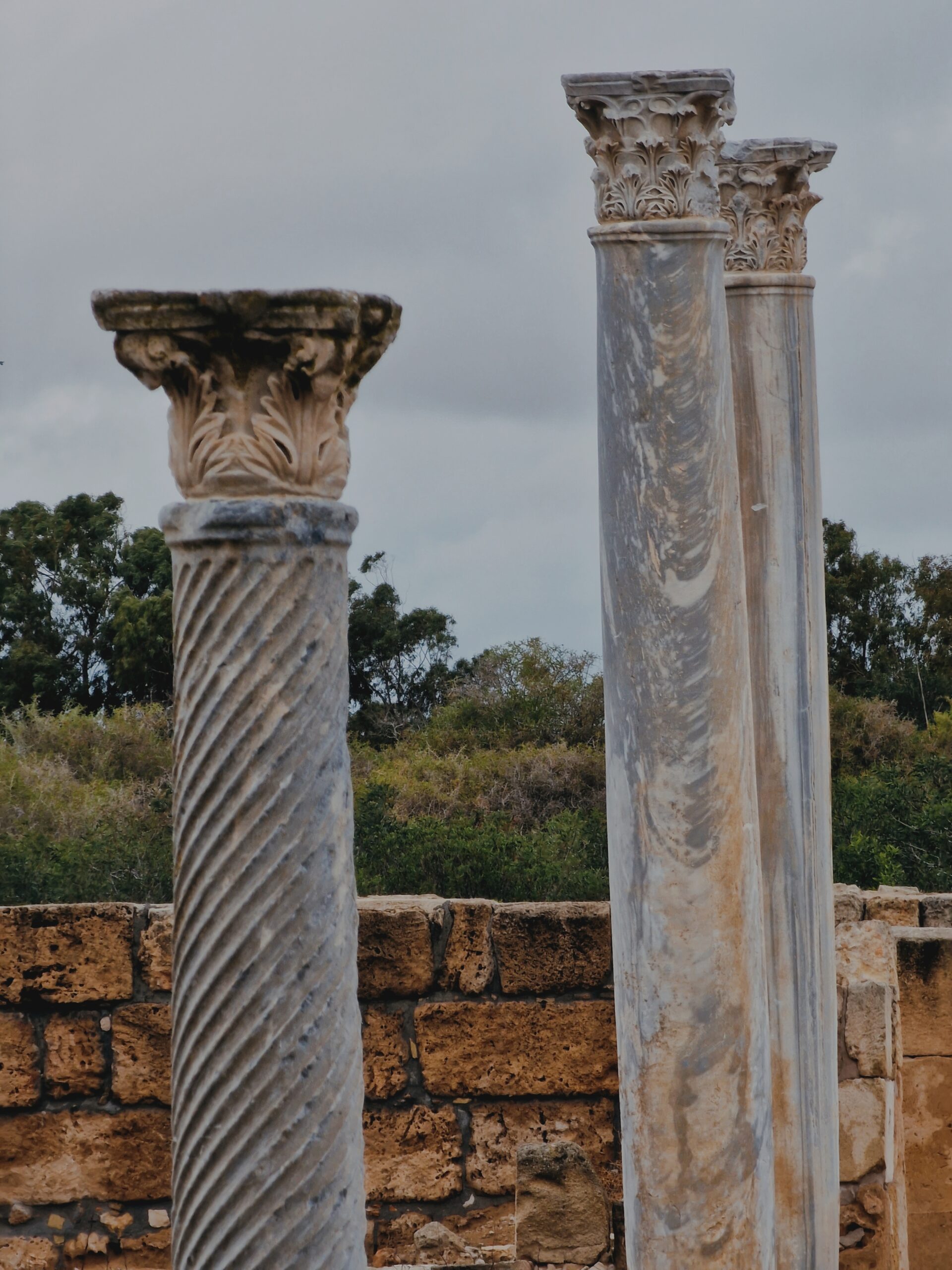
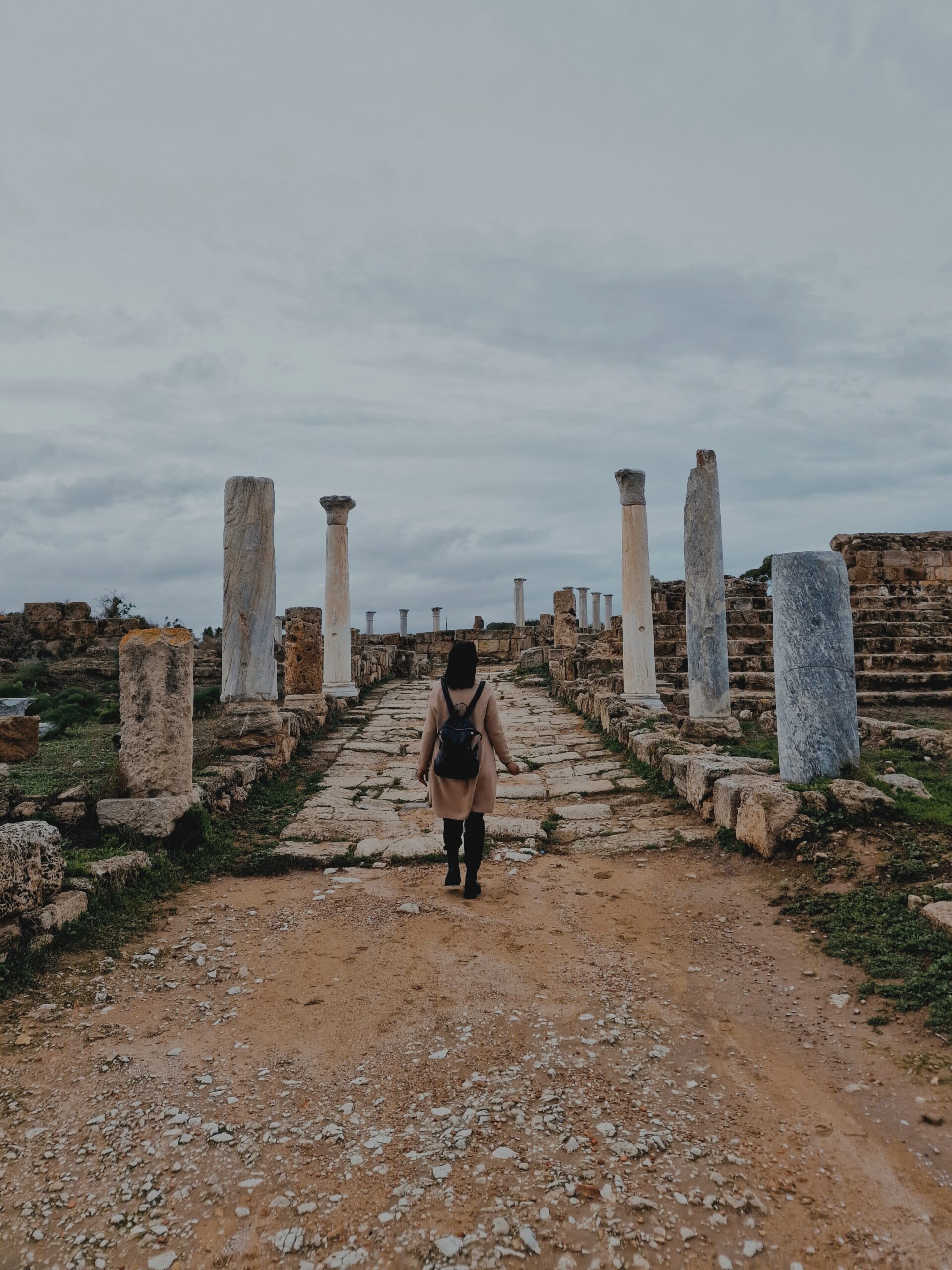
We finally arrived after a 1-hour drive in a moody, grey weather, we paid the entrance fee of €1 and walked from the kiosk to the archaeological site. When I stepped inside, the Ancient Gymnasium slowly unfolded in front of me, like a picture of my childhood coming to life. Walking between those columns, observing the architectural details, feeling the texture on my fingertips, all felt overwhelming but oddly satisfying – I was completing a life-long bucket list dream. It took a while until I was ready to move on to the rest of the site.
Salamis – founded around the 11th century BC – located on the eastern coast of Cyprus near modern-day Famagusta, was once one of the island’s most important ancient city. According to legend, it was established by Teucer, a hero of the Trojan War, after he was exiled for failing to avenge his brother Ajax. The city boasts impressive ruins, including a massive gymnasium, Roman baths, and a grand theater that once seated over 15,000 spectators.
We finally arrived after a 1-hour drive in a moody, grey weather, we paid the entrance fee of €1 and walked from the kiosk to the archaeological site. When I stepped inside, the Ancient Gymnasium slowly unfolded in front of me, like a picture of my childhood coming to life. The Gymnasium is one of the most impressive ruins you’ll find at Salamis. After a massive earthquake in 76 AD, it was rebuilt by the Roman Emperor Trajan and his cousin Hadrian — yes, the same Hadrian who later built the famous wall in Britain.
Walking between those columns, observing the architectural details, feeling the texture on my fingertips, all felt overwhelming but oddly satisfying – I was completing a life-long bucket list dream. It took a while until I was ready to move on to the rest of the site.
The Salamis archaeological site covers approximately 1.5 to 2 square kilometers though not all of it is excavated or accessible to visitors. If you’d like to explore the whole site, you can easily spend half a day walking around.
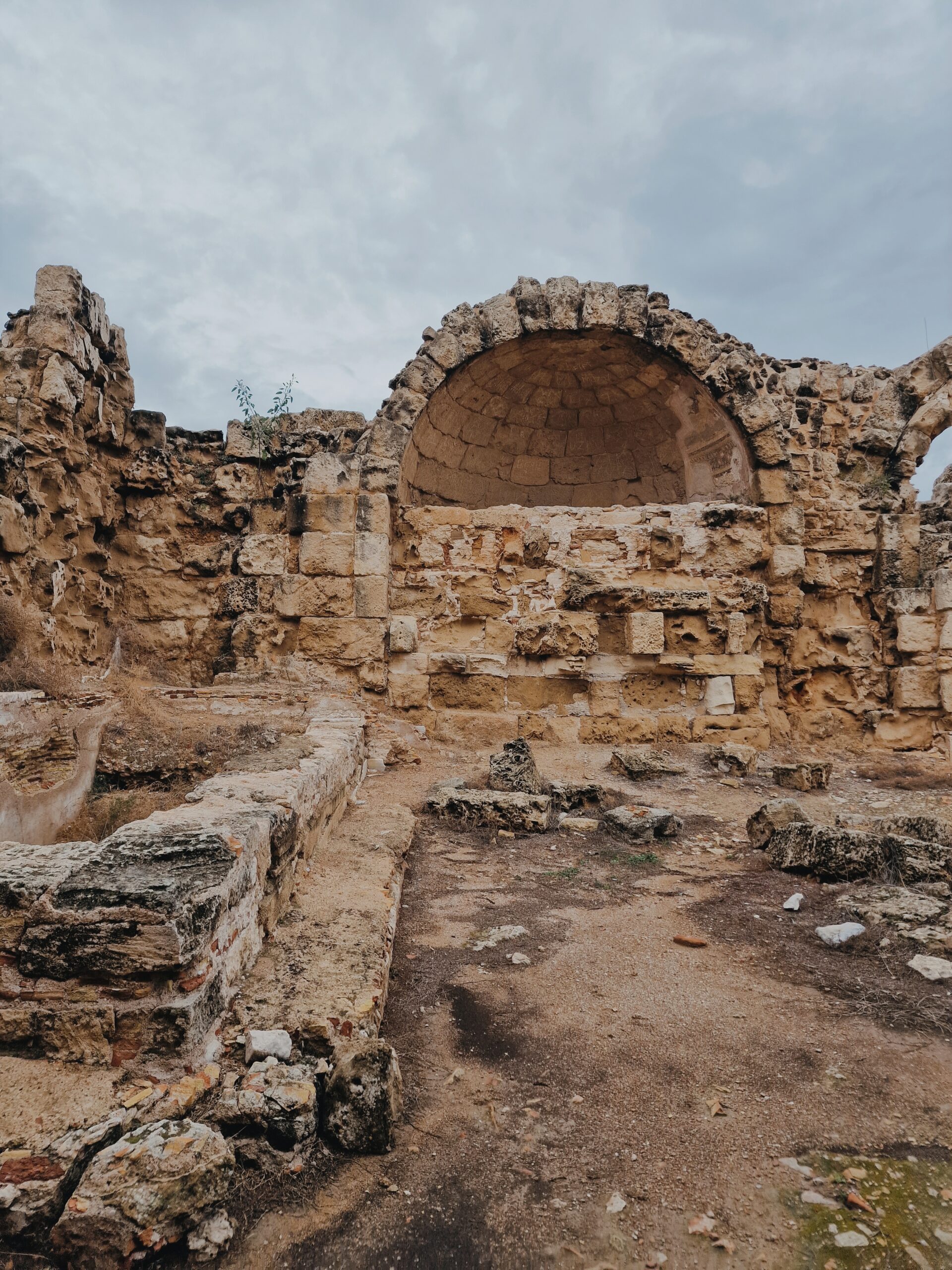
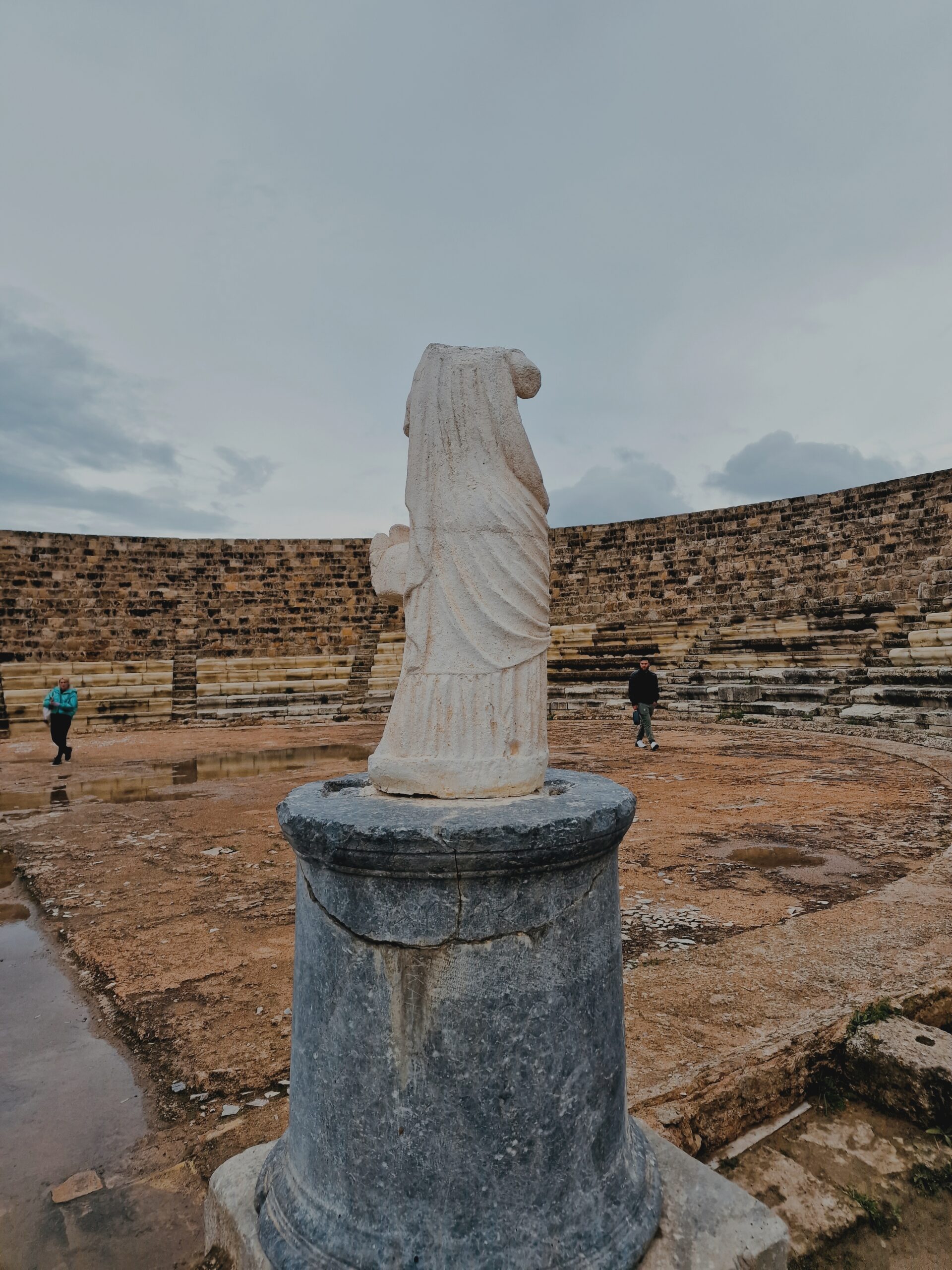
Just a short walk away from the gymnasium, you’ll find the massive Roman theatre. Nearby are the remains of the Agora, where merchants once haggled over goods, and several early Christian basilicas, complete with bits of mosaic flooring and crumbling columns.
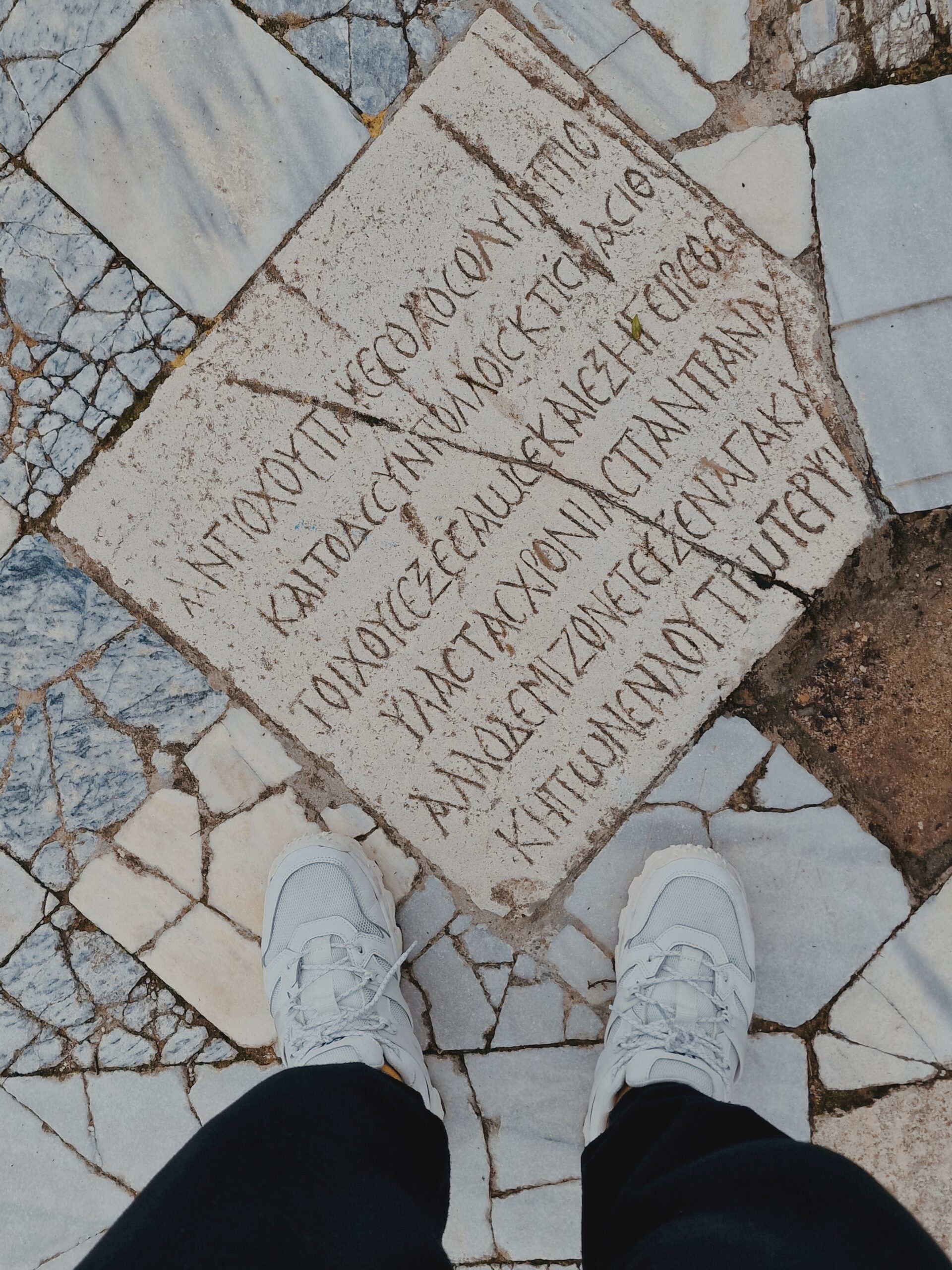
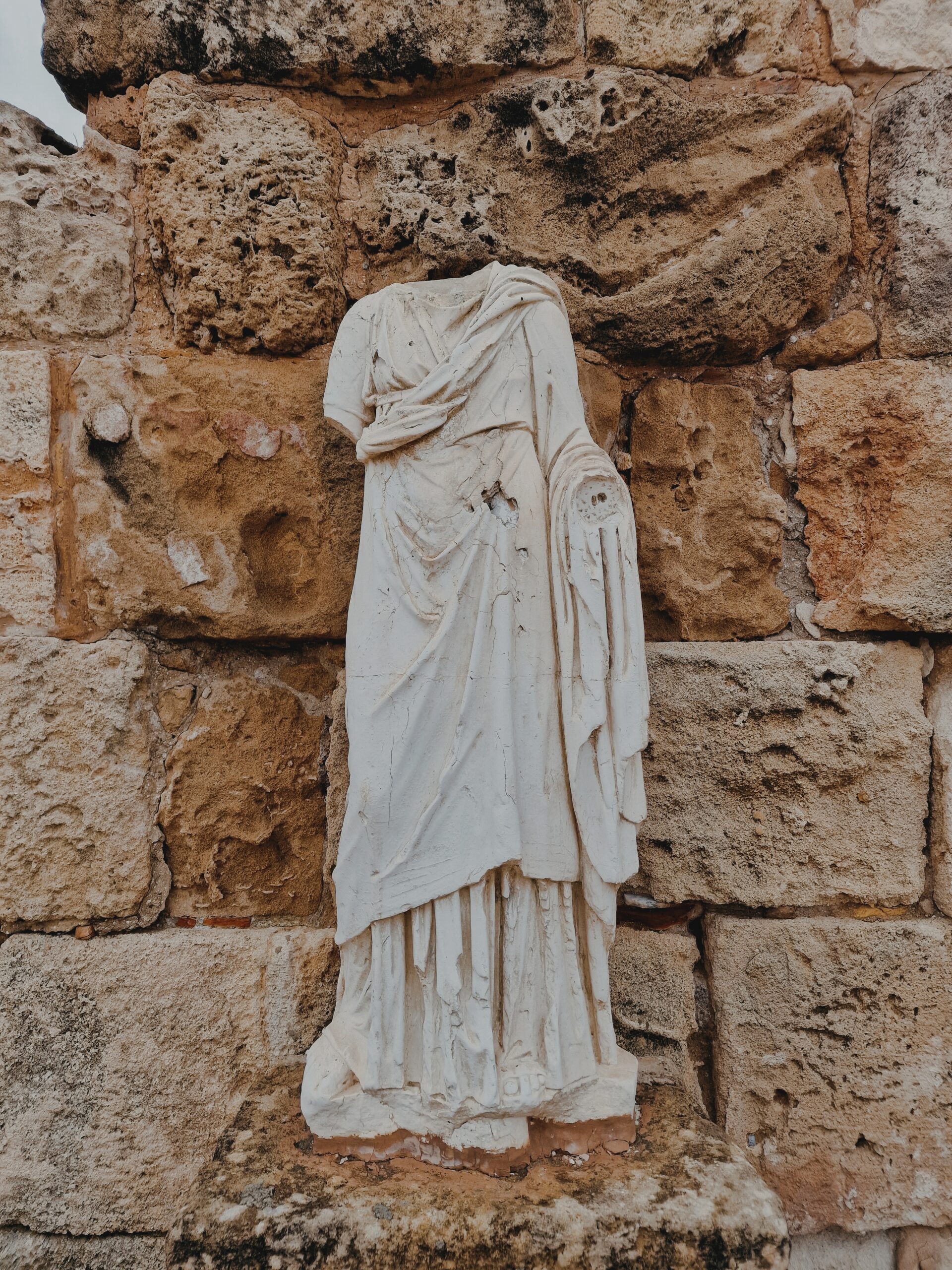
Scattered throughout are baths, latrines, statues, and even fragments of ancient roads—so it’s not just one big gym, it’s a whole ancient city waiting to be uncovered.
It was a bittersweet walk. Cyprus holds tremendous history, a big portion of which is on the occupied part. So many thoughts rushing through my head but I focused on the one: I got to see the ancient city of Salamis in person, and that’s the most important.